TLDR
- The Enterprise Ethereum Alliance (EEA) forms the “Privacy Working Group” to advance confidentiality solutions.
- Leading institutions such as Consensys, EY, and Polygon collaborate to solve the biggest obstacle in blockchain implementation.
- The group will publish bi-annual technical guides to standardize privacy and regulatory compliance on Ethereum.
The Enterprise Ethereum Alliance has created a Privacy Working Group with the goal of accelerating Ethereum adoption in businesses. Through this coalition, they seek to provide technical solutions so that institutions can manage tokenized assets with total confidence.
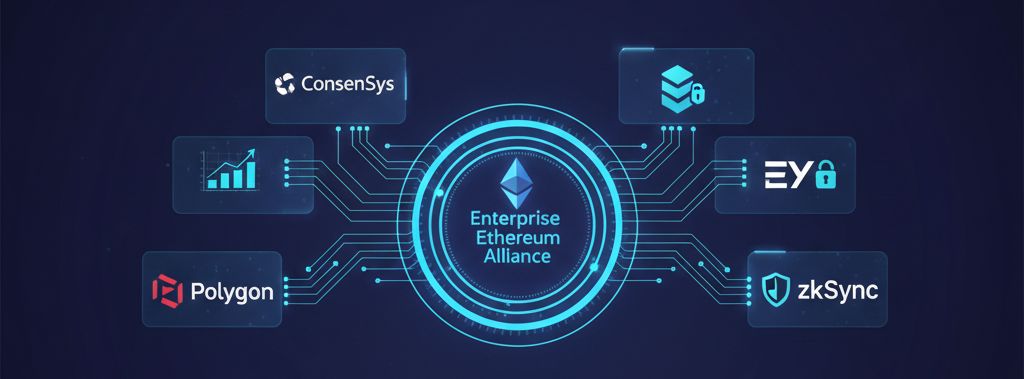
The group integrates ecosystem giants—such as Polygon, EY, Consensys, and ZKsync—working in conjunction with the Ethereum Foundation. The objective is to map out a clear roadmap that helps organizations evaluate and implement robust privacy technologies.
According to Mo Jalil, institutional privacy lead at the Ethereum Foundation, the lack of operational anonymity is currently the biggest blocker to serious corporate use. Therefore, this group will focus on creating interoperable building blocks that meet the security and compliance standards required by global banking.
Standardization and the Future of Institutional Privacy
This group has a mission that transcends technical research; they aim to unify market leaders to coordinate innovation across Layer 1 and Layer 2 networks. Consequently, ecosystem-level knowledge sharing is expected to reduce the risks associated with isolated experimentation.
As part of its deliverables, the EEA is preparing a technical publication that will offer a structured overview of current privacy approaches. This document will be updated twice a year to keep pace with the accelerated rate of evolution that characterizes blockchain technology.
In summary the formation of this group reflects a paradigm shift toward real and scalable institutional deployments. By solving the privacy challenge, the EEA not only preserves the ethos of Ethereum but also opens the doors to a new, global, and transparent financial infrastructure.