TL;DR:
- Bitcoin fell below $73,000 due to tightening macroeconomic conditions.
- Corporate credit spreads remains compressed, signaling that risk is not yet priced in.
- Historical patterns suggest a strategic buying window starting in the second half of 2026.
On a high-volatility Tuesday for the crypto market, prices were dragged down toward the $73,000 level. This market action coincides with the emergence of concerning U.S. macroeconomic data, where Bitcoin accumulation and credit stress appear to be closely linked.
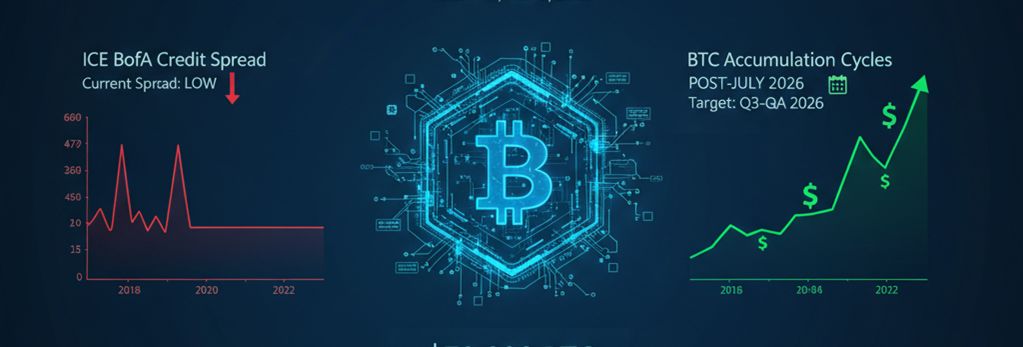
Currently, corporate credit spreads remain very low, despite U.S. debt reaching $38.5 trillion. Meanwhile, the 10-year Treasury yield has climbed to 4.28%, keeping financial conditions extremely tight for the private sector.
Experts indicate that in previous cycles—such as 2018 and 2022—Bitcoin only found a true floor after these spreads began to widen. Therefore, the current gap suggests the market must still absorb a phase of tension before initiating a sustained rebound.
Whale Behavior and the 2026 Window of Opportunity
In the short term, selling activity has increased significantly, with wallets holding over 1,000 BTC depositing large amounts into Binance. Additionally, holders who purchased a year ago have begun moving their funds to exchanges, marking the largest inflow from this cohort in months.
Despite this immediate pressure, the SOPR indicator has dropped to levels suggesting exhaustion among long-term sellers. Consequently, technical and macro analysis projects that the true growth phase will take shape following a necessary liquidation period to flush the market.
In summary, If credit spreads spike toward the 2% range by April, the historical cycle points to a buying window after July 2026. As the market absorbs economic stress, institutional investors may be positioning themselves for a massive accumulation phase toward the end of that year.