TL;DR:
- The House of Representatives approved the original bill in July 2025 through a bipartisan vote of 294 to 134.
- The United States Senate Banking Committee approved the advancement of the legislative proposal this past May 14, 2026.
- Washington’s legislative calendar includes only four weeks of full work in June and three weeks in July 2026.
Digital asset industry lobbying groups have intensified their efforts in the United States Congress to push for the final approval of the CLARITY Act. This offensive by the crypto lobby comes at a critical moment in 2026, as the legislative time for the current parliamentary session is running out.
Industry reports indicate that the survival of this digital structure market regulation depends directly on the U.S. Senate’s ability to untangle a considerable backlog of pending tasks unrelated to the crypto environment. A parliamentary source details that the proposal passed its last committee vote in mid-May 2026.
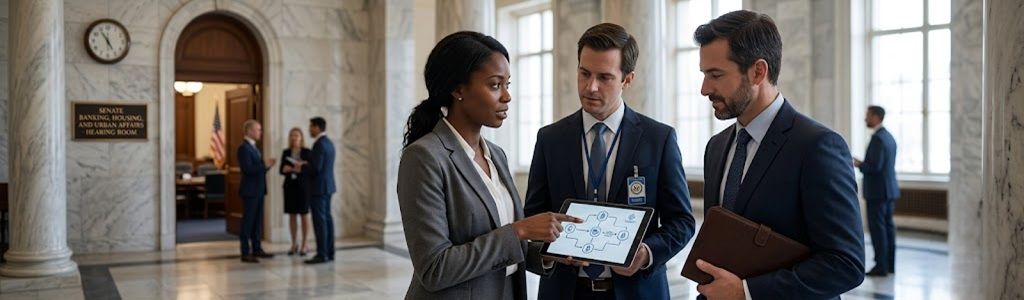
Obstacles on the U.S. Senate Agenda
Supporters of the legislation face an extremely narrow time window due to the institutional recess scheduled for August 2026. According to the schedules published by the chambers, the legislative branch has very little time left before election campaigns fully absorb the senators’ attention.
It appears that the main hurdle currently is not direct opposition to digital asset regulation, but rather a saturation of budgetary and national security priorities. The industry argues that postponing the debate to the next annual period would dilute the bipartisan consensus previously achieved.
The regulation establishes a comprehensive framework focused on defining financial oversight jurisdictions in the country. The technical text of the bill stipulates that matters related to digital commodities fall under the jurisdiction of the CFTC, while other specific assets would remain under the oversight of the SEC.
The Timeframe and Industry Demands
Representatives of trade associations within the ecosystem state that the lack of a unified federal framework could reduce the competitiveness of American companies compared to jurisdictions in Europe and Asia. Internal documentation from sector firms indicates that a clear legal definition is required by the end of the current session.
Analyses by the bill’s proponents point out that prolonged stagnation harms corporate strategic planning heading into the second half of 2026. Despite the accumulated delays in the upper house discussions, defenders of the project maintain weekly meetings with the staff of key lawmakers.
The advancement of this regulatory framework coincides with the evolution of parallel regulations implemented last year. Various market reports suggest that the final structure of the document could undergo last-minute technical modifications on the floor to secure votes from the Democratic caucus.
The next formal and definitive step for the bill will be its presentation before the full U.S. Senate for general debate and its final vote—a milestone that promoting committees estimate should occur before the start of the parliamentary recess set for August 2026.