TLDR:
- Leading exchanges call for a reduction of the 1% TDS and the flat 30% tax on gains.
- The sector seeks to evolve regulation from a punitive regime to one of active supervision.
- Liquidity migration to offshore platforms concerns both regulators and local businesses.
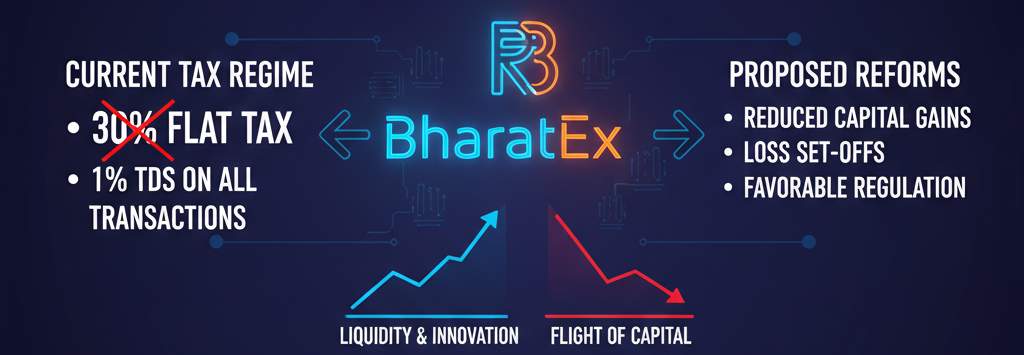
Leaders of the digital asset sector in India have intensified their demands to the Ministry of Finance ahead of the upcoming Union Budget. Executives from exchanges such as WazirX, ZebPay, and Binance are urging the government to reconsider crypto taxes in India, asserting that they act as barriers to innovation. The primary request focuses on reducing the 1% Tax Deducted at Source (TDS) and reviewing the flat 30% levy on profits.
WazirX founder Nischal Shetty highlighted that the budget represents a unique opportunity to foster a framework that supports transparency without stifling growth. In his view, a calibrated reduction in crypto taxes in India would help restore liquidity to domestic platforms. Currently, a significant portion of economic activity is shifting toward unregulated markets due to the excessive fiscal pressure on users.
Regulatory Challenges and the Search for an Equitable Framework
On the other hand, Raj Karkara of ZebPay stated that it is necessary to allow the offsetting of losses between different digital assets. He argued that balancing crypto taxes in India with those of other financial asset classes would create a much more predictable investment environment. This would enable the nation to leverage its vast developer talent and participate actively in the global virtual asset economy under international standards.
Despite these petitions, tax authorities have expressed concern over the difficulty of tracking transactions on offshore platforms and private wallets. The Reserve Bank of India has also warned about the risks stablecoins pose to national financial stability. However, the industry maintains that fairer crypto taxes in India would incentivize regulatory compliance and strengthen protection for retail investors.
In summary, the proposal seeks to transition from a model of fiscal deterrence toward one of licensing and constructive supervision. The final decision will be revealed on February 1, when the official budget is presented to Parliament. Meanwhile, the Web3 community awaits signals that the government is willing to integrate technological innovation with the objectives of transparency and real financial inclusion.