TL;DR:
- The off-label peptide trade surpassed an annual run rate of 100 million dollars, according to data from the firm Chainalysis.
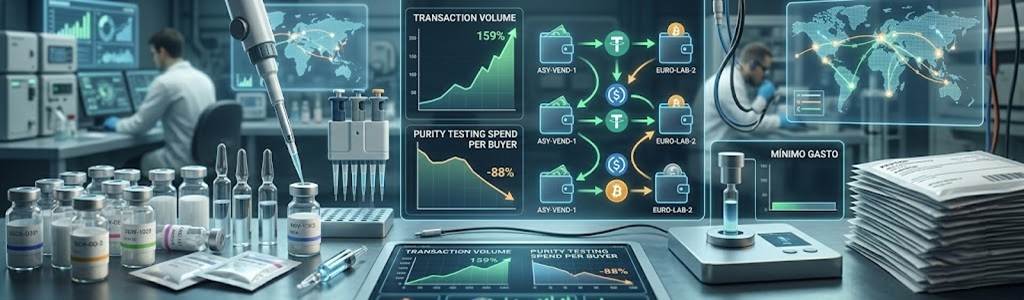
- During the first quarter of 2026, the transaction volume of this sector jumped 159% quarter-over-quarter, reaching 32 million dollars.
- The estimated spending on chemical purity testing per buyer dropped by 88% to stand at 8 dollars, according to the report.
This Thursday, the boom of internet trends dedicated to physical wellness and movements like “Make America Healthy Again” gave a boost to the informal demand for biological compounds. Peptide vendors and their buyers are increasingly using cryptocurrencies to process their transactions. Chainalysis details in its latest analysis that this sector operates under an alternative financial structure in the face of traditional banking restrictions.
The commercial success of medications based on GLP-1 peptides for appetite suppression and cellular repair increased interest from the general public. In this regard, Chainalysis indicates that this demand favored the growth of a gray market where Asian manufacturers distribute unbranded products directly to consumers. The traditional banking sector routinely prohibits the processing of payments related to unregulated prescription-grade compounds.
To expand their operations, distributors of these chemical compounds integrated crypto assets as the backbone of their payment infrastructure. Chainalysis suggests that the group of top-tier sellers exhibits professionalized behavior in their on-chain finances. Transactions averaging amounts equal to or greater than $1,000 dollars are mainly concentrated in stablecoins. Firm analysts indicated that this distribution of assets seeks to insulate supply chain orders from crypto market volatility.
Safety concerns in the gray market
The analysis of the blockchain ledger revealed health risk dynamics associated with the increase of inexperienced users in the ecosystem. Despite the increase in substance sales to international providers, the proportion of buyers funding independent purity analyses decreased. The firm Janoshik, a chemical verification laboratory located in Czechia, used to record frequent interactions with the same digital wallets that purchased peptides in China.
Data from the consultancy firm point out that the average spending on testing per buyer was drastically reduced in the recent period. This behavior occurs while the absolute volume of testing in the laboratory remains high due to the massive influx of new clients into the market.
On the other hand, the investigation detected that organizations previously linked to the commercialization of restricted chemical precursors expanded their activities into the peptide market. The firm identified transfers directed to entities such as Shanghai Sigma Audley for amounts of 1 million dollars in Bitcoin and 3.59 million in stablecoins before modifying their commercial catalog toward these supplements. Chainalysis concludes in its report that this expanding economic sector directs its campaigns toward a demographic profile that lacks experience in both unregulated pharmaceuticals and the technical handling of cryptocurrencies.