


TL;DR:
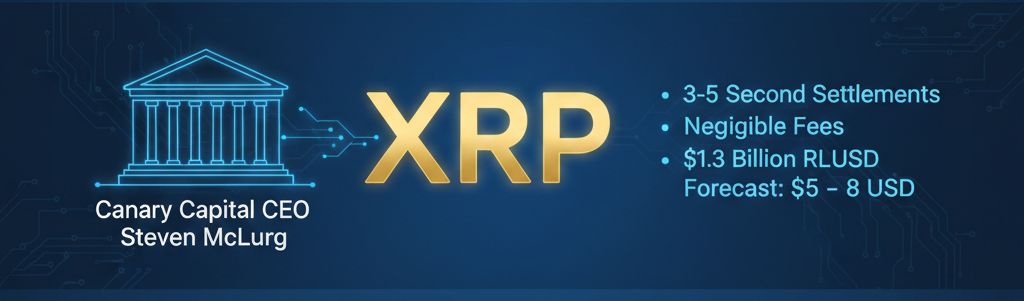
- Steven McClurg, CEO of Canary Capital, highlights that XRP solves multi-trillion dollar liquidity problems in real-time.
- XRP Ledger technology outperforms traditional systems like SWIFT in speed and operational cost reduction.
- Analysts project XRP’s price could reach $5 or even $8, driven by institutional adoption.
In 2026, the regulatory landscape for Ripple has taken a complete 360-degree turn after years of uncertainty. Steven McClurg, CEO of Canary Capital, surprised the market by declaring that XRP is essential for the next century of finance, positioning the asset as the fundamental “financial plumbing” for moving trillions of dollars globally.
Industry experts assert that XRP’s primary advantage lies not only in its speed but in its capacity to process real-world use cases. While other assets remain in experimental phases, the XRP Ledger already settles operations in a matter of seconds, leaving behind the slowness of traditional banking systems.
Decoupling from Bitcoin and the Path Toward Utility-Based Valuation
One of the most notable phenomena so far this year is XRP’s growing independence from Bitcoin’s price movements. Thanks to the expansion of tokenized assets and the success of the RLUSD stablecoin, the network’s value is now linked to its practical utility rather than just retail market speculative sentiment.
Furthermore, the current environment allows financial institutions to use the ecosystem to manage bonds and real estate efficiently. For this reason, the investment narrative has shifted from legal survival to technological dominance, consolidating the trust of high-level asset managers who previously focused exclusively on BTC.
Regarding price projections, Standard Chartered analysts suggest that the growth in liquidity required to settle debt markets could drive the token toward new all-time highs. Although the market is experiencing short-term volatility, the robustness of the technical support zones between $1.96 and $2.00 maintains a constructive structure for long-term investors.
In summary, this shift toward a utility-driven market is redefining the financial mathematics of the crypto ecosystem. With an infrastructure free of smart contract risks and unprecedented operational efficiency, the path toward mass adoption seems clearer than ever for Ripple’s asset.

