

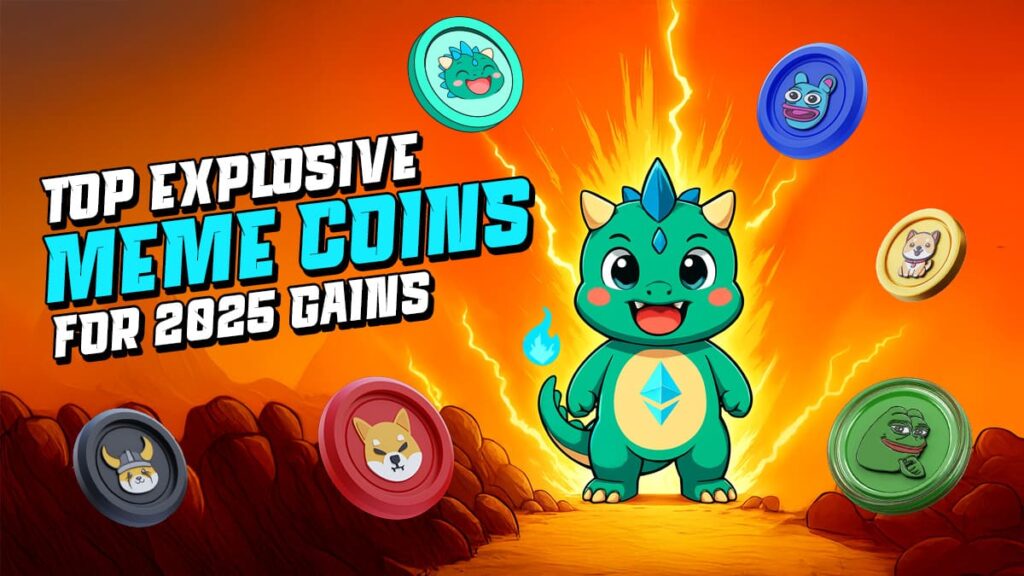
Meme coins, once widely treated as internet jokes, have at times reached large market valuations and attracted significant retail attention. Assets such as Dogecoin and Shiba Inu have also highlighted the risks of highly volatile tokens, including sharp drawdowns and rapidly shifting sentiment.
Recent marketing attention has also turned toward BullZilla ($BZIL), alongside established networks such as TRON (TRX) and Cardano (ADA). BullZilla is described in project materials as an ERC-20 meme-coin project with staged token-sale pricing and gamified mechanics. TRON and Cardano, by contrast, are larger and more mature networks with different risk profiles, liquidity conditions, and adoption dynamics.
According to the project, BullZilla is conducting an ongoing token sale with staged pricing that can change based on time or fundraising milestones. Any figures about funds raised, holder counts, or pricing should be treated as project-reported and may change over time.
1. BullZilla ($BZIL): Token-sale messaging and mechanics (project description)
BullZilla is presented by the team as a lore-driven meme-coin project. Promotional materials compare it to other meme tokens; readers should note that such comparisons are marketing-oriented and do not imply similar outcomes or market impact. The project has also published token-sale stage labels, a quoted token price, and claimed fundraising and holder figures; these details are not independently verified here.
The token-sale “mutation engine” (as described by the project)
BullZilla describes a pricing model in which the token-sale price can change on a schedule (for example, every 48 hours) or when fundraising milestones are reached (for example, each $100K). This is a form of progressive pricing commonly used in token-sale marketing. It does not indicate how a token will trade after listing, if it lists, or whether there will be sustained demand.
The project also frames these mechanics as a form of gamification. Readers should consider that gamified fundraising can amplify behavioral incentives, and it does not reduce the risks typically associated with early-stage tokens.
Participation mechanics (general information)
Project materials indicate that participation in the BullZilla token sale may involve using a Web3 wallet and exchanging supported assets for $BZIL through the project’s online portal. Anyone considering participation should review the project documentation, eligibility restrictions in their jurisdiction, and smart-contract and custody risks.
Project-reported features
BullZilla’s materials reference staking, token burn mechanics, and referral-based incentives. Any stated yields, rewards, or token-reduction schedules are subject to change and are not guarantees of return. Referral programs can also create additional conflicts of interest and may be restricted in some jurisdictions.
2. TRON (TRX): Network usage and stablecoin activity
TRON launched in 2017 and is known for relatively low transaction fees and fast settlement. It is widely used for stablecoin transfers and for applications that prioritize low-cost transactions. Estimates about the share of USDT activity occurring on TRON vary by data source and time period.
TRON’s ecosystem includes decentralized applications, token issuances, and consumer-facing services. As with other public blockchains, network usage metrics can shift quickly and may reflect broader market conditions rather than long-term adoption trends.
Separately, tokens launched on other chains (including Ethereum) do not rely on TRON by default; any relationship is typically indirect, such as users moving stablecoins across networks for liquidity or settlement.
3. Cardano (ADA): Research-oriented development and ecosystem maturity
Cardano is a proof-of-stake blockchain associated with Charles Hoskinson. It uses the Ouroboros consensus protocol and emphasizes a research-driven development approach. Claims that any network is “most secure” or “environmentally friendly” depend on definitions and comparisons; readers should treat broad superlatives cautiously.
Cardano has developed an ecosystem of decentralized applications and tooling over time. Its governance and interoperability roadmap are key parts of its positioning, but delivery timelines and adoption are subject to change.
Compared with meme coins and early-stage token-sale projects, ADA is generally considered more established, although it remains a volatile asset and is not inherently a “stable” hedge.
Conclusion
BullZilla, TRON, and Cardano represent different parts of the crypto market in 2025: an early-stage meme-coin project raising funds via a token sale (BullZilla), a high-throughput settlement network used for transfers (TRON), and a research-oriented smart-contract platform with a longer operating history (Cardano). These assets differ substantially in maturity, liquidity, and risk.
Project narratives and token-sale mechanics can influence short-term attention, but they are not reliable indicators of future performance. Readers should evaluate any token-sale participation with particular care, including smart-contract risk, token distribution, regulatory uncertainty, and the possibility of total loss.
This article is for informational purposes only and does not constitute financial or investment advice.
This outlet is not affiliated with the project mentioned.
For More Information:
Follow BZIL on X (Formerly Twitter)
Frequently Asked Questions
Why does the BullZilla project emphasize “mutation” and staged pricing?
Project materials describe a token-sale structure where the quoted price can change over time or after fundraising milestones. This is a marketing and distribution choice and does not predict future market pricing.
How does BullZilla describe its differences from other meme coins?
The project cites staged token-sale pricing and supply-reduction mechanisms (such as burns) as differentiators. As with similar claims across the sector, implementation details and outcomes can vary.
Is TRON still relevant today?
TRON continues to be widely used for transfers and for stablecoin activity. Specific market-share claims depend on the data source and the period measured.
Why might some readers compare Cardano to meme-coin markets?
Cardano is a general-purpose smart-contract platform; activity on the network can include speculative tokens as well as utility-focused applications. That said, the risk profile of ADA differs from early-stage meme-coin projects.
How can one participate in token sales such as BullZilla’s?
Token sales commonly use a web portal and a compatible wallet to exchange supported assets for the project’s token. Participants should verify official sources, understand transaction finality, and consider smart-contract and phishing risks.
What are common considerations and risks in token sales?
Token sales can involve limited disclosures, concentrated allocations, volatile post-sale pricing, and regulatory uncertainty. There is also risk of bugs, exploits, or project failure.
Is BullZilla positioned as an “alternative” to other meme tokens?
In its own messaging, the project compares its branding and mechanics to other meme tokens. Such positioning is promotional and should not be interpreted as evidence of comparable market outcomes.
Glossary
- Progressive Token-Sale Pricing: A model where quoted token prices can change with time or fundraising milestones.
- Token Burn: Permanent removal of tokens to reduce supply.
- HODL Furnace: BullZilla’s staking system (project terminology).
- ERC-20: Ethereum token standard.
- Referral System: A rewards structure tied to referrals, as described by the project.
- Roarblood Vault: Mechanism referenced by the project in relation to referral incentives.
- Staking APY: Annualized yield rate from staking, typically variable and not guaranteed.
- Supply Scarcity: Reduction of circulating supply.
- Community Vesting: Gradual release of tokens according to a schedule.
- Ethereum Smart Contracts: Automated contracts powering decentralized applications.
This article contains information about a cryptocurrency token sale. This outlet is not affiliated with the project mentioned. As with any initiative within the crypto ecosystem, readers should do their own research and carefully consider the risks involved. This article is for informational purposes only and does not constitute financial or investment advice.

