


Every market cycle brings unexpected contenders that dominate attention. Meme coins, once dismissed as lighthearted experiments, have become a notable segment of the digital-asset market. August 2025 is shaping up to be no exception. Pepe has seen renewed momentum alongside higher trading activity, Popcat is drawing attention as a Solana-based meme token, and BullZilla has announced an upcoming token sale.
This article reviews three meme tokens frequently discussed by market participants in August 2025. Pepe and Popcat have been active in secondary-market trading and community-driven narratives. BullZilla, meanwhile, has described a token-sale structure that changes pricing over time. As with all meme tokens, these assets can be highly volatile and outcomes are uncertain.
BullZilla: Project-Described Scarcity Features and Token-Sale Mechanics
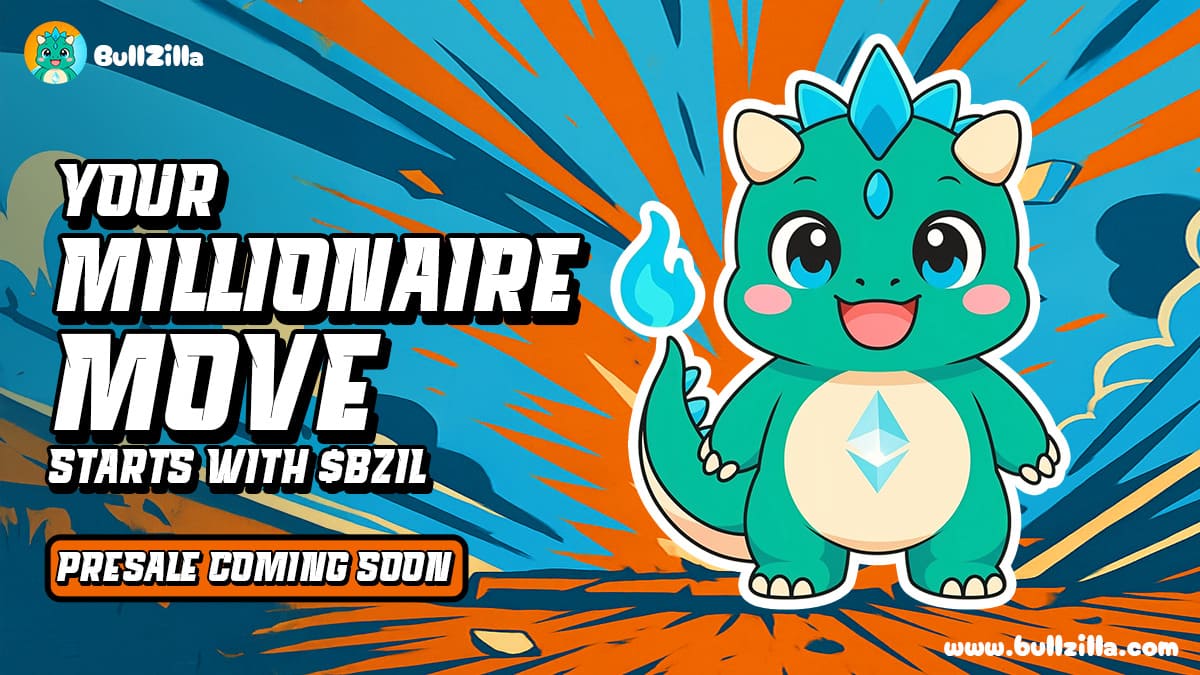
BullZilla ($BZIL) is being marketed with a token-sale structure that the project describes as different from many meme token launches. Project materials state a starting price of $0.00000575 and reference a “Mutation Engine” that adjusts the token-sale price every $100,000 raised or every 48 hours. This is a project-described pricing mechanism and does not indicate future market performance.
Project promotions also reference potential future listing assumptions and include hypothetical examples. Such scenarios are illustrative marketing content and should not be read as forecasts; token listings and post-sale prices are not guaranteed and can differ materially from any stated target.
BullZilla also describes a “HODL Furnace” staking pool with rewards advertised as up to 70% APY, and a “Roar Burn” mechanism that the project says can reduce supply at certain roadmap milestones. Staking yields, if available, can be variable, may depend on program rules, and can change over time.
Some research and commentary in the crypto industry has discussed how deflationary mechanics and staking incentives may affect token behavior after launch, though results can vary widely by project and market conditions. Readers should treat any tokenomics claims as project-reported and assess associated risks independently.
Pepe: A Veteran Meme Token With Active Secondary-Market Trading
Pepe is a well-known meme token. The article references a price of $0.00001016 and a 24-hour trading volume of $558 million; figures like these typically vary by data provider and time window. Readers should verify current numbers directly through market-data sources (for example, CoinGecko or other major aggregators) at the time they read this.
Pepe’s activity is often associated with its cultural visibility and broad exchange availability. Some market commentary has noted that high-volume meme tokens can be used by traders for short-term strategies, although this also increases exposure to rapid price swings.
Risks remain significant. Pepe’s valuation is largely tied to market sentiment, attention cycles, and speculative trading. Like many meme tokens, it can experience sharp moves in either direction.
Popcat: A Solana-Based Meme Token With Notable Volume
Popcat, built on the Solana blockchain, has been discussed as one of the more visible Solana-native meme tokens. The article references a price of $0.2688 and a daily trading volume of $33.5 million; as with all market data, these values can change quickly and should be verified independently.
Solana’s network is often promoted for relatively low transaction costs and high throughput. Solana’s documentation and ecosystem tooling frequently cite high theoretical transaction capacity (often referenced as more than 65,000 transactions per second), though real-world throughput can vary based on network conditions.
Market observers have also suggested that Solana-native meme tokens can see rapid shifts in activity due to lower friction for trading. That said, short-term traction does not necessarily translate into long-term sustainability.
As with similar assets, Popcat’s longer-term outlook depends on factors beyond trading interest, including continued community engagement, market liquidity, and broader crypto conditions.
Final Words:
BullZilla, Pepe, and Popcat illustrate different ways meme tokens can attract attention. BullZilla is being marketed with token-sale mechanics and incentive features described by the project. Pepe is notable for its established brand and exchange presence. Popcat highlights the role Solana-based ecosystems can play in meme token distribution and trading activity.
Rather than serving as a ranking or recommendation, this comparison is intended to summarize how these assets are being discussed in the market and what risks and structures are commonly cited. Meme tokens remain speculative instruments and can be unsuitable for many participants depending on risk tolerance and jurisdictional constraints.
For More Information:
BZIL Telegram Channel
Follow BZIL on X (Formerly Twitter)
Frequently Asked Questions
1. What does the project say about BullZilla’s token sale structure?
Project materials describe a token-sale price that can change every $100,000 raised or every 48 hours. This is a project-described mechanism and does not indicate future trading outcomes.
2. Why is Pepe often mentioned in discussions about meme tokens?
Its visibility, exchange availability, and established meme identity have kept it in market conversations, although interest can fluctuate.
3. What is typically cited as Popcat’s main technical context?
As a Solana-based token, Popcat operates on a network often associated with lower fees and higher throughput, though actual performance and user costs can vary.
4. Are these meme tokens risky?
Yes. Volatility, regulatory shifts, liquidity changes, and community sentiment can lead to rapid price moves and potential losses.
5. How should readers approach comparisons between meme tokens?
Comparisons should focus on verifiable factors (such as market liquidity, contract risks, and program terms) and acknowledge that meme tokens can behave unpredictably. None of the information in this article is a recommendation to buy or sell.
Glossary of Terms
Liquidity – The ease of buying or selling an asset without affecting its price.
Token sale – An early sale of a token before it may become available for broader trading on exchanges.
APY – Annual Percentage Yield, a measure used to describe staking or yield rewards (which can be variable).
Burn Mechanism – Process of permanently removing tokens from circulation, which can affect supply.
Throughput – Number of transactions a blockchain can process in a given second.
Summary:
This article reviews BullZilla, Pepe, and Popcat as meme tokens discussed in August 2025. It summarizes project-described BullZilla token-sale mechanics and incentive features, and it notes commonly cited market-data points for Pepe and Popcat, which readers should verify through independent sources. These assets can be highly volatile and may not be appropriate for all market participants.
This outlet is not affiliated with the project mentioned. This article is for informational purposes only and does not constitute financial or investment advice.

