TL;DR:
- Newlimit raised $435 million in a Series C round led by Founders Fund, lifting its valuation to about $3.1 billion.
- The longevity biotech, co-founded by Brian Armstrong, Blake Byers and Mark Kimmel, is developing epigenetic reprogramming medicines to restore youthful cell function.
- After a prototype breakthrough in old human liver cells, Newlimit plans human clinical trials next year, shifting attention from funding momentum to clinical validation and safety evidence now.
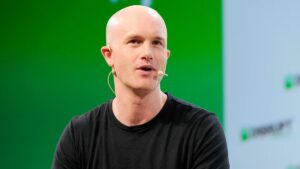
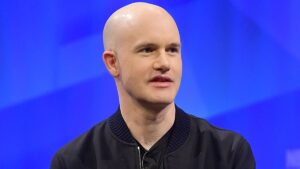
Newlimit, the longevity biotech co-founded by Coinbase CEO Brian Armstrong, has raised $435 million in a Series C round that pushes its valuation to $3.1 billion. The financing, announced June 2 and led by Founders Fund, roughly triples the company’s previous mark from below $1 billion. The striking part is how quickly a side bet became a multibillion-dollar biotech wager, especially as Newlimit prepares to move from laboratory progress toward human testing next year.
Longevity science draws crypto-era capital
The round also brought in new investors Thrive Capital, Greenoaks and Quiet Capital, while Kleiner Perkins, Abstract and Valor Equity Partners added to existing stakes. Newlimit was founded in 2021 by Armstrong, former GV partner and bioengineer Blake Byers, and stem cell biologist Mark Kimmel. The company is built on the idea that aging is biologically flexible, or “plastic,” at the cellular level, a thesis that remains bold even inside a biotech sector increasingly willing to fund longer-horizon bets.

Newlimit’s work focuses on epigenetic reprogramming, a technique designed to restore youthful function to old cells by changing how genes are expressed without altering the underlying DNA. The company said a prototype medicine breakthrough reversed cell age in old human liver cells, giving it confidence to push toward the clinic. That laboratory claim is the bridge between ambition and scrutiny, because the next milestone will test whether promising cell-level results can survive the stricter environment of regulated drug development.
The valuation jump is notable because Newlimit raised $130 million as recently as last year, yet the latest round more than triples its value in roughly 12 months. The company now plans to bring its first cell-aging reprogramming medicine into human clinical trials next year, entering the phase where safety, efficacy and repeatability matter more than investor excitement. The next test is no longer fundraising, but translation, as Newlimit tries to convert heavily funded longevity science into medicine that can address age-related disease.
For Armstrong, the deal also extends a portfolio beyond Coinbase and crypto into high-risk, long-duration science, showing how digital-asset wealth is increasingly flowing into biotech moonshots where the addressable market could be measured in trillions if the biology delivers. Until then, the raise is a signal of confidence, not proof that cellular age can be safely reset clinically.