


Recent charts show contrasting moves in the Shiba Inu (SHIB) price analysis and the Zcash (ZEC) price outlook. While SHIB’s momentum has been fluctuating near its latest support level, ZEC has been battling a correction phase after testing higher resistance zones. These shifts have kept traders alert, watching for signs of whether a new market trend is forming.
Against that backdrop, BlockDAG (BDAG) has drawn attention with a project update tied to its fundraising event and planned token generation event (TGE). According to the project, a “TGE code” is used to assign a queue or ranking that affects the timing of token distribution on the stated distribution date. Readers should note that these mechanics are described by the project and may change.
BlockDAG Introduces a Ranked Distribution Mechanism
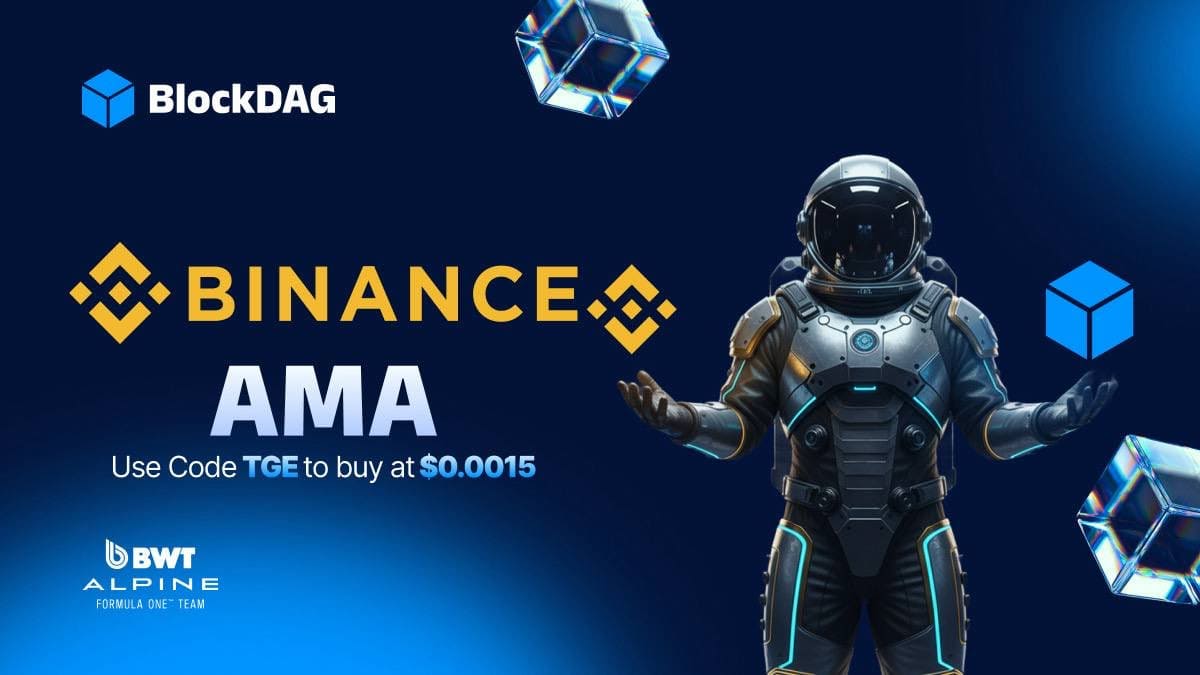
According to BlockDAG’s materials, its token sale is structured around batches and a “TGE code” that assigns a ranked position. The project states that the code is associated with a listed token-sale price of $0.0015 and that the rank is intended to influence how quickly tokens are distributed on the distribution date.
The project says ranks 1–300 receive tokens first, while lower ranks may wait longer (up to 24 hours). As with other token-sale programs, the practical outcome depends on execution, and participation carries risk.
The BlockDAG team reports it has raised nearly $430 million in its token sale, selling more than 27 billion BDAG coins to 315,000+ holders. The project says it is in “Batch 31” and is targeting $600 million ahead of a planned launch and exchange listings; these targets and timelines are not guaranteed.
BlockDAG also says it will appear on Binance this Friday, October 24 at 3 PM UTC for an AMA, and that it plans to discuss roadmap items ahead of “Keynote 4: The Launch Note” and “GENESIS DAY.” Scheduling and content for third-party platforms can change.
The project describes its technology as a hybrid PoW-DAG model with claimed throughput of 2,000–15,000 TPS and EVM compatibility. It also states it has undergone audits by CertiK and Halborn; readers should review any audit reports directly and note that audits do not eliminate risk.
Shiba Inu (SHIB) Price Analysis: Testing Support and Market Patience
The Shiba Inu (SHIB) price analysis shows a coin in a testing phase. The article cites SHIB trading around $0.0000096, with recent moves between $0.0000093 and $0.0000102, signaling a tug-of-war between buyers and sellers. The text also references on-chain outflows of about $3.2 million and an RSI near oversold levels, which some traders interpret as a potential for a short-term rebound; indicators can be unreliable, especially in volatile markets. The mention of recent burn activity (such as 140 million tokens reportedly burned in a single event) is one factor some market participants track, though it does not by itself determine price direction.
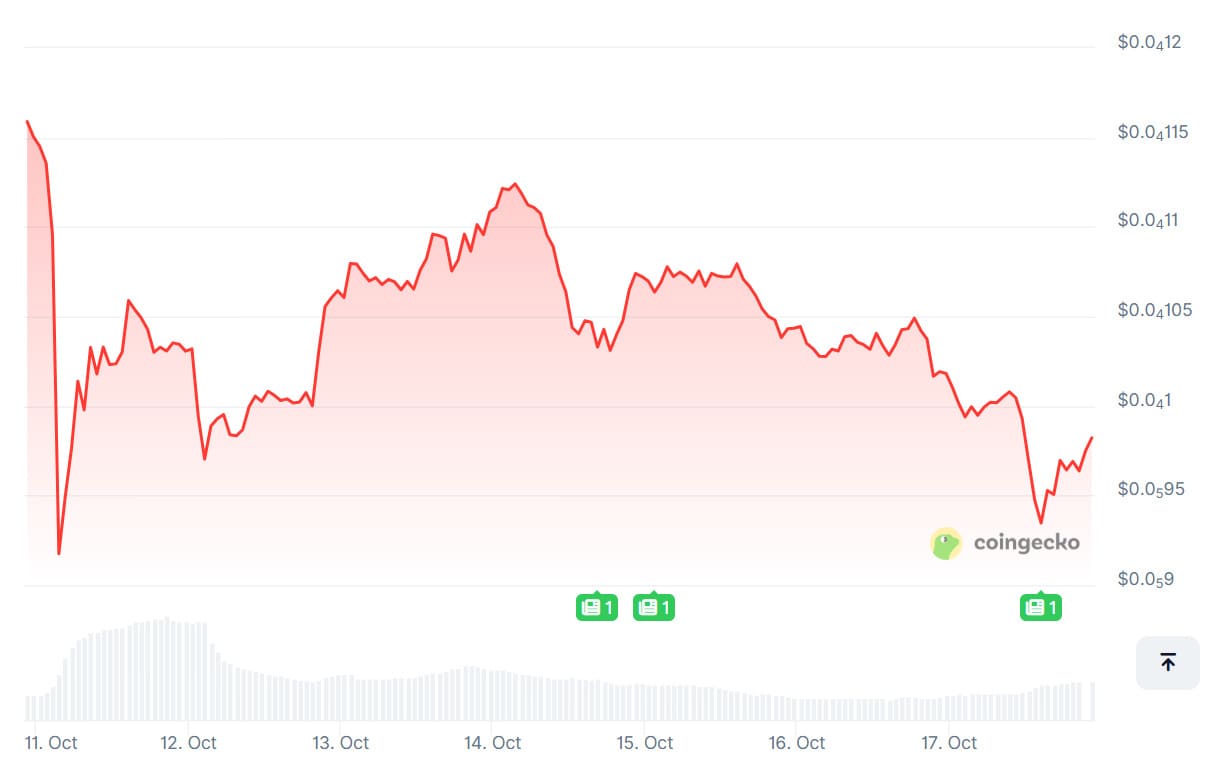
One focus for traders is whether SHIB can hold the $0.0000093 area, which is often cited as support; a sustained hold could set up a retest of nearby resistance levels such as $0.0000105. Any outcome will also depend on broader market conditions and project-specific developments, including activity on Shibarium.
Zcash (ZEC) Price Outlook: Balancing Correction and Uncertainty
The Zcash (ZEC) price outlook reflects a market trying to find balance after a pullback. The text cites ZEC trading near $213 after a recent high around $226, with support discussed in the $200–225 area. It also notes mixed technical indicators and declining futures open interest, which can reflect reduced risk appetite. Any referenced resistance levels (such as $278) are speculative and can be invalidated quickly by new market information.
The article also cites third-party price forecasts from sources such as CoinCodex and DigitalCoinPrice, which it says project a wide range (for example, $275 to $388 by late 2025) if sentiment improves. Such projections are inherently uncertain and should not be treated as expected outcomes. Separately, Zcash’s privacy-focused design and selective disclosure features remain the core technical narrative that some developers and long-term holders cite as reasons for interest.
Summary
The SHIB and ZEC sections highlight how quickly sentiment can shift around key support and resistance zones. BlockDAG’s update, as described by the project, focuses on token-sale participation mechanics and a ranked distribution queue tied to its planned TGE.
Project website (for reference): https://blockdag.network
Telegram: https://t.me/blockDAGnetworkOfficial
This article is for informational purposes only and does not constitute financial or investment advice. This outlet is not affiliated with the project mentioned.

