TL;DR:
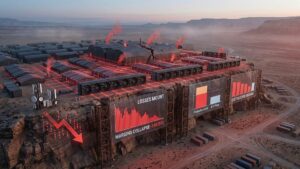
- Fourteen mining companies plan to triple their current capacity through massive data infrastructure for AI.
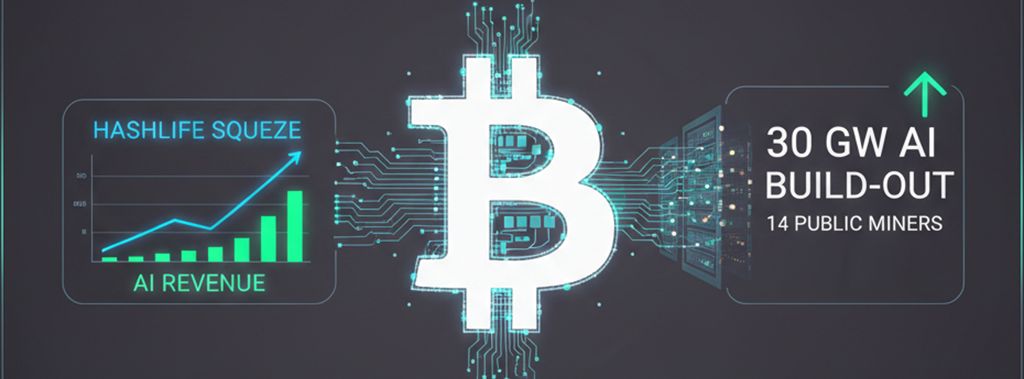
- The industry currently has 11 operational gigawatts but projects an additional 30 gigawatts in early-stage development.
- The transition from ASICs to GPUs for data centers represents an unprecedented operational and financial challenge.
The mining industry is rapidly evolving toward a new business model based on data processing. Currently, the Bitcoin miners’ AI infrastructure is emerging as a lifeline in the face of falling hashprices and pressure from capital markets.
Data compiled by TheEnergyMag indicates that 14 of the most prominent public mining companies are developing projects totaling 30 gigawatts of capacity. This volume, equivalent to the energy consumption of a small country, seeks to transform mining farms into enterprise-grade data centers.
It is worth noting that a significant gap exists between the 11 gigawatts currently in operation and the proposed future expansions. The success of this move will depend not only on equipment efficiency but also on who manages to secure power and financing most agilely.
Operational Challenges and Risks of the Technological Transition
The pivot toward AI involves returning to the use of GPUs, leaving behind ASIC chips specialized in Bitcoin. However, diversifying into AI “colocation” carries much more complex commercial risks than simple cryptocurrency production.
Unlike traditional mining, where power translates directly into assets, the AI business depends on sales execution and product-market fit. For this reason, many analysts fear that megawatt projections may be more of a market narrative than an immediate technical reality.
In summary, in this scenario, the true winners will be the companies that successfully convert their planned capacity into contracted revenue. The energy arms race in the AI era will mark the next cycle of maturity for mining companies worldwide.