TL;DR
- Armstrong corrected François Villeroy de Galhau at Davos, saying Bitcoin is decentralized and has no issuer after a “private issuers” remark.
- He argued Bitcoin versus fiat is healthy competition that checks deficit spending, citing fixed supply and flight to Bitcoin in uncertainty like gold.
- Armstrong said he came to push a U.S. market structure bill after Coinbase withdrew support for a Senate proposal and expects updated revisions within weeks.
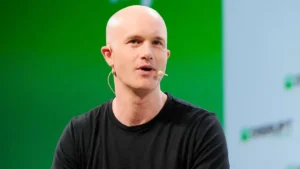
Coinbase CEO Brian Armstrong pushed back on Bank of France governor François Villeroy de Galhau during a World Economic Forum panel in Davos on January 21 after the central banker referred to Bitcoin’s “private issuers.” A single phrase about issuance unexpectedly became a proxy fight over who deserves monetary trust. Villeroy de Galhau said he trusts central banks with mandates more than “private issuers of Bitcoin.” Armstrong answered that Bitcoin is a decentralized protocol with no issuer at all, and he said it is even more independent than central banks because no country, company, or individual controls it anywhere in the world. The exchange unfolded in a tokenization focused session, and a video clip circulated on X via Cointelegraph’s Gareth Jenkinson.
JUST IN: @brian_armstrong challenges France central bank governor on Bitcoin at World Economic Forum in Davos 🔥
François Villeroy de Galhau says "I trust more independent central banks with a democratic mandate than private issuers of Bitcoin".
Armstrong hits back: "Bitcoin… pic.twitter.com/pZXXveSVGe
— Gareth Jenkinson (@gazza_jenks) January 21, 2026
Trust, issuance, and Davos
Armstrong used the moment to argue that Bitcoin’s relationship with government issued money is healthy competition, not just ideological theater. He positioned the choice between Bitcoin and fiat as a practical accountability mechanism for deficit spending. He added that Bitcoin has no money printer and a fixed supply, and said people move toward it during uncertainty much as they historically turned to gold. He argued that people can decide which system they trust more, making overspending harder to ignore in practice. Villeroy de Galhau countered that the guarantee for trust comes from central bank independence combined with accountability to citizens. Ripple CEO Brad Garlinghouse later described the panel as “spirited dialogue,” while stressing agreement that innovation and regulation are not opposites.

Beyond the sound bite, Armstrong tied the Davos appearance to a policy and market structure agenda. He said he came to meet bank leaders and policymakers to advance a U.S. crypto market structure bill. Those meetings followed Coinbase’s January 14 move to withdraw support from a Senate crypto regulation bill, citing concerns about rules that would limit interest payments. He linked tokenization to broader access in markets. Armstrong also said digital versions of real world assets could expand access to investment products for billions of adults worldwide. He indicated the White House has been cooperative and that a revised version of the legislation could emerge within weeks. The full panel discussion is available on the World Economic Forum’s official channel.