

In 2025, Bitcoin and Ethereum have continued to see significant price swings, and uncertainty in trading has led some market participants to look at alternatives such as cloud mining services. Cloud mining typically refers to renting computing power from third-party providers rather than operating mining equipment directly. These services can carry operational, counterparty, and market risks, and outcomes vary by provider and contract terms.
Cloud mining providers generally offer contracts that describe a hashrate allocation, a duration, fees, and a payout schedule. Whether a contract is economical depends on factors such as network difficulty, asset price, fees, downtime, and the provider’s ability to deliver the advertised computing power.
Below is an overview of six services that are frequently discussed in the cloud mining market. This article does not rank platforms by performance, and readers should independently verify claims made by any provider.
1. AIXA Miner – Overview
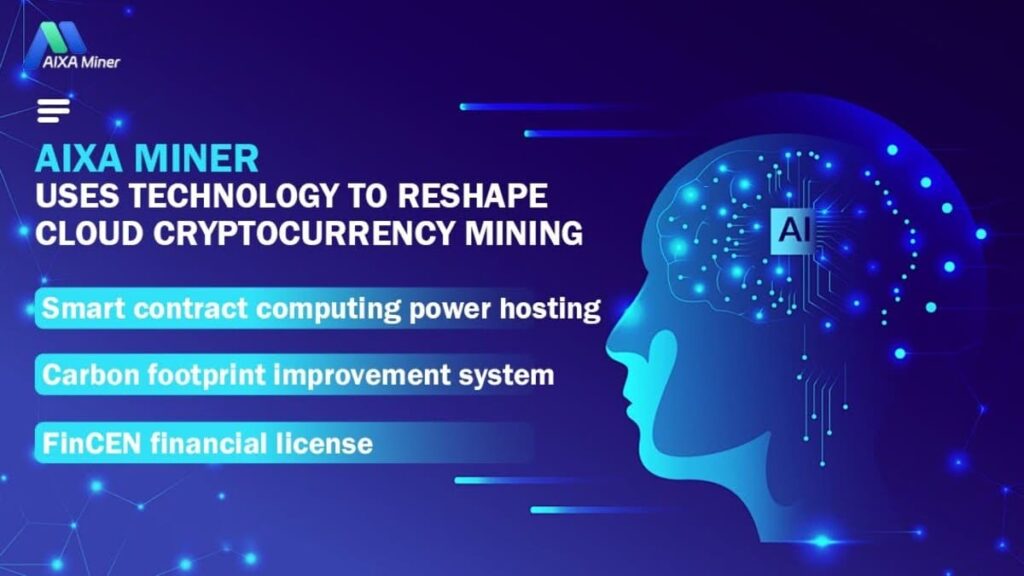
Created in 2020, AIXA Miner describes itself as a cloud mining provider with operations and customers in multiple regions. The company states that it is based in the United States and that it is registered with the Financial Crimes Enforcement Network (FinCEN); these claims should be independently checked using official sources. The project also promotes sustainability initiatives and a broad data-center footprint; as with any provider, specifics may change over time and may not be independently audited.
What the company highlights:
- Contract options marketed as starting around $20, with higher tiers also advertised.
- A stated payout schedule that may be described as “daily” in project materials; payouts, if any, can vary and are not guaranteed.
- Customer support availability promoted by the company.
Illustration of contract terms (project-reported)
| Contract Name | Contract Amount (USD) | Duration (Days) | Daily Earnings (USD) | Total Earnings (USD) | Daily Rate |
| LTC Free Experience Miner | $20 | 1Day | — | — | — |
| DOGE Beginner Experience Miner | $100 | 2Day | — | — | — |
| DOGE Miner DG Hydro 1 | $1100 | 10Days | — | — | — |
| BTC Miner M60S++ | $7000 | 18Days | — | — | — |
| BTC Miner M66S++ | $30,000 | 22Days | — | — | — |
| BTC Miner ANTSPACE MD5 | $100000 | 26Days | — | — | — |
| ANTSPACE MD5-Bonus $130000 | $650000 | 16Days | — | — | — |
As with any cloud mining service, advertised terms and results should be treated as provider-reported and subject to change. Prospective users typically review fee schedules, withdrawal terms, downtime history, and independent reputational signals before engaging.
2. Genesis Mining – One of the Oldest Names in the Industry
Genesis Mining has operated in the cloud mining sector since 2013, making it one of the longer-running brands in the space.
Commonly cited characteristics:
- A longer operating history relative to many newer providers.
- Support for multiple cryptocurrencies (availability may vary).
- A user interface aimed at accessibility.
Potential considerations:
- Contract availability and terms may be limited or change over time.
- Hardware, fees, and transparency are factors users often assess across providers.
As with similar services, independent verification of operational claims and careful review of contract terms are important.
3. NiceHash – Cloud Mining Meets Marketplace
NiceHash operates as a marketplace where users can buy or sell hashing power, rather than a single-provider contract model.
Pros of NiceHash:
- Flexibility to purchase hashing power on-demand.
- Market-based pricing that can change in real time.
- Support for multiple assets and algorithms (depending on listings).
Cons :
- Effective use may require more technical familiarity with mining and marketplace dynamics.
- Costs and outcomes can vary with demand, network conditions, and fees.
Because it functions as a marketplace, users typically consider counterparty risk and liquidity conditions alongside mining fundamentals.
4. CudoMiner – Mining Optimized by Software
CudoMiner is primarily positioned as mining software that can manage mining on a user’s own hardware, with automated switching features described by the project.
Pros of CudoMiner:
- Automation features designed to optimize which asset is mined (as described by the software).
- Support for multiple cryptocurrencies.
- A workflow that may be simpler for some GPU users than manual setups.
Cons:
- It typically requires the user to operate and maintain their own hardware.
- Results depend on electricity costs, hardware performance, and market conditions.
- It is not the same as a fully hosted cloud contract model.
Users generally compare software-based mining to hosted services based on operational control, costs, and the ability to manage hardware.
5. Eobot – A Long-Term Mining Service
Eobot launched in 2013 and has been associated with cloud mining and related features such as faucets, depending on the product offering at a given time.
Pros of Eobot:
- A user interface often described as accessible for new users.
- A longer presence in the sector relative to many newer services.
- Compatibility with multiple digital assets (which can change over time).
Cons:
- The platform’s design and feature set may feel dated to some users.
- Economics depend on contract fees and market conditions, which can limit viability.
- Scaling options and transparency are considerations users may evaluate.
As with other providers, contract clarity, fee disclosures, and withdrawal conditions are key points to review.
6. BitMiner – Popular but Lack of Trust Service.
BitMiner has been promoted online for offering trial access alongside paid contracts. Availability and terms may vary, and users typically evaluate reputation signals carefully before engaging with lesser-known providers.
Pros of BitMiner:
- Trial access is marketed as a way to test the service.
- Withdrawals and processing times depend on the provider’s rules and conditions.
- Support for several coins may be offered.
Cons:
- Transparency around operations is a common concern raised by users when evaluating some providers.
- Outcomes can be inconsistent and depend on market conditions, fees, and service uptime.
- Suitability for larger-scale users, if relevant, depends on liquidity, limits, and contract structure.
For any platform, it is prudent to verify identity, contractual enforceability, and withdrawal track record before committing funds.
Final Verdict – How to Compare Cloud Mining Platforms in 2025
Cloud mining services differ in model (hosted contracts vs. marketplaces vs. user-run software), fee structures, transparency, and operational risk. Rather than relying on marketing claims, readers commonly compare providers using factors such as clear disclosure of fees, the ability to verify hashrate delivery, contractual terms, custody and withdrawal rules, customer support responsiveness, and third-party reputation signals.
This article is for informational purposes only and does not constitute financial or investment advice. This outlet is not affiliated with the project mentioned.
This article provides information about cloud mining services or staking platforms. Crypto Economy is not affiliated with any of the platforms mentioned. We recommend that our readers conduct thorough research before using any service, as these types of products may involve certain risks associated with the crypto sector. This content is for informational purposes only and should not be interpreted as investment advice.

