The crypto token-sale landscape in 2025 is more competitive than ever. Among early-stage fundraising projects, a few stand out for stated use cases, technical goals, and publicly shared progress. Nexchain, BlockDAG, and WeWake each approach blockchain development differently, targeting different user needs.
From AI-focused infrastructure to accessible web3 crypto presale-related tools, these initiatives describe plans to create utility beyond short-term trading narratives. Early-stage token-sale participation can involve higher risk and limited information, so readers may want to review project documentation and on-chain or product evidence where available.
The projects below are presented for informational context, not as endorsements or recommendations.
Nexchain – AI-Powered Blockchain for Real Utility
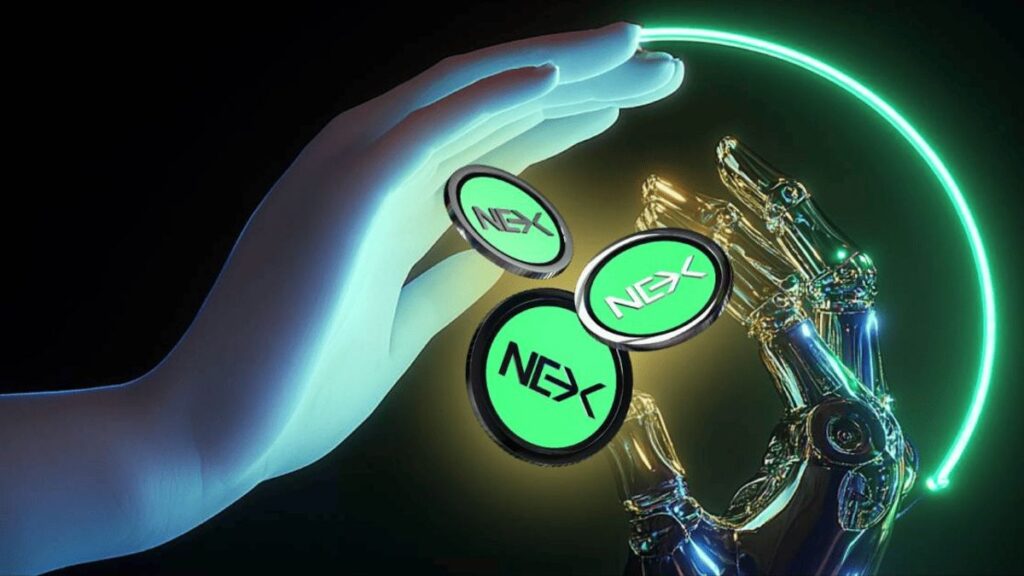
Nexchain describes itself as a blockchain ecosystem driven by AI, with goals that include improving transaction throughput, scalability, and automation. The project says its token sale is structured in stages, with price changes tied to internal fundraising milestones.
In finance-related use cases, the project states its architecture can support fraud detection, credit analysis, and algorithmic trading using automated models.
According to the project, an airdrop campaign concluded on July 14th, and its testnet went live on August 11th, allowing users to trial features in a test environment.
The project reports throughput of up to 400,000 TPS, using AI optimization and parallel processing. It also describes a hybrid consensus design that combines Proof-of-Stake with adaptive AI to balance performance and decentralization.
Nexchain also reports low transaction fees (for example, $0.001 per transaction) and has published stage-based pricing and fundraising figures (including a stated Stage 25 price of $0.10 per NEX and $8.58M raised out of a $9.2M target). These figures are project-reported and may change.
BlockDAG – Token sale alongside a working platform
BlockDAG has promoted a demo trading platform ahead of a mainnet release. This setup may allow prospective users to test elements of its Layer 1 network before launch, depending on availability and feature scope.
The project reports $371 million raised and 25 billion BDAG coins sold. It also states that more than 2.5 million people use its X1 app and that its community includes more than 200,000 holders. The token sale is described as Batch 29, with BDAG priced at $0.0276 at the time of the project’s update.
As with any early-stage crypto project, readers may want to distinguish between product demonstrations, full network functionality, and independently verifiable adoption metrics.
WeWake – Simplifying Web3 Access
WeWake describes itself as a walletless and gasless Layer 2 network aimed at mainstream onboarding. The project says users can log in through Google, Apple, or Telegram without managing seed phrases.
According to the project, the network covers transaction gas fees, enabling access to NFTs, tokens, and swaps without separate gas payments. As with similar claims, the practical experience may depend on network conditions and how the system is implemented.
The project reports $670K raised in its token sale. Readers may wish to review the token distribution, fees, and any restrictions or eligibility requirements disclosed by the team.
Closing Thoughts
Nexchain, BlockDAG, and WeWake each outline different approaches to blockchain development. Nexchain emphasizes AI integration and throughput targets, BlockDAG highlights early product demonstrations, and WeWake focuses on simplifying onboarding for new users.
These examples illustrate how early-stage token projects may pair technical roadmaps with product updates. However, fundraising-stage tokens can involve significant uncertainty, and milestones, pricing, and timelines may change.
This article is for informational purposes only and does not constitute financial or investment advice. This outlet is not affiliated with the project mentioned.
This article contains information about a token sale. Crypto Economy is not associated with the project. As with any initiative within the crypto ecosystem, readers are encouraged to do their own research before participating and to consider the risks involved.