The crypto market waits. Bitcoin dominance holds above 60 percent in late May 2026. A handful of altcoins pump on isolated narratives, but a broad, sustained altcoin season remains absent. Data from on-chain metrics, trading volumes, and macro indicators reveal a market in transition.
Traders do not ask whether altcoins will eventually rally; they ask what needs to change first. A genuine rotation of capital demands a series of structural shifts. Here are the seven conditions that must align before money flows decisively into the altcoin market.
Bitcoin Dominance Must Crumble
Bitcoin dominance controls the distribution of speculative capital across crypto. The metric trades between 56 and 62 percent throughout most of 2026, buoyed by spot ETF inflows and institutional accumulation. In late May, dominance still sits above 60 percent. For altcoins to capture meaningful liquidity, this fortress must crack.
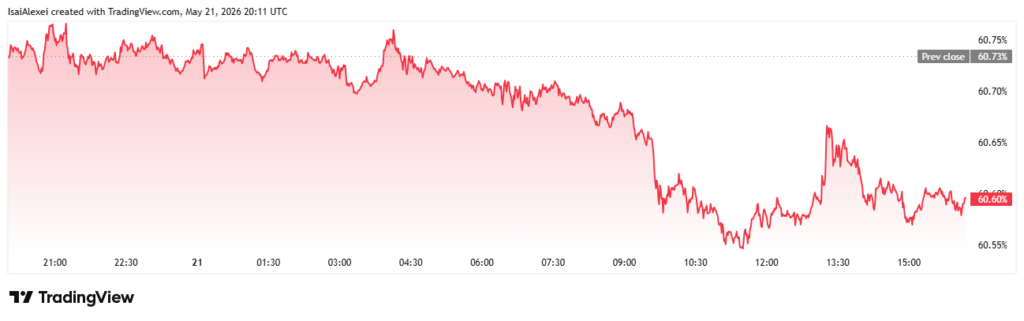
Analysts monitor two specific levels. The first signal arrives when Bitcoin dominance drops below 59.63 percent. A more definitive rotation requires a breakdown below 52 percent. Technical signals support the possibility of a shift. The dominance chart prints a bearish MACD crossover in May 2026, which indicates fading upside momentum.
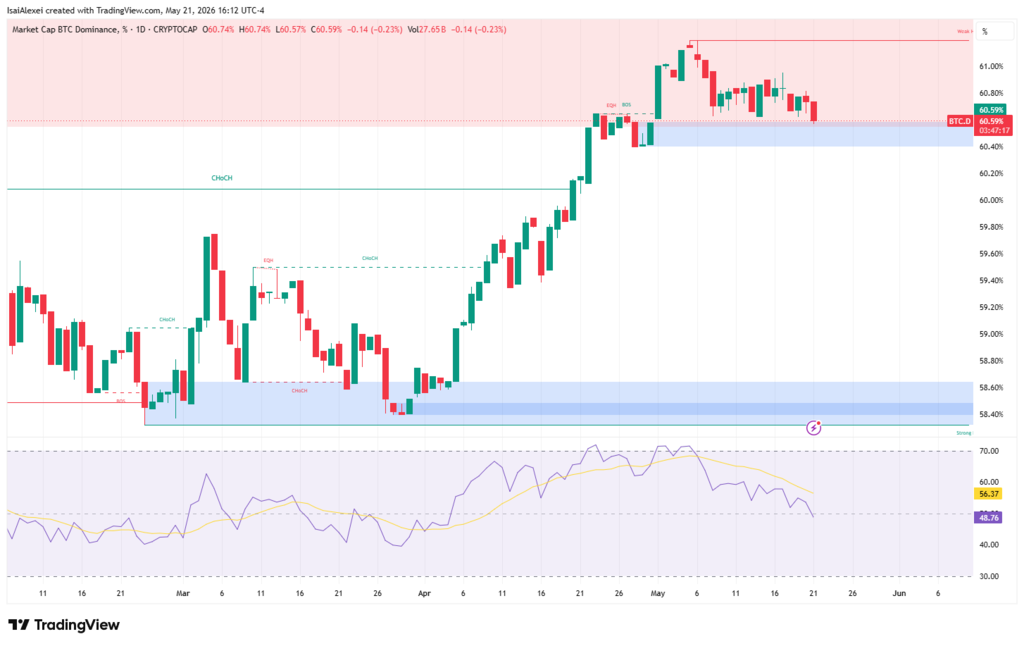
Traders watch this development closely. A sustained decline in Bitcoin dominance opens the door, but the door does not swing wide until the 52 percent floor breaks.
The Altcoin Season Index Must Climb Past 75
Blockchain centers track altcoin performance through the Altcoin Season Index. This gauge measures whether the top 100 coins outperform Bitcoin over a rolling 90-day period. Right now, the index bounces between 27 and 50. That range signals a market still leaning heavily toward Bitcoin.
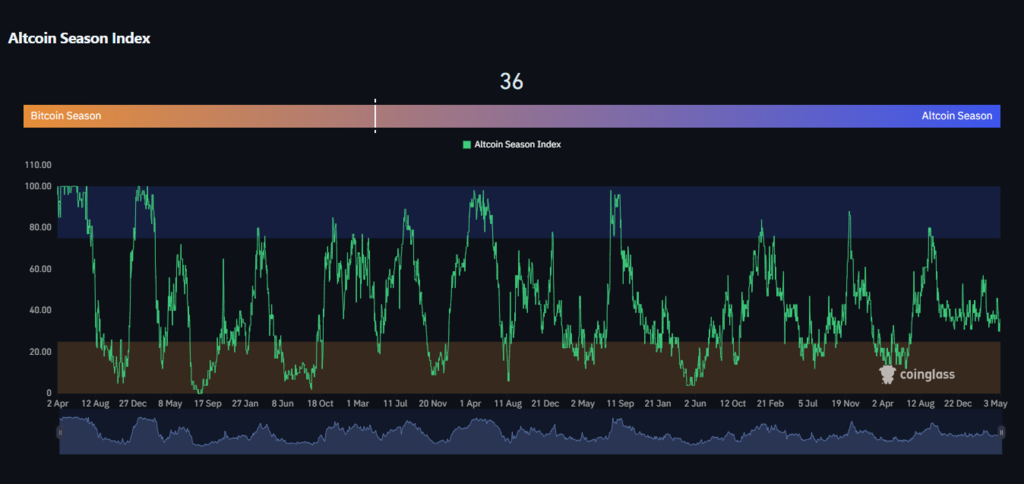
The official declaration of an altcoin season requires the index to cross 75. A brief spike to 100 in March offered a false start. Since then, the reading has pulled back, and the market remains in a transitional phase. The index must break higher and hold above the threshold to confirm a durable rotation. Until that happens, any altcoin strength remains local and narrative-dependent rather than systemic.
Stablecoin Dry Powder Must Rotate
Capital sits on the sidelines, and the pile is enormous. The total stablecoin market capitalization reached a record $320 billion in March 2026. This mountain of dry powder represents potential fuel for an altcoin rally. But potential does not equal action. The money must move.
A key rotation signal triggered in May. The 30-day moving average for altcoin trading volume crossed above the 365-day moving average. This crossover indicates that volume momentum is building. However, stablecoin reserves on exchanges still need to decline, and altcoin pair volume must expand further. When traders deploy those billions from stablecoins into altcoins, order books deepen, and prices respond. The market awaits that deployment.
Bitcoin Must Consolidate While Altcoins Recover
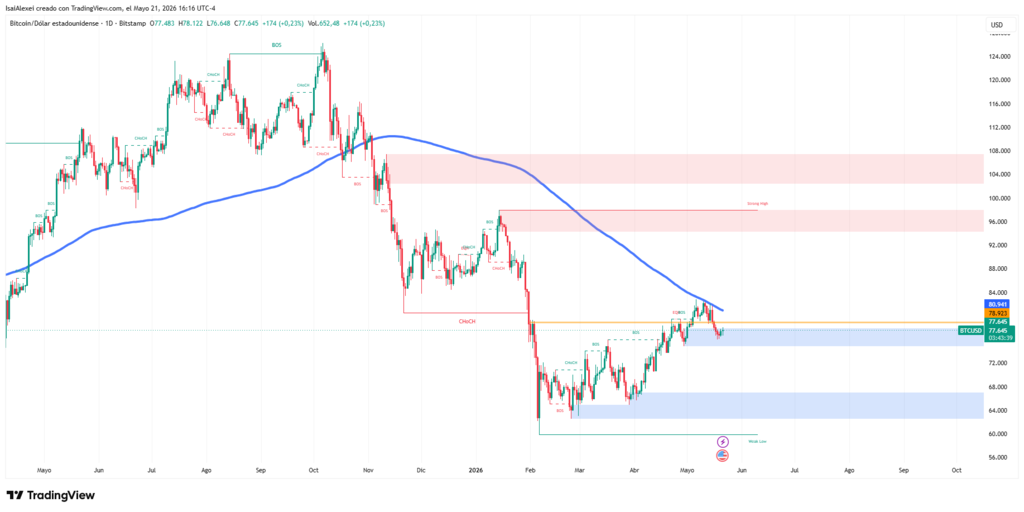
Bitcoin price action sets the rhythm for the entire market. In late May 2026, Bitcoin trades in a narrow consolidation range between $78,000 and $82,000. Range-bound Bitcoin creates a classic backdrop for capital rotation. When the dominant asset stops trending, traders search for higher returns elsewhere.
Bitcoin network activity shows lower transaction counts and subdued fee generation. At the same time, early recovery signals flicker among altcoins. On Binance, about 21 percent of altcoins have climbed back above their 200-day moving average.
That level marks the highest reading since September 2025. The number is still modest, but the trend points upward. A broad altcoin season needs this quiet recovery to accelerate while Bitcoin grinds sideways.
Macro Conditions Must Turn Supportive
Crypto markets do not operate in a vacuum. Risk assets like altcoins depend heavily on the macroeconomic environment. The Federal Reserve holds interest rates steady at 3.50 to 3.75 percent. This stance keeps capital cautious. A genuine risk-on shift demands either rate cuts or clear dovish guidance from the central bank.
The ISM Manufacturing PMI has printed above 50 for two consecutive months, which signals an expanding economy. Historically, crypto markets perform well during expansionary phases. In addition, the confirmation of a relatively crypto-friendly Federal Reserve chair on May 13, 2026, removes a layer of policy uncertainty. Yet traders still need the Fed to pivot. Without easier monetary conditions, the macro backdrop restrains the appetite for speculative altcoin positions.
Regulatory Clarity Must Unlock Institutional Capital
Ambiguity around token classification remains a barrier for institutional money. While spot Bitcoin ETFs have absorbed billions, altcoin markets still lack a clear legal framework. The market needs legislative progress to unlock the next wave of capital.
The proposed CLARITY Act offers a path forward. The bill classifies certain digital tokens as commodities, which would place them under the purview of the Commodity Futures Trading Commission rather than the Securities and Exchange Commission. Passage of this legislation triggers a new wave of institutional demand for top-tier altcoins.
Early 2026 already delivered precedents: regulators approved spot ETFs for XRP and Litecoin. Those approvals demonstrate that the door opens when rules become clear. The broader altcoin market now waits for comprehensive legislation.
Strong Narratives and Fundamental Catalysts Must Lead
The days of an “everything rally” are over. The 2026 market rewards projects with real utility and strong tokenomics. Capital rotates into specific sectors that carry clear narratives and tangible catalysts.
Artificial intelligence and blockchain convergence protocols continue to draw developer activity and venture funding. Real World Asset (RWA) tokenization brings traditional financial instruments on-chain, connecting crypto with trillions in off-chain value. Decentralized Physical Infrastructure Networks (DePIN) offer a new model for building and operating hardware networks.
Ethereum adds a critical catalyst of its own. The recent Glamsterdam upgrade drastically reduces fees on Layer-2 networks. Lower costs make DeFi applications, gaming platforms, and social protocols more accessible.
A healthy Ethereum ecosystem often acts as a launchpad for altcoin activity. The market now waits to see whether these narratives attract sustainable capital inflows rather than short-lived speculation.
Caution: Selectivity, Tokenomics, and Macro Risks
Even if the seven conditions align, the 2026 altcoin season differs sharply from 2017 or 2021. The market has matured. Institutional capital and smart money analyze fundamentals with discipline. Broad indiscriminate pumps are unlikely.
Investors favor projects with genuine product-market fit, active developer communities, and sustainable revenue models. Tokenomics matter more than ever. High inflation, low float, and looming unlocks from early investors suppress price performance, even in a bullish environment. A strong narrative alone does not guarantee returns if the supply dynamics work against holders.
Geopolitical tensions simmer in multiple regions. The Federal Reserve remains vigilant on inflation. Any shock that tightens financial conditions reverses the rotation and sends capital back to Bitcoin or stablecoins. The market trades in a delicate balance, and traders manage risk with clear eyes.
The Market Waits for Confirmation
Early signals flicker across multiple indicators. Bitcoin dominance shows technical cracks. Stablecoin reserves sit at record highs. Altcoin volume momentum turns positive. But confirmation remains absent. The Altcoin Season Index has not yet crossed 75. Bitcoin dominance still holds above 60 percent. Stablecoin capital has not yet rotated at scale.
They watch the dominance chart for a breakdown, the index for a breakout, and the macro calendar for a dovish shift. The conditions for an altcoin season are clear, measurable, and within reach. When these seven pieces snap into place, the market will not guess at the start of the rotation—it will see it confirmed. Until that moment, capital waits, and the data tells the story in real time.