TL;DR:
- Dunamu, operator of South Korea’s top exchange Upbit, warns of a trading volume drain toward offshore platforms due to regulatory delays.
- The Financial Supervisory Service (FSS) proposes adapting electronic payment laws to won-denominated stablecoins amid the lack of specific legislation.
- The Financial Services Commission (FSC) plans to permit the trading of tokenized assets starting February 4, 2027.
Operational pressure is mounting for South Korea’s top crypto exchange due to regulatory roadblocks affecting the development of digital asset markets in the Asian country. During a cryptocurrency policy conference in Seoul, Kim Hyung-nyeon, co-founder of Dunamu—the parent company of Upbit—expressed concern over local regulatory lag. Furthermore, it was noted at the event that this regulatory stagnation is causing investors to seek alternatives on international platforms.
The regulatory situation in the Asian nation keeps domestic trading of tokenized stocks on hold, a sector experiencing full expansion globally. Presented data indicates that local operators and major platforms are prevented from offering exposure to tokenized versions of high-capitalization South Korean companies, such as Hyundai Motor, Kakao, Naver, Samsung Electronics, and SK Hynix.
Faced with the lack of an agile internal regulatory framework, investors interested in these financial instruments choose to use offshore exchanges. These foreign platforms are already actively trading tokenized versions of major South Korean stocks, representing a direct outflow of transaction volume outside national territory and reducing the competitiveness of the local industry.

Regulatory Advances and Adaptation of Payment Laws
In parallel with Dunamu’s statements, South Korean financial authorities announced measures to mitigate the legal loophole. Shim Eun-seop, head of the electronic financial inspection office at the Financial Supervisory Service (FSS), stated in the same forum that stablecoins intended for payments in the country must temporarily comply with the existing Electronic Financial Transactions Act.
This provisional proposal arises because the Basic Digital Asset Act, originally designed to regulate these instruments, remains unapproved in parliament. The absence of such specific legislation has forced regulators to adapt prior regulations to supervise the won-denominated stablecoin payment ecosystem.
Legislative Outlook and Official Deadlines
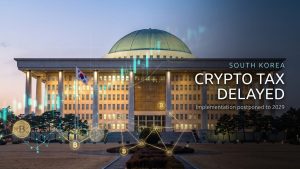
South Korean lawmakers have expressed their intention to accelerate the processing of pending bills. Yoo Dong-su, chairman of the Political Affairs Committee, and Min Byung-duk, a Democratic Party lawmaker, expressed their political will to submit the Basic Digital Asset Act bill to a vote as soon as it is presented by the government. Lawmaker Min Byung-duk set a target commitment toward January 18 for the parliamentary vote.
Meanwhile, the Financial Services Commission (FSC) is drafting its own regulations to permit the formal trading of tokenized stocks, bonds, and funds within the country starting February 4, 2027. The regulatory agency will keep the public comment period open for this regulatory proposal until November 11.