TL;DR:
- MoonPay enabled its PayBox solution on xAI’s Grok assistant on August 31, 2026, marking its third deployment following ChatGPT and Claude.
- The tool supports transactions on Solana and EVM networks including Ethereum, Base, Polygon, Arbitrum, and Hyperliquid under the open x402 standard.
- The infrastructure splits cryptographic keys using multi-party computation (MPC) and trusted execution environments (TEE) developed by Sodot.
MoonPay reported this Monday that expands PayBox to Grok. The goal is to allow xAI’s chatbot to prepare and execute transactions involving cryptocurrencies and fiat currency under user authorization.
every @grok user now has the power to trade, shop, and spend by having a conversation
welcome to PayBox, the payment vault and non-custodial wallet that lets AI Agents securely transact on @solana, onchain, and across the open internet pic.twitter.com/2aIR5NGty1
— MoonPay 🟣 (@moonpay) August 31, 2026
The technical integration operates as a self-custodial vault positioned between the artificial intelligence model and user assets. Rather than granting full private keys to the software, the system generates transaction drafts within the conversation flow. According to the market report, this design aims to mitigate vulnerabilities associated with credential exposure in conversational interfaces.
Users can configure operations under two control modes: “Always Ask” and “Autonomous”. Under the first option, every individual transaction requires mandatory signing via an immediately expiring biometric passkey. In the second, the assistant holds authorization to operate independently within predefined spending limits. Data from the technical documentation indicates that modifying these financial caps requires fresh human validation using a passkey.

Technical Architecture and Multichain Compatibility
PayBox’s security is backed by technology from Sodot, a threshold cryptography firm acquired by MoonPay in early 2026. The framework shards private keys across isolated secure hardware enclaves. According to company specifications, neither MoonPay nor the large language models have access to the complete signature keys. The company reports that this architecture secures over $50 billion in assets across 10 million wallets.
In terms of blockchain connectivity, PayBox operates across the Solana network and multiple environments compatible with the Ethereum Virtual Machine (EVM), including Base, Arbitrum, Polygon, Hyperliquid, Tempo, and Robinhood Chain. For agent-to-agent transfers and settlements, the tool implements the x402 standard. Additionally, credit or debit card payments are routed through Visa’s agentic commerce protocol, preventing the AI agent from storing bank card numbers.
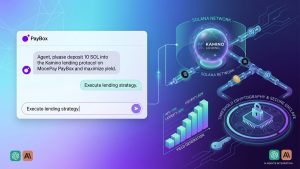
Within the DeFi ecosystem, eligible users on Solana can interact with liquidity protocols like Kamino to allocate USDC deposits. Industry analyses suggest that agentic interaction in decentralized finance could reduce execution friction for retail users. However, reports caution that market risks and the irreversibility of on-chain transactions remain factors if an agent executes a suboptimal order within authorized limits.
At a corporate level, MoonPay serves more than 30 million customers across 180 countries and holds licenses including the New York BitLicense alongside regulatory authorizations under the MiCA framework in the European Union.
The company will present updated volume metrics and agentic use cases during the upcoming cycle of institutional payment conferences in September 2026.