TL;DR:
- Withdrawal in Greece: The platform canceled its application with the Hellenic Capital Market Commission before receiving a formal ruling.
- Compliance deadline: Cryptocurrency firms had until late June 2026 to secure a valid license under the European framework.
- Global infrastructure: The operator maintains a deployed global team of 1,500 professionals dedicated exclusively to the regulatory compliance department.
Binance confirmed its intention to maintain its operations within the European Union despite having withdrawn its application to obtain an official license in Greece. The decision introduces a complex scenario for the company ahead of the closing of the transition period for the Markets in Crypto-Assets (MiCA) regulation.
New routes toward European harmonization
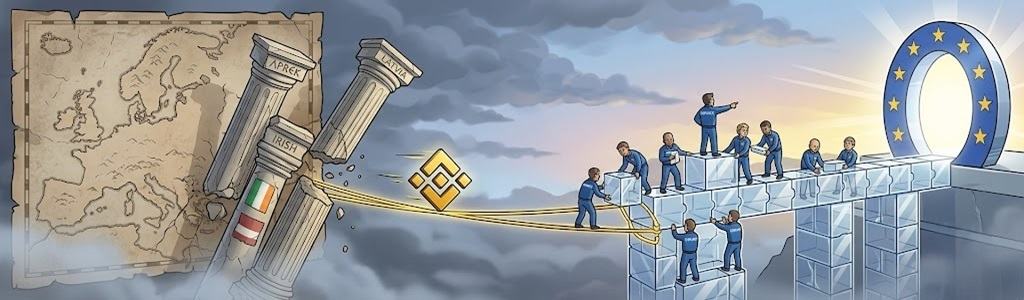
Gillian Lynch, the firm’s director for Europe and the United Kingdom, stated to Reuters that the organization is not considering leaving the European market and is already evaluating different alternative jurisdictions. Data from the corporation suggest that regulatory channels in other member states are being explored to ensure the continuity of its services.
The change in strategy occurs following reports indicating a possible denial of the permit by the Hellenic Capital Market Commission. According to industry sources, local authorities in Greece, Ireland, and Latvia expressed reservations due to the company’s previous sanctions and its international corporate structure.
Faced with these allegations, the company’s management clarified that they did not receive an official justification regarding a dismissal. The legal representation of the entity defends that recent investments in internal controls would nullify any pending technical conflict in the evaluation files.
The impact on Eurozone users
The MiCA regulation allows companies approved by a single national regulator to operate across the 27 countries of the bloc. By not having this passport before the temporary tolerance framework expires, the company could find itself forced to temporarily restrict the registration of new clients in EU territory.
A report from the European Securities and Markets Authority (ESMA) points out that those firms without a current authorization must proceed to an orderly closure of their activities in the Eurozone. To mitigate this risk, the brand’s spokespersons initiated direct communications via email with their European users to detail contingency plans during this technical adjustment period.
Industry analysts consider that this setback could provide a commercial advantage to direct competitors who have already completed their regularization. Platforms with current licenses in the region present themselves as attractive options for institutional investors who prioritize operational certainty.
The evolution of this process over the coming weeks will determine whether European Union supervisors require a deep restructuring from major global operators before granting them definitive access to the unified financial market.