TL;DR
- Flare and D’CENT launched a new integration that gives hardware wallet users direct access to XRP yield vaults through native XRP Ledger signatures without relying on custodial services.
- The rollout also includes the debut of the XRP Alliance, a coalition formed by Flare, D’CENT, Banxa, Doppler, and Squid to expand XRP’s role in decentralized finance.
- Two institutional-grade vaults are already live, offering yield opportunities while users keep assets secured inside their hardware wallets.
Flare and D’CENT introduced a new integration that connects hardware wallets to XRP yield vaults through native XRP Ledger signatures. The system allows users to access decentralized finance products without using separate wallets, external bridges, or additional gas tokens.
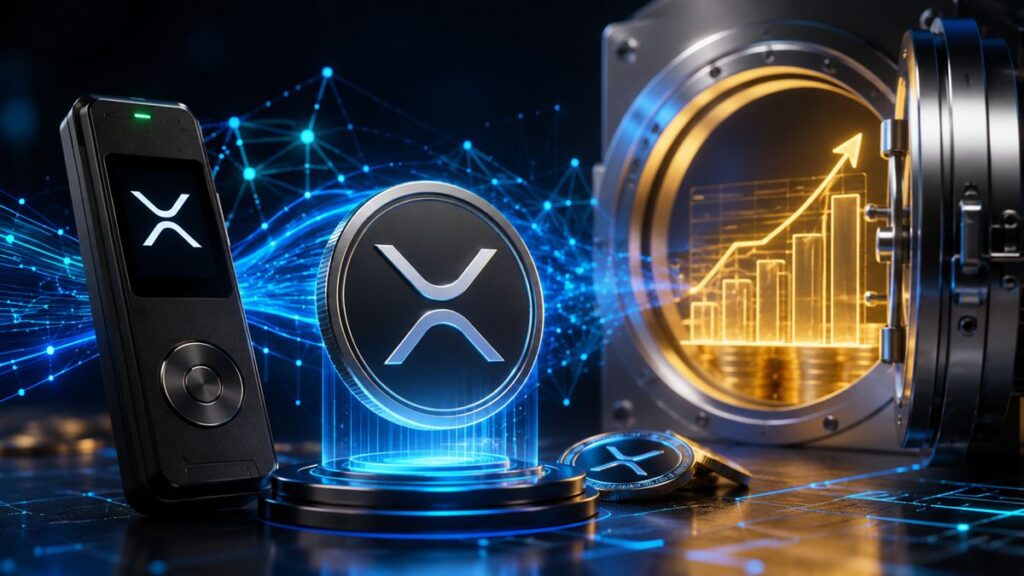
The release gives D’CENT users a non-custodial way to generate yield on XRP while maintaining hardware-level security and direct asset control. The integration arrives as competition among blockchain networks intensifies around tokenized assets and decentralized liquidity infrastructure.
Flare And D’CENT Expand XRP Yield Access
The integration uses a two-signature process executed directly from the D’CENT hardware wallet. The first signature reserves collateral on Flare and selects the destination vault, while the second transfers XRP into the Core Vault on XRPL. That action automatically triggers FXRP minting on Flare before assets move into the selected strategy.
At launch, users can access two vaults. The Monarq vault combines on-chain and off-chain yield strategies and operates under a FalconX-majority-owned asset manager. The second option, earnXRP, is managed by Clearstar and offers another yield-focused product for XRP holders.
Withdrawals follow the same dual-signature structure. Smart contract proxies assigned to each XRPL address manage execution while users continue authorizing transactions directly from their hardware devices.
Hardware wallet integrations are becoming more relevant across crypto markets as users search for yield opportunities without giving custody of funds to centralized exchanges. Demand for self-custody products has increased significantly following several major exchange collapses over the last few years.

XRP Alliance Targets Broader DeFi Utility
The integration launches alongside the XRP Alliance, a coalition formed by Flare with participation from D’CENT, Doppler, Banxa, and Squid. The group plans to expand programmable finance capabilities for XRP through Flare’s FAssets infrastructure and Smart Accounts framework.
Flare positions itself as a programmable layer for XRP, allowing XRP-based assets to interact with decentralized applications while remaining connected to XRP Ledger activity. The structure gives XRP additional utility across lending, payments, and tokenized finance markets without changing XRPL’s base architecture.
XRP remains one of the largest crypto assets by market capitalization despite years of regulatory pressure surrounding Ripple and the token’s legal treatment in the United States.