Wall Street’s largest institutions build the infrastructure for tokenized equities. The market for tokenized stocks expanded from $32 million in January 2025 to over $960 million by January 2026. Ondo Global Markets captured the largest share of the tokenized equity market within 48 hours of its September 2025 launch.
The platform lists more than 260 tokenized U.S. stocks and ETFs. A U.S.-registered broker-dealer holds the underlying securities and backs each token 1:1. Ondo Finance President Ian De Bode projects the tokenized equities market will reach $3 billion before the end of 2026.
Other platforms multiply their assets at a similar pace. Backed Finance’s xStocks product, now operating under Kraken’s ownership, grew its asset base ninefold in five months. Securitize prepares to issue natively tokenized SEC-registered public stocks later in 2026. The total on-chain value of tokenized real-world assets rose an estimated 232 percent across 2025. Equity tokenization now expands nearly thirty times faster than the tokenized Treasury segment.
BlackRock delivered the clearest institutional signal
The asset manager’s tokenized Treasury fund, BUIDL, crossed $1 billion in assets. CEO Larry Fink then declared in his 2025 annual letter that every stock, bond, and fund can move on-chain. BlackRock filed for a second tokenized fund and began exploring the tokenization of its ETF product line.
Goldman Sachs and JPMorgan integrate tokenized assets directly into their portfolios. Institutions now control 70 percent of the asset-tokenization market. Operational efficiency and liquidity drive the allocation, not speculation. A cross-border redemption of tokenized U.S. Treasuries between Ondo, J.P. Morgan, Mastercard, and Ripple settled in under five seconds. Traditional T+2 settlement takes two full business days. The capital efficiency gap widens every quarter.
Regulatory clarity arrived in late 2025
President Trump appointed Paul Atkins as SEC Chair. Atkins launched a dedicated Crypto Initiative and stated that most crypto tokens do not qualify as securities. The SEC authorized a pilot program for tokenized securities trading. The program grants a three-year waiver from certain federal securities laws for transfers of tokenized assets to registered wallets.
The agency also required distinct ISINs for third-party tokenized securities to prevent investor confusion and mandated that broker-dealers retain exclusive control over the private keys securing tokenized assets. Nasdaq proposed rule changes that enable tokenized securities trading on its platform with T+1 settlement through the Depository Trust Company. The SEC’s pilot program, ISIN mandate, and Nasdaq’s rule proposal construct the compliance framework institutions demand before committing serious capital.
The value proposition goes far beyond simple access to U.S. stocks
Tokenized equities allow native fractional ownership. An investor in a market with limited brokerage infrastructure can purchase a fraction of an S&P 500 company using a blockchain wallet. Coinbase CEO Brian Armstrong emphasized that tokenized stocks open global exposure for millions of people who lack traditional brokerage accounts. A World Economic Forum report from 2024 estimated that asset tokenization could bring trillions in previously illiquid assets into active circulation and extend financial inclusion to underbanked populations worldwide.
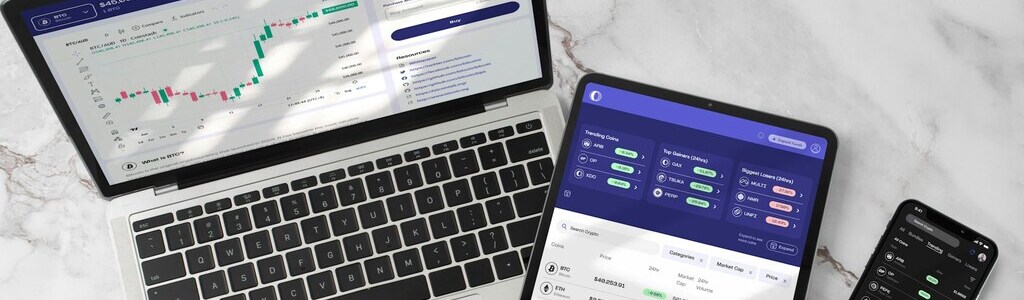
Continuous trading represents another fundamental shift. Traditional equity markets close overnight and on weekends. Tokenized stocks trade 24 hours a day, seven days a week. Near-instant settlement replaces the delayed clearing process. Smart contracts embedded in the tokens enable automated corporate actions, conditional transfers, and programmable governance mechanisms tied to on-chain verifiable criteria like holding duration.
DeFi protocols incorporate tokenized stocks as collateral for lending, borrowing, and yield strategies. The programmability layer creates capital markets that bypass legacy custodians and clearinghouses.
The World Federation of Exchanges, which represents the world’s largest stock exchanges, calls on regulators to restrict tokenized equities. The WFE argues that tokenized stocks mimic real shares without offering equivalent investor rights or safeguards.
The federation warns that the underlying companies could suffer reputational harm if tokenized versions fail or if investors misunderstand the nature of what they hold. IOSCO, the global securities watchdog, identifies new counterparty risks from token issuers, potential contagion channels from crypto market stress, and vulnerabilities in the blockchain technology stack. A central legal ambiguity persists: investors may not know whether they own the underlying security or only a derivative token referencing it.

Regulatory fragmentation across jurisdictions compounds the challenge. Roughly 30 percent of countries lack clear digital asset regulations. The European Union advances its MiCAR framework, but many emerging markets operate with minimal or no rules for tokenized assets. The patchwork delays cross-border adoption and creates compliance asymmetries.
IOSCO also notes that actual adoption levels remain limited and that efficiency gains distribute unevenly as the technology continues to integrate with legacy market infrastructure. Custody standards, bankruptcy remoteness, and cross-border enforceability still require resolution before the largest pension funds and sovereign wealth allocators can move.
The growth trajectory points toward a multi-trillion-dollar opportunity. Bitwise analysts project tokenization will capture between one and five percent of the $257 trillion global stock and bond markets. Other forecasts place the tokenized real-world asset market at $0.6 trillion in 2025, expanding to nearly $19 trillion by 2033, powered by a 53 percent compound annual growth rate.
The tokenized securities segment alone grows from $6.66 billion in 2025 to a projected $37.93 billion over the next decade. Bernstein analysts call 2026 the start of a tokenization supercycle that reshapes finance. SEC Chair Atkins explicitly envisions the integration of AI agents with on-chain capital markets, layering autonomous execution onto tokenized equities.
BlackRock’s distribution power, Ondo’s market traction, and the SEC’s permissive posture create an institutional flywheel. Tokenized stocks evolve from a synthetic replication of equity exposure into a programmable asset class that rewrites settlement, custody, and global access. The bet no longer centers on whether blockchain technology touches equities.
The bet now centers on how quickly the new infrastructure replaces the old, and which institutions position themselves at the center of the flow. The data, the regulatory filings, and the capital allocations all confirm the same conclusion. Wall Street’s next infrastructure overhaul does not sit on a physical trading floor. It runs on-chain, settles atomically, and trades while legacy markets sleep.