The crypto-asset market in Latin America is undergoing a transformation process, showing a pragmatic maturity driven by structural needs. In a region defined by economic volatility, decentralized technology is shifting from being a simple investment vehicle to becoming a survival tool. This change marks a milestone in the interaction between code and regional finance.
Refuge against Inflationary Erosion
In economies with constant devaluation, access to a strong currency is a matter of patrimonial survival. Currently, for the average citizen in this region, stablecoins function as an immediate store of value. The user seeks to preserve their purchasing power and not necessarily to obtain excessive gains through asset volatility.
People without access to foreign bank accounts can now protect their savings thanks to the so-called digital dollarization. By removing the barriers of informal and expensive exchange channels, cryptography democratizes financial parity. Thus, the digital asset behaves like a savings account resistant to local crises.

Efficiency and Transactional Operability
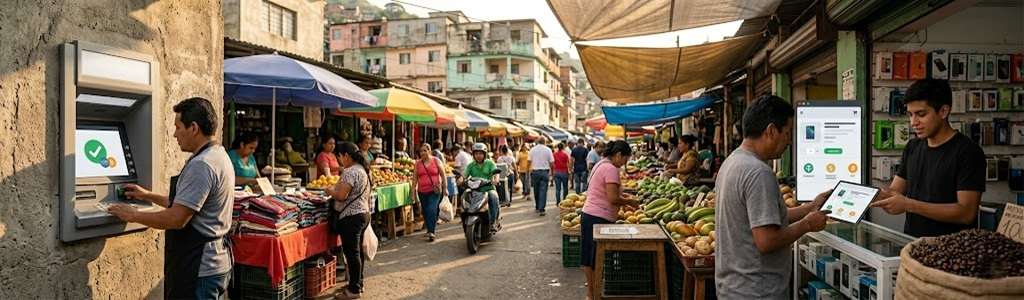
The traditional banking system in the region has multiple deficiencies, which is why utility has displaced speculation. High commissions and endless waiting hours for international transfers created a critical vacuum. Decentralized infrastructure fills this space with fast processes and significantly lower settlement costs.
For small and medium-sized enterprises, non-tangible assets are now essential units of account for foreign trade. The ability to move capital without the frictions of correspondent banking grants unprecedented economic agility. In environments with restricted capital, these tools sustain the daily operability of businesses.
The Risk of Technological Dependence
Despite the success of the pragmatic approach, prioritizing immediate stability could limit local technical innovation. By massively adopting already consolidated protocols, the region risks becoming a passive user of foreign technologies. The lack of its own experimentation could hinder the development of indigenous disruptive solutions.
Furthermore, dependence on assets pegged to the dollar perpetuates a financial structure subordinated to external policies. While operational utility solves present problems, true economic emancipation requires leadership in the creation of own infrastructure. The challenge is to move from necessary adoption to sovereign creation.
The Latin American ecosystem has shown that blockchain technology is, above all, a fabric for the real economy. The transition toward operational utility is a triumph of common sense in the face of institutional precariousness, but the future demands balance. The region must decide whether to settle for being an adoption market or seek to lead the next financial revolution.