TLDR:
- The reduction in supply on Ethereum is a result of asset rotation between different networks, rather than a massive capital exodus.
- The use of derivatives and options allows traders to maintain risk exposure without needing idle liquidity in spot wallets.
- A true alarm signal would require a massive conversion to fiat currency and a sustained drop in open interest across exchanges.
Recent hours have reawakened old fears among investors due to the latest decline in the ERC-20 stablecoin supply. Many associate these figures with a loss of liquidity; however, analysis reveals that the scenario is far less dramatic than surface-level charts suggest.
Currently, stablecoins are more than just idle cash waiting for a buying opportunity; they are dynamic assets. These funds constantly move between blockchains and exchanges, often escaping traditional supply metrics.
Consequently, a contraction in market capitalization within the Ethereum network can signify much more than a simple liquidation. It is crucial to understand that capital often migrates to other formats or derivative markets where balances are not publicly visible.
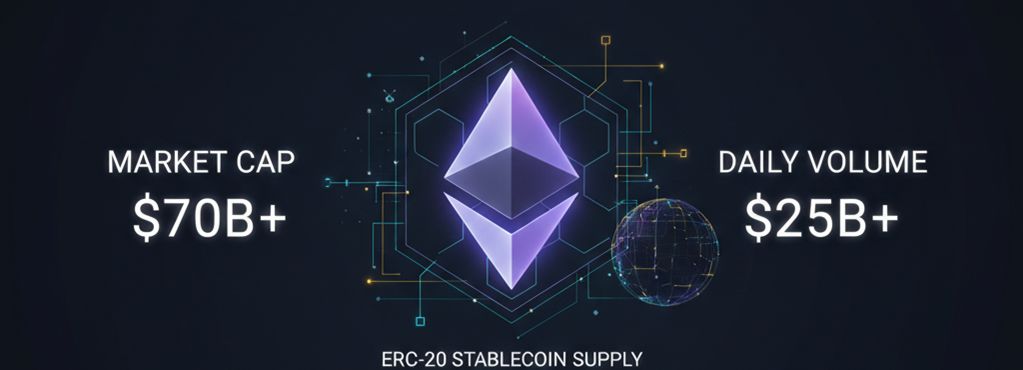
Asset rotation vs. abandoning the ecosystem
Traders often prefer to reduce their exposure in the spot market while maintaining risk through futures and options. This technical behavior reduces visible supply but should by no means be interpreted as a sign of panic or a market exit.
Confusion is amplified when analyzing short-term data, where weekly changes may simply reflect the rebalancing of large trading desks. In today’s crypto infrastructure, billions can move silently without capital actually leaving the ecosystem.
Real concern would be justified only if signs of massive institutional withdrawals into fiat money appeared. This would manifest through a steady decline in exchange balances and a depletion of open interest across multiple trading venues.
In summary, the reduction in ERC-20 stablecoin supply is a metric to watch, but not necessarily one that should cause panic. During corrective market phases, fund rotation is a normal and healthy process that adjusts the financial architecture of the sector.