TLDR:
- Revolut cancels its merger plans with a U.S. lender to seek its own license through the OCC.
- The deregulation environment under the Donald Trump administration makes it easier for fintechs to operate independently.
- The company expands its presence in Latin America with an application for a full banking license in Peru.
The British fintech giant Revolut has formally applied for an independent U.S. banking license, marking a major step in its international expansion. After discarding previous plans to merge with a local entity, the firm now seeks to establish itself under its own name in the North American market.
This application comes at a crucial moment, marked by a shift in the stance of the Office of the Comptroller of the Currency (OCC). Thanks to the deregulation trend driven by the Donald Trump administration, Revolut is confident that the application process to obtain national bank status will be more streamlined and efficient.
Previously, Revolut considered purchasing a bank with a national charter to accelerate its growth across all 50 states. However, the operational challenges of maintaining physical branches and the regulatory hurdles of a merger led the management team to choose the path of digital autonomy.
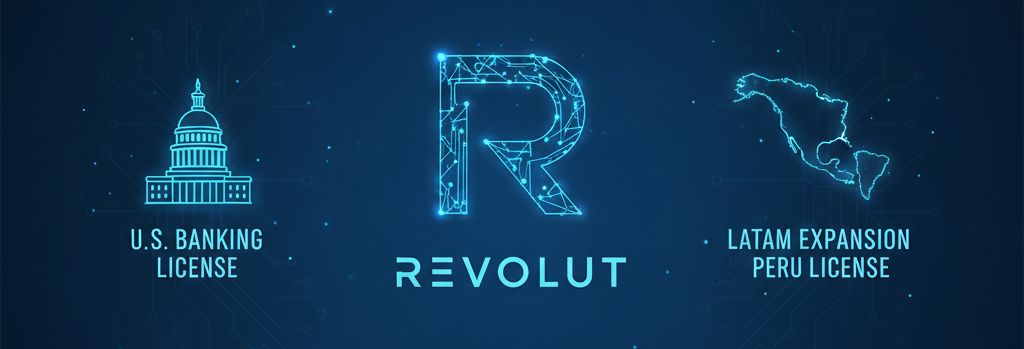
Revolut Sets Its Sights on Peru and the Latin American Market
While paving its way in North America, the British company has also applied for a full banking license in Peru to compete with traditional banking. This expansion is part of an ambitious plan to reach 100 million customers globally, tapping into markets with high demand for remittances.
In the Andean nation, the fintech seeks to break the concentration of the financial system, where only four entities dominate the majority of loans. By offering multi-currency services and international transfers, the firm hopes to attract both the banked population and those who do not yet have access to digital services.
In summary, Revolut already holds regulatory approvals in Mexico, Colombia, Brazil, and Argentina, consolidating Latin America as a pillar of its growth. The combination of a U.S. banking license and its strong presence in the south of the continent positions the firm as a dominant player in the global financial ecosystem.