TLDR:
- Monica Long predicts that half of major corporations will integrate digital assets into their treasuries by 2026.
- Stablecoins and asset tokenization are consolidating as pillars of modern financial infrastructure.
- More than 50% of the world’s largest banks will formalize crypto custody services this year.
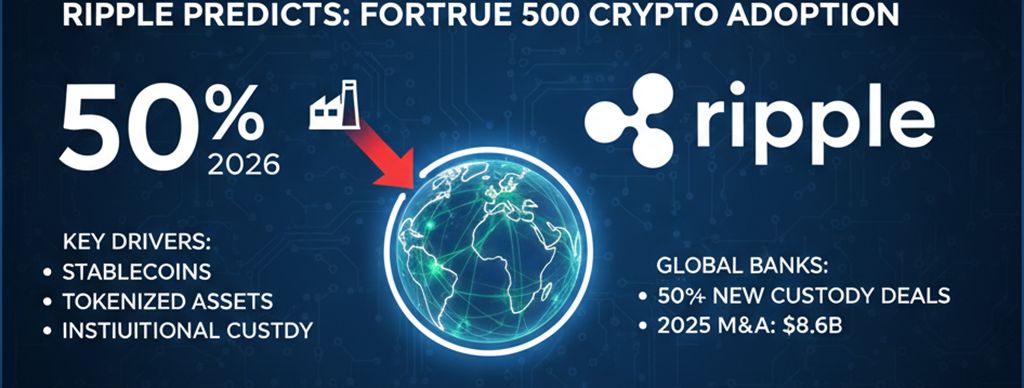
The global financial industry is heading toward an unprecedented transformation led by the crypto adoption in Fortune 500 companies. Monica Long, President of Ripple, predicts that by 2026, at least half of these corporations will have implemented formal digital asset treasury strategies, focusing especially on stablecoins and tokenized assets.
Long added that the sector is leaving pilot phases behind to enter large-scale production, where cryptocurrencies will not just be investment products, but essential operating infrastructure. In this sense, regulatory clarity in the United States, following the passage of regulations such as the “GENIUS Act,” has been a fundamental catalyst for firms like Visa and Stripe to integrate these assets into their payment flows.
Corporate balance sheets also reflect this paradigm shift, as they diversify their exposure beyond Bitcoin. Consequently, companies are expected to routinely adopt on-chain instruments to improve settlement speed and daily liquidity management.
Impact of ETFs and Institutional Custody on the Ecosystem
The surge of Ethereum and Solana exchange-traded funds (ETFs), which recorded record volumes in January 2026, acts as a gateway for institutional investors requiring familiar structures. The executive emphasizes that the sector’s consolidation, with acquisitions exceeding $8.6 billion in 2025, is strengthening global custody infrastructure.
Monica Long also anticipates that more than half of the world’s top 50 banks will establish formal crypto custody relationships during this year. Therefore, interoperability between blockchain systems and financial automation tools will allow for continuous and efficient collateral management.
In summary, the market is closely watching how these forecasts materialize in an environment of increasing technological maturity. The validation of these projections would not only transform the traditional financial system but would also consolidate digital assets as the foundation of global corporate commerce in the coming decade.