The crypto market has recently surpassed the $3.1 trillion mark, reflecting renewed activity across major networks. Solana continues trading near the $140 level, while Polkadot remains close to $2.11. Both networks retain relevance, though their market size naturally limits the scale of near-term price movements. As capital rotates, some market participants are evaluating newer infrastructure projects that are still in earlier development phases.
This shift raises a broader question: can emerging networks offer growth profiles that larger chains no longer provide? Some analysts point to Zero Knowledge Proof (ZKP), noting its focus on infrastructure and technical design rather than short-term speculation.
Zero Knowledge Proof (ZKP) follows a build-first model, reportedly committing more than $100 million to infrastructure before opening its presale auction. This approach alters how value and risk are assessed. Analysts suggest the project reflects characteristics typically associated with later-stage networks, even though it remains in an early market phase. As pricing inefficiencies narrow, ZKP continues to attract attention from those monitoring early-stage infrastructure opportunities.
Before examining ZKP in more detail, it is useful to review recent developments in Solana and Polkadot.
Solana Shows Early-Year Stability
Solana has maintained price levels near $140, reflecting steady participation during mixed market conditions. Institutional interest has continued, with several firms advancing exchange-traded product filings tied to Solana.
Network performance remains a focal point. A recent validator update (v3.0.14) was introduced to improve reliability under higher load conditions, supporting ongoing scalability efforts. Despite broader market volatility, Solana has continued to record consistent inflows.
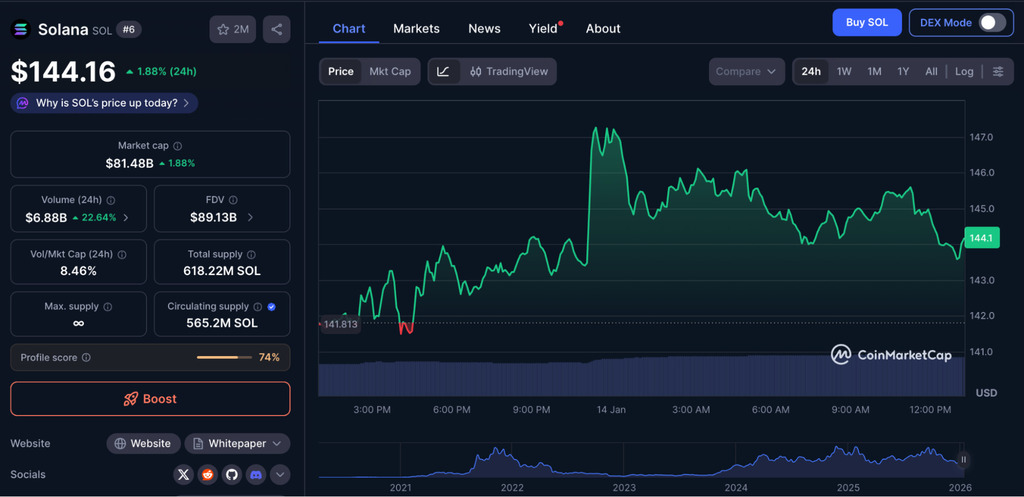
Historically, early-year periods have often coincided with stabilization phases for Solana. Analysts are monitoring resistance near $145, though further movement depends on broader market sentiment and sustained demand.
Polkadot Positions Around Structural Changes
Polkadot is entering a transition period as its 2.0 upgrades progress. The move toward a flexible coretime model simplifies onboarding for new projects while improving throughput and operational efficiency. These changes have contributed to relative price stability near the $2.25 level.
Cross-chain interoperability remains a defining feature, with developers continuing to value its connectivity framework. Additionally, the introduction of a fixed supply cap has drawn attention from analysts, as reduced issuance over time may influence long-term supply dynamics.
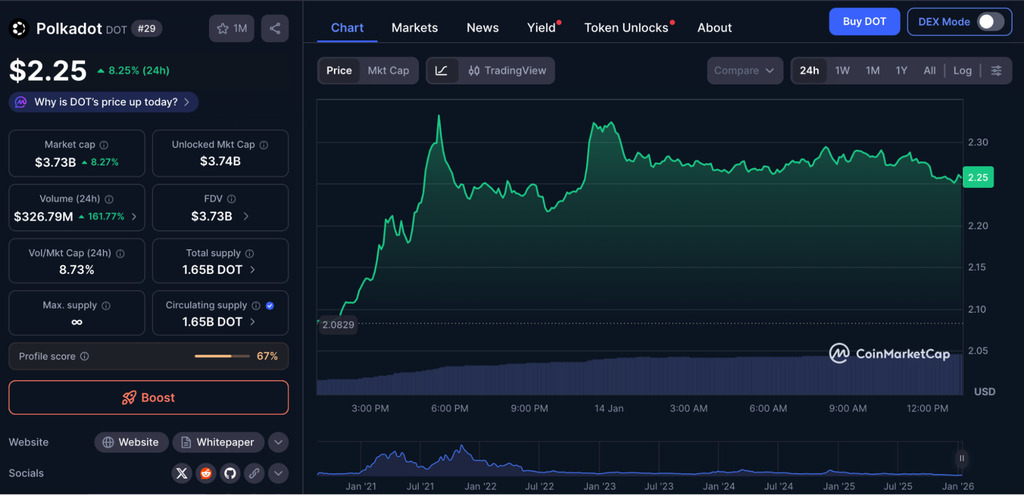
While these structural elements support Polkadot’s positioning, some observers note that its scale may limit the magnitude of future price expansion compared with earlier-stage networks.
Zero Knowledge Proof (ZKP) and Its Infrastructure-First Model
Zero Knowledge Proof (ZKP) distinguishes itself through its emphasis on infrastructure readiness prior to market participation. The project reports allocating more than $100 million toward hardware, systems, and core development before launching its presale auction, differing from models that prioritize fundraising before technical delivery.
With infrastructure reportedly active and network components operational, ZKP aims to reduce common execution risks associated with early-stage projects. Analysts note that many networks struggle to deliver functional systems post-launch, whereas ZKP’s build-first approach seeks to address this challenge directly.
Some market observers suggest that the network’s operational status places it closer to later-stage projects in terms of development maturity, even though pricing remains aligned with early-stage valuation frameworks. This perceived gap between infrastructure readiness and market pricing continues to attract analytical attention.

As the presale auction remains open, analysts caution that pricing dynamics may evolve as broader awareness increases. Entry conditions at this stage reflect early-market participation rather than guaranteed performance outcomes.
Summary
Solana and Polkadot continue to demonstrate stability and structural progress, though their market scale naturally moderates the pace of future expansion. Larger networks often experience steady growth, while more pronounced valuation shifts tend to occur earlier in a project’s lifecycle.
Zero Knowledge Proof (ZKP) is drawing attention due to its infrastructure-first development model and early operational status. Analysts describe it as a project that prioritizes execution readiness over fundraising velocity. While outcomes remain uncertain, its current presale phase positions it within early-stage market dynamics.
As discussions around emerging infrastructure projects continue, Zero Knowledge Proof (ZKP) remains part of that broader conversation.
Find Out More About Zero Knowledge Proof (ZKP):
Website: https://zkp.com/
Presale Auction: https://auction.zkp.com/
X: https://x.com/ZKPofficial
Telegram: https://t.me/ZKPofficial
This article contains information about a cryptocurrency presale. Crypto Economy is not associated with the project. As with any initiative within the crypto ecosystem, we encourage users to do their own research before participating, carefully considering both the potential and the risks involved. This content is for informational purposes only and does not constitute investment advice.