TL;DR
- 2026 reflects a shift in how investors interpret scarcity beyond physical supply limits.
- Bitcoin’s fixed issuance remains unchanged, but ETFs and derivatives influence pricing and access.
- Gold continues to function as neutral collateral for institutions and central banks. Silver’s value responds to both investment demand and industrial use, creating sharper and less predictable price adjustments across market cycles.
The comparison of Bitcoin vs. gold vs. silver in 2026 shows how scarcity is no longer measured only by how limited an asset is. Investors now focus on access, liquidity, and reliability within modern financial systems. This shift affects portfolio construction across digital assets and traditional commodities.
As markets mature, scarcity increasingly reflects how assets move through financial infrastructure rather than how difficult they are to produce. Bitcoin, gold, and silver each express this dynamic in different ways, shaping capital allocation decisions worldwide.
Bitcoin Vs. Gold Vs. Silver In 2026 And The New Scarcity Logic
Bitcoin continues to stand apart due to its transparent and rule-based supply. The protocol enforces a fixed issuance schedule that market participants can verify at any time. In 2026, this certainty remains intact, even as most investors gain exposure through spot ETFs and regulated derivatives rather than direct on-chain ownership. These instruments improve liquidity and broaden participation while leaving the underlying supply untouched.
Gold’s scarcity operates through trust rather than code. Mining output changes slowly, but its role as a reserve asset remains central for governments and monetary authorities. Gold trades through physical markets, futures, and ETFs, each serving different investor needs. During periods of policy stress, its function as neutral collateral supports steady demand without relying on production shocks.
Silver occupies a more complex position. It shares monetary history with gold, yet industrial demand drives a significant share of consumption. Electronics, solar energy, and manufacturing absorb large volumes, tightening supply even when investment flows soften. This dual role makes silver more sensitive to shifts in global growth and inventory levels.

Market Access Liquidity And Financial Structure
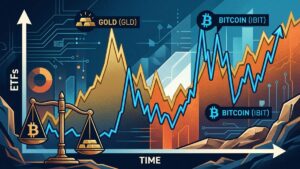
Exchange-traded products play a growing role in shaping scarcity perceptions. For Bitcoin, ETFs connect a digital asset to traditional portfolios, allowing rapid capital movement. In precious metals, similar products convert physical scarcity into tradable securities that respond quickly to macro signals.
Derivatives add another layer. Futures and options expand exposure without requiring ownership, increasing volume and short-term volatility. These tools do not remove scarcity, but they influence how prices reflect it on a daily basis. Investors increasingly accept that genuine scarcity can coexist with deep leverage and active hedging.