TLDR
- NEAR Protocol records explosive 158% activity growth over the past week.
- Networks such as Aptos and Plasma show solid expansion with increases exceeding 20%.
- Ethereum maintains its structural dominance with a steady 10% increase in operations.
Activity across decentralized networks experienced a vertical surge over the past week, marking a technical recovery trend in the sector. Recent data from Nansen indicates that blockchain transaction volume has ceased to be a flat metric, entering a phase of aggressive acceleration.
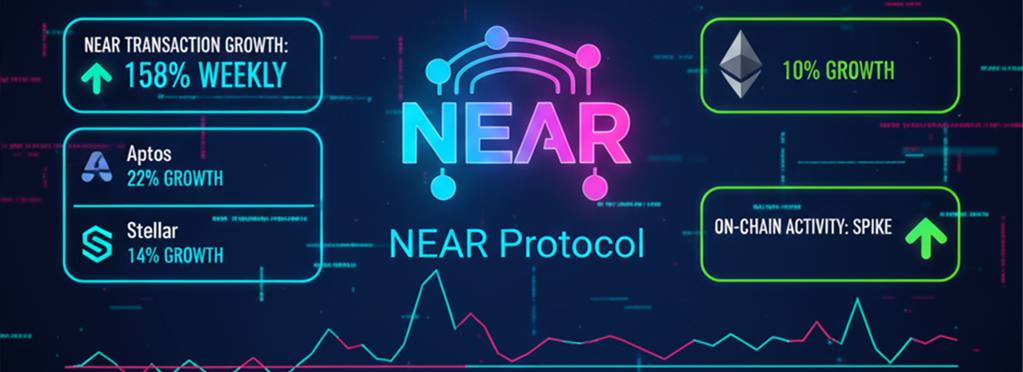
NEAR Protocol emerged as the undisputed leader of this movement, entering what analysts call “turbo mode,” with a 158% increase in transactional activity, far surpassing any other major protocol during the same period. This growth in NEAR is not an isolated event or an artificial spike; metrics show a steady rise in the number of active addresses, suggesting organic adoption and real network utility.
Following the leader, other mid-tier chains are also demonstrating great strength. Plasma recorded a 28% increase in transactions, while Aptos followed closely with 22% growth, backed by one of the highest active address counts in the current market.
Ethereum and Payment Networks Consolidate Blockchain Transaction Volume
While the spotlight is currently on NEAR’s speed, more mature ecosystems are not falling behind. Ethereum, the cornerstone of smart contracts, achieved a 10% increase in weekly activity. Although its pace is more measured compared to emerging protocols, its ability to maintain a massive user base reaffirms its position as the preferred settlement layer for institutions.
For its part, Stellar has also shown signs of vitality with a 14% uptick in blockchain transaction volume, focusing primarily on the digital payments sector.
In summary, the data suggests that we are not witnessing a single-chain anomaly, but rather a widespread awakening of network participation. While NEAR dominates short-term acceleration, momentum is spreading across multiple ecosystems, signaling a substantial improvement in user engagement.
As summarized in the Nansen report, although some networks are operating in “turbo mode,” the rest of the market is quickly closing the gap, setting the stage for a highly dynamic start to 2026.