TLDR
- 29% of voters opposed transferring intellectual property and domains to the DAO.
- Major players like Wintermute and Lido analysts question the alignment of incentives.
- Stani Kulechov’s $10 million token purchase sparked significant prior scrutiny.
A critical vote concluded this week, sparking intense debates within the decentralized finance ecosystem. Token holders overwhelmingly rejected the proposal to place the protocol’s brand assets—including social media, domains, and intellectual property rights—under the direct control of the DAO.
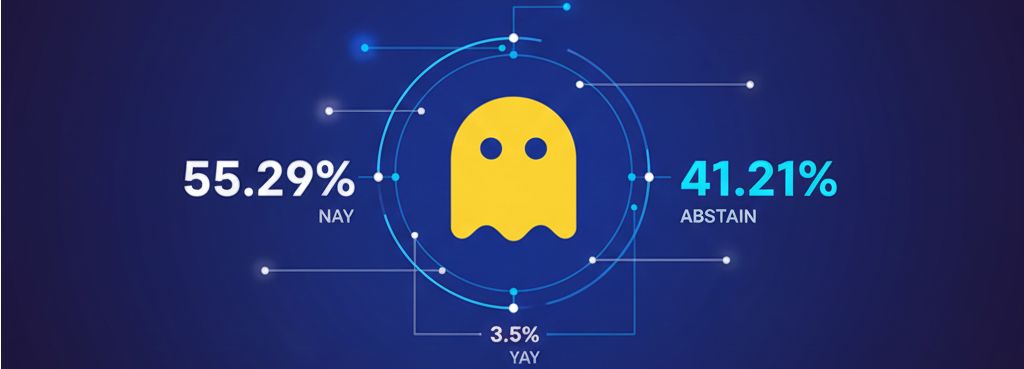
The Snapshot poll revealed decisive results, with 55.29% of votes against (“NAY”), while only 3.5% supported the initiative, and abstentions reached 41.21%.
This chapter of Aave governance highlighted the existing frictions between theoretical decentralization and the practical operations of major lending protocols.
While those who voted in favor of the proposal claimed this move was a necessary step to clarify brand stewardship, detractors pointed out that the process was rushed and lacked solid consensus.
Structural Tensions and the Future of the AAVE Token
Beyond the numerical outcome, the rejection brought deep-seated concerns regarding value capture to light. Evgeny Gaevoy, CEO of Wintermute, disclosed that they voted against the proposal and urged Aave Labs to work on long-term alignment.
According to Gaevoy, resolving how the token captures value is a critical challenge that could serve as a model for the entire crypto sector.
On the other hand, figures like Hasu, an advisor to Lido, labeled the current structure as “fundamentally broken.” He argued that the dual model between equity and governance tokens creates misaligned incentives that hinder Aave governance.
Experts and investors believe these hybrid structures were born out of regulatory necessity but must evolve into a single, coherent system.
The debate was also fueled by scrutiny over Aave founder Stani Kulechov, who acquired $10 million in AAVE tokens just before the vote.
In summary, this event reignited the debate over the influence of “whales” and the structural weaknesses of Aave governance, where decisions can be heavily swayed by large capital holders, occasionally undermining community discussion processes.