
TLDR:
- Scott Bessent, Chair of the FSOC, is preparing a new policy that will shift the regulatory focus from “tightening” to “removing undue burdens.”
- The FSOC review seeks to determine if existing rules are undermining financial stability by stifling innovation and economic growth.
- This regulatory pivot aligns with the Trump administration and could significantly benefit the digital asset industry.
Scott Bessent, who chairs the Financial Stability Oversight Council (FSOC), appears to be on the verge of redefining how Washington approaches “systemic risk,” with the crypto industry potentially being one of the biggest beneficiaries.
The top markets watchdog at the U.S. Treasury Department is preparing a new policy letter that steers the FSOC away from merely imposing stricter rules and towards the active removal of regulations deemed “undue burdens” that hinder growth.
The FSOC was created right after the 2008 financial crisis; its goal is to monitor threats that could crash the entire system and coordinate key regulators like the SEC and the CFTC.
Now, in the context of a crypto-friendly Trump administration and a Treasury that backs stablecoin pilots and tokenization projects, Bessent’s pivot could fundamentally reshape how federal agencies treat digital assets.
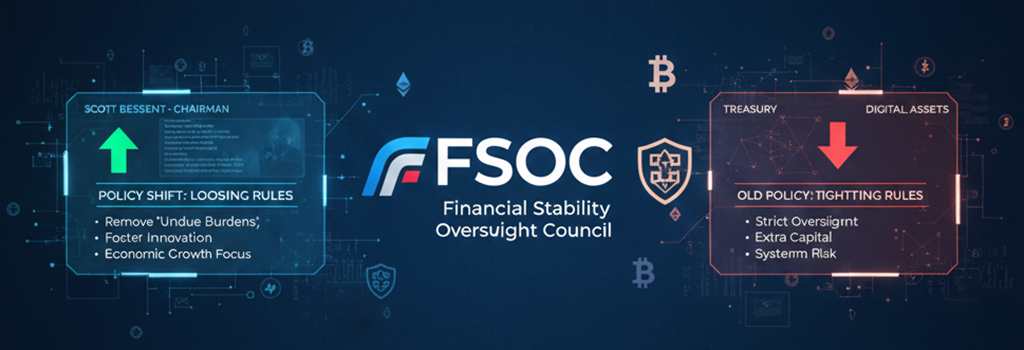
The FSOC Shifts from Tightening to Deregulation
CNBC obtained a letter detailing that Bessent will tell fellow regulators that the FSOC must begin questioning whether current rules are actually harming stability by stifling innovation and growth. The draft indicates that the Council will work with member agencies to consider whether parts of the U.S. regulatory framework “impose undue burdens and negatively impact economic growth, thereby undermining financial stability.”
This change is notably different from the FSOC’s original mandate under the Dodd-Frank Act, which emphasized stricter oversight following the 2008 collapse. Bessent’s plan fits neatly into the broader Trump-era deregulatory push.
While Congress advances pro-crypto bills like the GENIUS act for stablecoins, the FSOC is being directed toward pruning back its regulatory footprint rather than expanding it. This softening is particularly relevant for the crypto industry, which was previously singled out by the FSOC in 2022 as a possible “systemic threat” in a report that called for stricter regulation.