TL;DR
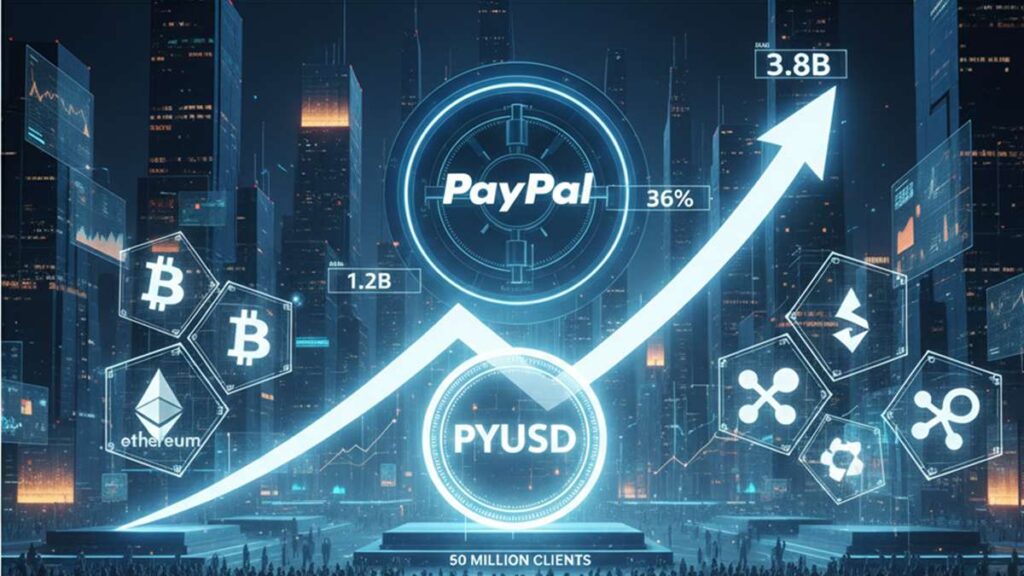
- PYUSD’s market capitalization tripled from $1.2 billion in September to $3.8 billion in December.
- With this growth, PayPal’s stablecoin is positioned as the sixth-largest in the crypto ecosystem.
- The success is attributed to PayPal’s vast user base and its global payment infrastructure.
PayPal has entered the digital asset ecosystem with a strong foothold. Its stablecoin, PYUSD, is currently one of the fastest-growing assets in terms of market capitalization. A notable upward curve is shown in DeFiLlama statistics, demonstrating that the entry of a payment giant into the digital space is reshaping the stablecoin landscape.
In just a few months, PayPal’s stablecoin (PYUSD) achieved the fastest expansion ever recorded in the segment. The asset’s market capitalization was approximately $1.2 billion in September, and by December, it had already surpassed $3.8 billion, representing a multiplication of more than three times.
The monthly growth rate was particularly aggressive, exceeding 36% in November. This accelerated expansion of PayPal’s PYUSD is a clear indication of increased user adoption and the rapid integration of the asset within the company’s Web3 ecosystem.

The PayPal Factor Behind the Expansion of PYUSD
PYUSD looks like a rocket, and this behavior is a testament to the influence that a global player with a pre-existing payment infrastructure can exert on the crypto market. Financial analysts attribute the rapid growth to two main factors.
First, PayPal’s vast user base and its global payment infrastructure facilitated market acceptance much faster than its crypto-native competitors.
Second, the asset is quickly building its role within PayPal’s Web3 ecosystem, facilitating transactions and serving as a bridge between traditional finance (TradFi) and the decentralized world.
With this momentum, PYUSD is climbing positions to become the sixth-largest stablecoin by total market capitalization. The expansion of PayPal’s PYUSD not only consolidates it as a key player in the cryptocurrency market but also underlines how large technology companies can accelerate the adoption of digital assets on a global scale.
Ultimately, this particular performance suggests that the integration of stablecoins into conventional financial services is only just beginning.