


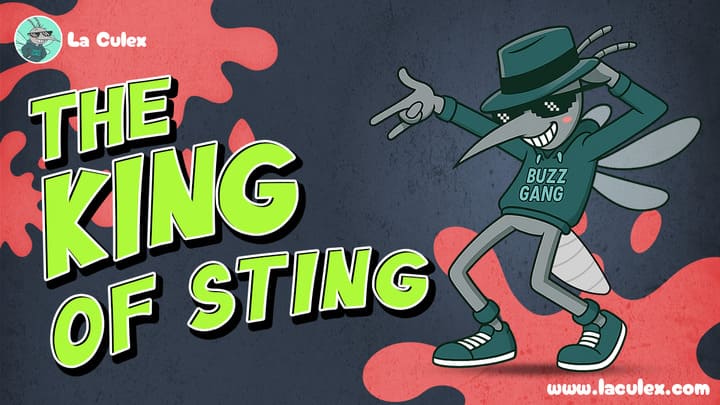
Meme-themed tokens often use seasonal narratives and humor to attract attention. One example is La Culex ($CULEX), a mosquito-themed token on Ethereum that the project says is being distributed through an early-stage token sale. As with similar launches, participation can involve significant risks, including high volatility and limited liquidity.
Beyond meme tokens, the broader market includes widely used networks and assets such as Ethereum, Solana, XRP, Bitcoin, Binance Coin, Avalanche, and TRON. These projects differ materially in scale, maturity, decentralization profiles, and common use cases (for example, smart contracts, payments, or ecosystem utility). Any comparison between them should account for those differences rather than focusing on short-term price narratives.
1. La Culex ($CULEX): Meme-themed token on Ethereum
La Culex is presented by the project as a meme-themed token built on the Ethereum network. Marketing materials emphasize community branding and a set of mechanisms often described as tokenomics, but those claims should be treated as project-reported and subject to change.

According to the project, features include staking rewards, a referral program, and periodic token burns. In practice, the effects of these mechanisms depend on implementation details, market conditions, and ongoing participation, and they do not ensure any particular outcome.
Why is this token included? It is an example of an early-stage, meme-branded token sale that market participants may encounter alongside more established crypto assets.
2. Ethereum (ETH): A widely used smart-contract network
Ethereum is a major smart-contract platform and is used across decentralized finance and other on-chain applications. Market participants often track metrics such as validator activity, network fees, and transaction volume to evaluate usage and network conditions. Staking exists within Ethereum’s consensus model, but yields vary over time and depend on multiple factors.
ETH’s ecosystem includes NFTs, DeFi protocols, and a broad range of decentralized applications. Network upgrades and adoption trends are commonly discussed as factors that may influence demand, although outcomes remain uncertain.
Why is this asset included? Ethereum is a foundational network for many on-chain applications and tokens.
3. Solana (SOL): High-throughput Layer-1 network
Solana is a Layer-1 blockchain often highlighted for throughput and comparatively low transaction costs. It supports DeFi, NFTs, and gaming use cases. Like other networks, its performance and reliability have varied over time, and users may consider factors such as outages, congestion, and developer activity when assessing risk.
Why is this asset included? Solana is a widely used alternative smart-contract platform with an active ecosystem.
4. Ripple (XRP): Payments-focused asset with legal and regulatory considerations
XRP is commonly associated with cross-border payments use cases. Market sentiment around XRP can be influenced by adoption announcements as well as legal and regulatory developments. Participants typically monitor transaction activity and public updates related to compliance and litigation risk.
Why is this asset included? XRP is frequently discussed in the context of payments infrastructure and policy developments.
5. Bitcoin (BTC): The largest crypto asset by market capitalization
Bitcoin is the longest-running and most widely recognized crypto asset. Observers commonly track factors such as network hash rate, custody and institutional product developments, and market dominance. BTC’s price can still be volatile, but it is often treated as a benchmark for the broader crypto market.
Why is this asset included? Bitcoin remains central to market structure and liquidity across crypto trading pairs.
6. Binance Coin (BNB): Exchange- and ecosystem-linked utility token
BNB is used within the Binance ecosystem for functions such as fees and certain platform utilities. Network activity, ecosystem usage, and token-burn announcements are among the datapoints market participants may consider. As with any exchange-linked asset, counterparty and platform-related risks may be relevant.
Why is this asset included? BNB is tied to a large exchange ecosystem and is widely used across related services.
7. Avalanche (AVAX): Multi-chain smart-contract platform
Avalanche is a smart-contract platform designed to support multiple chains and decentralized applications. Analysts often reference developer activity, ecosystem growth, and DeFi usage metrics such as total value locked (TVL), while noting that these indicators can change quickly with market cycles.
Why is this asset included? Avalanche is one of several Layer-1 networks competing for developers and application deployment.
8. TRON (TRX): High-throughput network with ongoing decentralization debate
TRON is a network known for high transaction throughput and an active on-chain economy that includes stablecoin transfers and DeFi activity. As with other projects, market participants may evaluate governance and decentralization characteristics as part of their risk assessment.
Why is this asset included? TRON is frequently referenced in discussions about high-volume on-chain activity and application usage.
Conclusion
Early-stage token sales such as La Culex can carry elevated uncertainty compared with more established assets, including higher volatility, lower liquidity, and greater execution risk. Larger networks such as Ethereum, Solana, XRP, Bitcoin, BNB, Avalanche and TRON each carry their own distinct risks and may be evaluated based on factors like utility, network activity, adoption, and security.
Risk management and independent research remain important, particularly when reviewing project-reported tokenomics, incentive programs, and roadmap claims.

For More Information:
Project website (for reference): Visit the Official CULEX Website
Project social profile (for reference): Follow CULEX ON X (Formerly Twitter)
Frequently Asked Questions About La Culex token sale
Is La Culex guaranteed to reach its listing price?
No. Early-stage token sales are speculative and can involve risks such as price volatility, limited liquidity, and potential listing delays.
How much can Ethereum staking yield?
Staking returns can vary significantly over time and may depend on network conditions, protocol parameters, and validator/operator fees.
What are the main risks of early-stage token-sale tokens?
Commonly cited risks include liquidity constraints, smart-contract vulnerabilities, regulatory uncertainty, and rapid changes in market sentiment.
Should investors diversify among these coins?
Diversification is often discussed as a way to spread risk, but it does not eliminate risk and may not be appropriate for every situation.
How can one analyze rapid price moves in altcoins?
Market participants may look at charts, volume, support/resistance levels, and ecosystem activity, while recognizing that technical signals are not predictive on their own and may not be suitable for decision-making in isolation.
Glossary of Key Terms
- Token sale (early-stage): A token distribution or fundraising event that may take place before broader market availability, sometimes ahead of exchange listings.
- Tokenomics: The economic design of a crypto token, which may include supply rules, incentives, and burn mechanisms.
- Staking: Locking tokens in a network or protocol under specified rules to support operations and potentially receive rewards.
- Total Value Locked (TVL): A metric commonly used in DeFi to estimate the value of assets deposited in protocols on a given network.
- ROI (Return on Investment): A measure of gain or loss relative to an initial amount; it can be positive or negative and is not guaranteed.
Summary
This article provides an overview of La Culex ($CULEX) and several widely discussed crypto assets (ETH, SOL, XRP, BTC, BNB, AVAX and TRX). It outlines general use cases and risk considerations, and notes that early-stage token sales can involve additional uncertainties compared with more established networks and assets.
This article contains information about a cryptocurrency token sale. This outlet is not affiliated with the project mentioned. As with any initiative within the crypto ecosystem, we encourage users to do their own research before participating, carefully considering both the potential and the risks involved. This article is for informational purposes only and does not constitute financial or investment advice.

