


Can meme-coin fundraising and community-driven crypto projects influence how market participants assess risk and adoption? Dogecoin remains one of the most widely recognized meme coins, while BullZilla ($BZIL) is a newer project conducting an early-stage token sale. This article outlines publicly discussed narratives around Dogecoin and summarizes BullZilla’s stated features based on project materials.
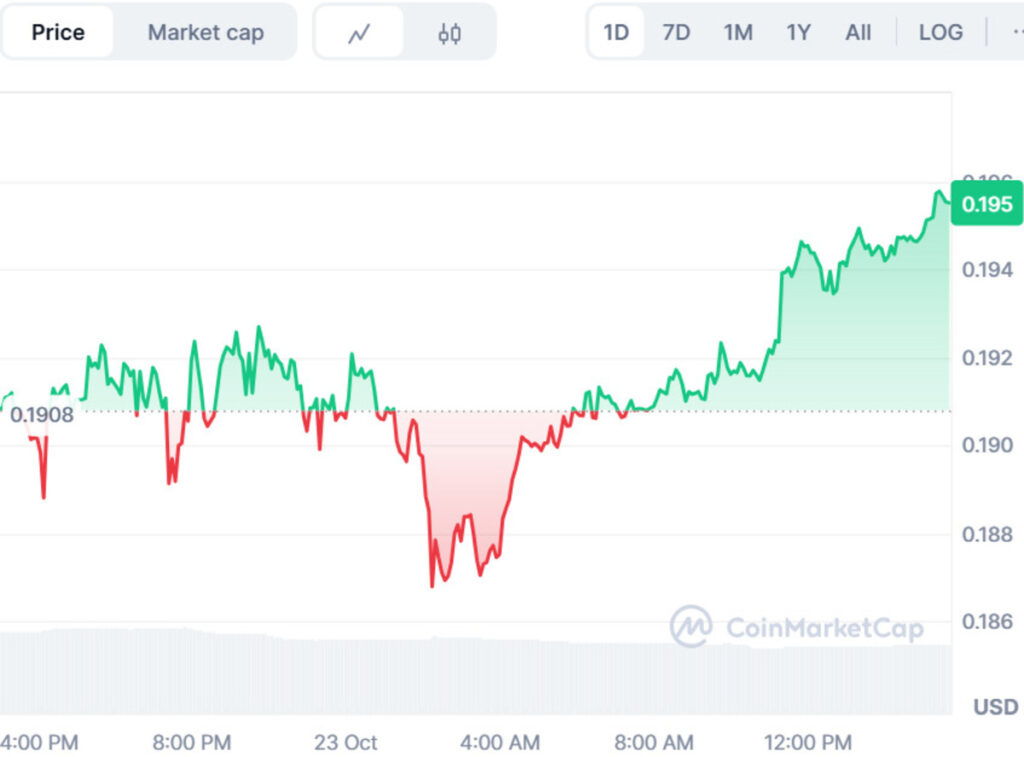
Recent attention has included ongoing discussion about a potential Dogecoin ETF and coverage of multiple early-stage token sales across the meme-coin category. This segment of the market is typically volatile, and price moves can be driven by sentiment, liquidity, and broader macro conditions. Any forward-looking scenarios discussed by traders or commentators remain uncertain.
Dogecoin (DOGE): Market focus amid ETF speculation
Dogecoin ($DOGE) remains one of the most established meme coins by market recognition. The market has also seen unverified rumors about a potential Dogecoin ETF involving major financial firms. Separately, the REX-Osprey Dogecoin ETF ($DOJE) has been cited in market commentary as an example of interest in DOGE-related products, although ETF-related developments and their market impact are uncertain. Traders sometimes reference zones such as $0.17–$0.19 and resistance levels such as $0.23 for short-term technical analysis, but these levels can change quickly and do not predict future performance.
Frequently Asked Questions about Dogecoin
-
What’s driving Dogecoin’s current market attention?
Market commentary has pointed to a combination of technical trading levels and ETF-related speculation. These factors can influence sentiment, but they do not confirm sustained demand or future price direction.
-
Could Dogecoin’s price break above $0.23 soon?
Some analysts discuss a move toward levels such as $0.23 under certain macro and liquidity conditions (including potential changes in interest-rate expectations). This remains speculative and depends on broader market dynamics.
BullZilla ($BZIL): Project overview and token-sale claims
BullZilla ($BZIL) is a newer meme-coin project that says it is conducting an early-stage token sale on Ethereum. In project materials, BullZilla describes a staged pricing model (including a “Progressive Price Engine”) and a supply-reduction mechanism (a multi-stage “burn” process). These features are the project’s stated design choices and are not independent verification of value, demand, liquidity, or future price performance.
BullZilla’s website and marketing materials list a current stage, a token-sale price, and fundraising and holder figures. Such figures are project-reported and can change over time. This article does not verify the project’s claims, and token-sale participation can be high risk.
How BullZilla’s token sale is described to work
According to the project, access is provided through its token-sale interface, typically via compatible Web3 wallets. Eligibility, custody considerations, fees, token-claim conditions, and other terms vary by project and jurisdiction, and the relevant details are set out in the project’s own documentation.
Frequently Asked Questions About BullZilla
-
What does the project say differentiates BullZilla from other meme-coin token sales?
Project materials highlight its Ethereum deployment, staged pricing approach, and a stated supply-reduction mechanism. Whether these elements translate into meaningful adoption or liquidity is uncertain and depends on execution and market conditions.
-
How does BullZilla’s “Progressive Price Engine” work, according to the project?
The project describes it as a token-sale pricing schedule that changes on a fixed cadence and/or based on fundraising thresholds. A staged sale price does not imply post-sale market pricing, liquidity, or exchange availability.
-
What pricing and timeline information has BullZilla published?
BullZilla publishes stage-based pricing and related fundraising updates in its own channels. These updates are informational and should not be interpreted as a forecast of listing outcomes or future returns.

Conclusion: Dogecoin narratives and early-stage token-sale risk
Discussion around Dogecoin in 2025 continues to include ETF-related speculation and shifting macro expectations, both of which can affect sentiment without providing certainty. At the same time, early-stage token sales such as BullZilla’s are often marketed with detailed tokenomics and staged pricing, but they can carry significant risks, including liquidity uncertainty, execution risk, and the possibility of losing the full amount committed.
Readers evaluating meme-coin projects should distinguish between community narratives, project claims, and independently verifiable developments, and should be cautious about treating fundraising updates or staged pricing as indicators of future market performance.
Project links (for reference):
Disclaimer
This article is for informational purposes only and does not constitute financial or investment advice. This outlet is not affiliated with the project mentioned.
This article discusses an early-stage token sale. Participation in crypto token sales may involve significant risk, including the loss of all funds committed. This content is for informational purposes only and does not constitute financial or investment advice. This outlet is not affiliated with the project mentioned.

