

Floki, once a playful meme experiment, has grown into a widely recognized meme token within the broader digital-asset market. What began as a cultural phenomenon has also become a case study in how online communities, branding, and ecosystem development can influence attention in crypto. Still, meme tokens remain highly speculative, and outcomes can vary widely across projects.
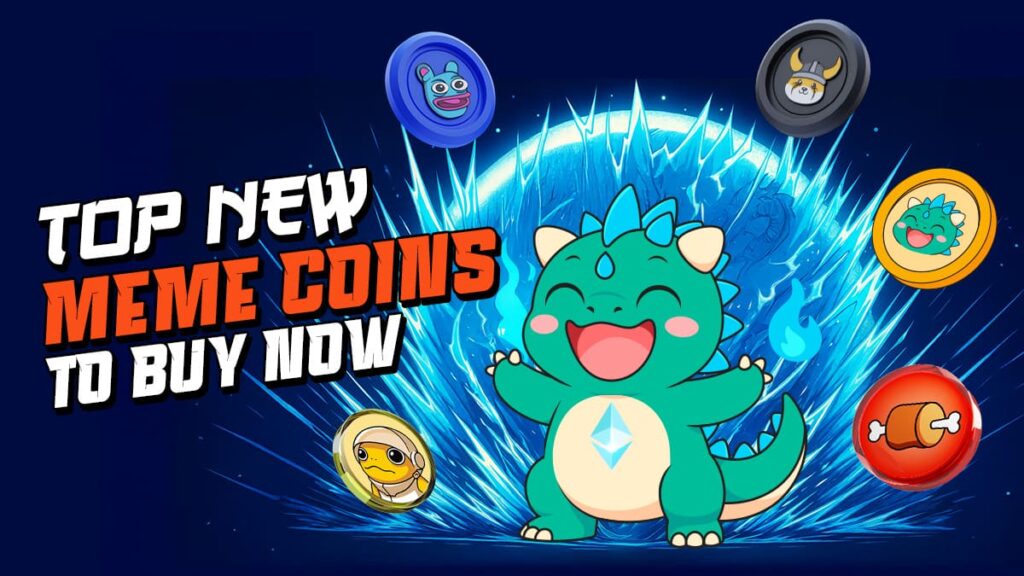
As the crypto market shifts in and out of risk-on sentiment, some meme-themed projects attract disproportionate interest. Among those frequently discussed are BullZilla, MoonBull, La Culex, FLOKI, and PEPE, alongside older and more established names like Dogecoin. Several of the newer tokens describe fundraising rounds, staged pricing, and reward mechanics in their materials, but these structures do not remove market, execution, or smart-contract risk.
1. BullZilla – Early-stage token sale overview
BullZilla is running a staged token sale. According to the project’s published materials, it was in Stage 6 (Going Full Send!) and Phase 4 at the time of writing, with a stated token price of $0.00015907. The project also reported raising more than $920,000, exceeding 3,000 token holders, and selling more than 31 billion BZIL tokens. These figures are project-reported and can change quickly.

The project describes future stage-based price increases as part of its sale design. Any stated future price levels or prospective exchange listings should be treated as tentative and not as guarantees of performance.
BullZilla also promotes a holder-reward mechanism described as a “HODL Furnace/reward engine.” Project materials mention yields (for example, 70% APY) for participants in its reward program; such rates are not guaranteed, may depend on conditions set by the protocol, and can change over time.
2. FLOKI – A larger, established meme token
FLOKI is a more established meme token and has built brand recognition and an active community. The project has also promoted ecosystem initiatives such as NFTs, metaverse-related products, and partnerships. It is listed on multiple exchanges, which can affect liquidity and market access compared with earlier-stage tokens.
Metrics commonly monitored for FLOKI include social engagement, wallet distribution, trading volume trends, and project roadmap updates. As with other meme tokens, market moves may be driven by sentiment as much as fundamentals, and there is no assurance of adoption or price appreciation.
3. MoonBull (MOBU) – Meme token with staking and trading mechanics
MoonBull is presented as a meme-themed token built on Ethereum with DeFi-style features. The project describes a multi-stage token sale and tokenomics that include reflections, automatic liquidity additions, and burns (for example: 2% to liquidity, 2% to holders, 1% burned per trade). These mechanisms can affect supply dynamics, but they do not eliminate volatility or smart-contract risk.
Project materials also describe a staking feature with a stated yield (for example, 95% APY) and governance features beginning at later stages. Any yield figures and timelines should be treated as project claims and are not guarantees.
Some third-party reporting has referenced fundraising totals and early-stage performance estimates for MoonBull. Readers should treat such numbers as time-sensitive and potentially unverifiable without primary documentation.
4. La Culex (CULEX) – Meme token with staged fundraising claims
La Culex describes itself as a meme token with a structured token distribution model. In its materials, the project references a 200 billion total supply and an allocation breakdown that includes tokens for the token sale, staking rewards, locked liquidity (for example, 18 months), and a burn reserve.
Because La Culex is described as not yet listed, information about trading liquidity, price discovery, and market access may be limited. As with any early-stage token, participants face execution risk, potential smart-contract risk, and the possibility of significant loss.
5. Dogecoin (DOGE) – The original large-cap meme token
Dogecoin is one of the earliest meme-themed cryptocurrencies, launched in 2013. It remains among the most widely recognized tokens in the category, supported by an active community and periodic attention from high-profile figures.
Dogecoin’s inflationary supply model and its current market scale may affect how it behaves compared with smaller, newer tokens. Any discussion of future price scenarios is inherently speculative.
6. PEPE (PEPE) – A meme token driven by online virality
PEPE gained traction through meme-driven online attention and fast-moving market sentiment. Like other meme tokens, its performance has been closely tied to narrative, liquidity conditions, and the broader risk appetite in crypto markets.
PEPE runs on Ethereum and has been described as using a no-tax, community-driven model. References to burns, supply changes, and trading activity should be verified against on-chain data and official documentation, and high volatility remains a central risk.
7. FARTCOIN (FARTCOIN) – A high-uncertainty meme token example
FARTCOIN is positioned around intentionally absurd branding, which can be a driver of short-term social-media attention in meme-token markets. However, attention cycles can reverse quickly, and meme tokens can experience sharp drawdowns as sentiment changes.
Project descriptions emphasize simplicity and community-driven marketing, as well as claims of transparent tokenomics and a decentralized launch. Readers should independently verify these claims and review contract, liquidity, and distribution details where possible.
Conclusion
FLOKI illustrates how some meme tokens attempt to move beyond internet culture by building products and partnerships. Dogecoin and PEPE show how community attention and narrative can still be major forces in the category.
At the same time, newer projects that use staged token sales and reward mechanics can be difficult to evaluate, and advertised yields or future pricing scenarios are not guarantees. Readers should treat meme tokens as high-risk instruments and rely on primary sources and on-chain data when assessing claims.
Project website (for reference):
Frequently Asked Questions
What is an early token sale in crypto and why does it matter?
An early token sale (sometimes called a token sale before public exchange trading) is a fundraising event that can occur before a token is widely traded. Terms such as pricing, vesting, and allocation vary by project and can carry additional risks, including limited liquidity and incomplete disclosures.
Is meme token investing too risky?
Meme tokens are typically highly volatile and can be subject to rapid sentiment shifts. In addition to market risk, participants may face liquidity risk, smart-contract risk, and project execution risk.
How do staking rewards work in meme projects?
Some projects distribute tokens or fees to users who stake or lock tokens in a contract. The stated yield (APY) depends on the project’s design and conditions and is not guaranteed; participants should review inflation, unlock schedules, and contract security.
Can Dogecoin increase by extremely large multiples?
Price-multiple targets are speculative. Because Dogecoin is already a large, widely traded asset with an inflationary supply model, extremely large multiples would generally require substantial changes in demand and broader market conditions.
How do audits reduce risk?
Security audits can identify some vulnerabilities or logic issues in smart contracts. However, audits do not guarantee safety, and risks can remain due to implementation changes, economic design, or operational factors.
Should one invest across multiple meme tokens?
Diversification can reduce exposure to a single asset, but it does not remove overall market risk. Portfolio decisions depend on individual circumstances and risk tolerance.
When should one exit an early token sale or early-stage investment?
There is no universal rule. Liquidity events, vesting schedules, and market conditions can materially affect outcomes, and early-stage tokens may be subject to sharp price swings after listing.
Glossary of Terms
- APY (Annual Percentage Yield): An annualized yield metric that may incorporate compounding, as calculated by a protocol or platform.
- Burn mechanism: Removing tokens from circulation permanently.
- Liquidity lock: Contractually locking liquidity pool assets so developers cannot remove them prematurely.
- Reflections: Passive rewards distributed to token holders on certain types of trades, depending on token design.
- Scarcity schedule/stages: A design where token price and/or availability changes stage by stage, as defined by a project.
- Whale: A holder who controls a large share of a token’s supply.
- Rug-pull: A situation where developers withdraw funds or abandon a project, potentially destroying token value.
- HODL furnace/reward engine: A project-described on-chain program that distributes rewards to holders under defined conditions.
- Smart contract audit: Independent security review of contract code.
This outlet is not affiliated with the project mentioned. This article is for informational purposes only and does not constitute financial or investment advice.

