

As interest grows around early-stage crypto projects, NexChain has attracted attention for AI-focused claims about future capabilities. Public materials describe it as a blockchain aimed at predictive or automated operations, but as of publication there is limited independently verifiable information about a live product, such as a public testnet. Meanwhile, projects such as BlockDAG (BDAG) have emphasized execution milestones and tooling that they say are already available.
With speculation around token pricing common in early-stage markets, the gap between narrative and delivery can matter. Below is a comparison of what each project says it is building versus what can be observed or verified at the time of writing, based on publicly available information and project statements.
NexChain: AI Narrative, Limited Publicly Verifiable Delivery
NexChain has been discussed across early-stage token-sale communities and influencer channels, largely because of its AI positioning. In its own descriptions, NexChain presents itself as an AI-enhanced blockchain protocol intended to support predictive infrastructure and developer tooling. Project materials refer to automating cross-chain operations, improving transaction logic, and using AI integrations for data processing.

At the same time, most of the current attention appears to be driven by expectations rather than demonstrated usage. Based on publicly accessible information at the time of writing, there is no confirmed public testnet or independently verified user traction. As a result, many discussions about the token’s value are not anchored to observable network activity or a transparent testing phase.
For any early-stage token sale, the absence of a verified demo, an active user base, or clear testing details can increase uncertainty. NexChain may outline next-generation enhancements, but at present it appears to remain in a pre-launch stage, and prospective participants should treat project timelines and capability claims as unverified until independently demonstrated.
BlockDAG: Reported Milestones and Launch Timeline
BlockDAG has positioned its updates around delivery and launch planning. The team recently referenced a presentation titled “The Launch Note,” which it says summarizes what has been built and what is planned as it approaches a stated “GENESIS DAY” date of November 26. As with all project disclosures, these statements should be treated as project-reported unless independently confirmed.
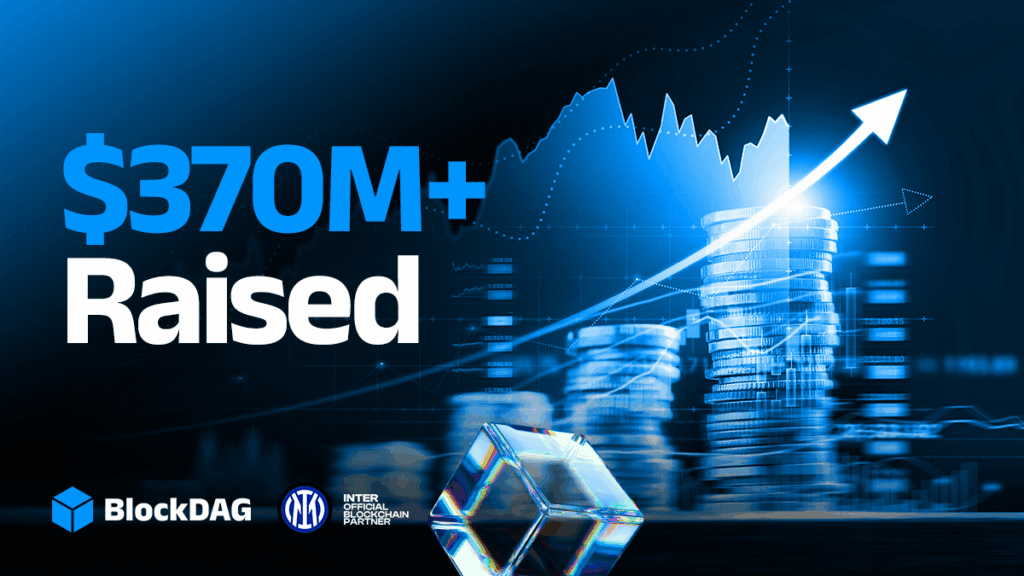
According to BlockDAG’s published figures, the project has raised over $425 million and sold more than 27 billion BDAG tokens. It also claims that more than 3 million users participate daily via its X1 mobile mining app. The team states that the network is available in a public testnet phase and that tools such as a block explorer, dashboard, and Stratum miner integration are live.
The project also advertises token-sale batches and pricing (including a promotional code referred to as “TGE” in its materials). Any pricing terms, discounts, or comparative return scenarios described by a project are inherently promotional and may not reflect future market outcomes.

BlockDAG also cites marketing partnerships and brand activations, including a relationship it describes with BWT Alpine Formula 1®. Readers should distinguish between marketing announcements and independently verifiable adoption or long-term network usage.
Participation-Based Token Distribution (Project-Described)
BlockDAG says its launch includes a leaderboard that ranks participants over a defined period (October 7 to November 26). In project materials, the ranking is described as affecting when participants receive BDAG tokens after launch, with earlier distribution for higher-ranked entries:
- Ranks 1–300: Distribution at launch (described as an “instant airdrop”)
- Ranks 301–600: Distribution after 30 minutes (project-stated)
- Ranks 601–1000: Distribution after 60 minutes, with longer delays for lower-ranked entries (project-stated)
Mechanisms that tie distribution timing to participation can shape market dynamics around launch and may introduce additional risks for participants. Details such as eligibility rules, token unlock schedules, and vesting (if any) should be reviewed directly in primary project documentation.
By comparison, NexChain has not publicly detailed a similar participation-based distribution structure. Where token-release mechanics are unclear, participants may face additional uncertainty around timing, liquidity, and the conditions under which tokens become transferable.
Roadmap vs. Current Evidence
NexChain’s messaging centers on a future AI-enabled roadmap. Until more technical evidence is available (such as a public testnet, code disclosures, audits, or independently verifiable usage), many of its claims remain difficult to assess externally.
BlockDAG, based on its own disclosures, points to a testnet environment and supporting infrastructure. However, reported fundraising totals, user counts, partnerships, and launch mechanics should still be treated cautiously, and readers should seek primary sources and independent verification where possible.

Website (for reference): https://blockdag.network
Telegram (for reference): https://t.me/blockDAGnetworkOfficial
This article is for informational purposes only and does not constitute financial or investment advice. This outlet is not affiliated with the project mentioned. Information about early-stage token sales may be incomplete or change over time; readers should review primary documentation and consider risks carefully.

