

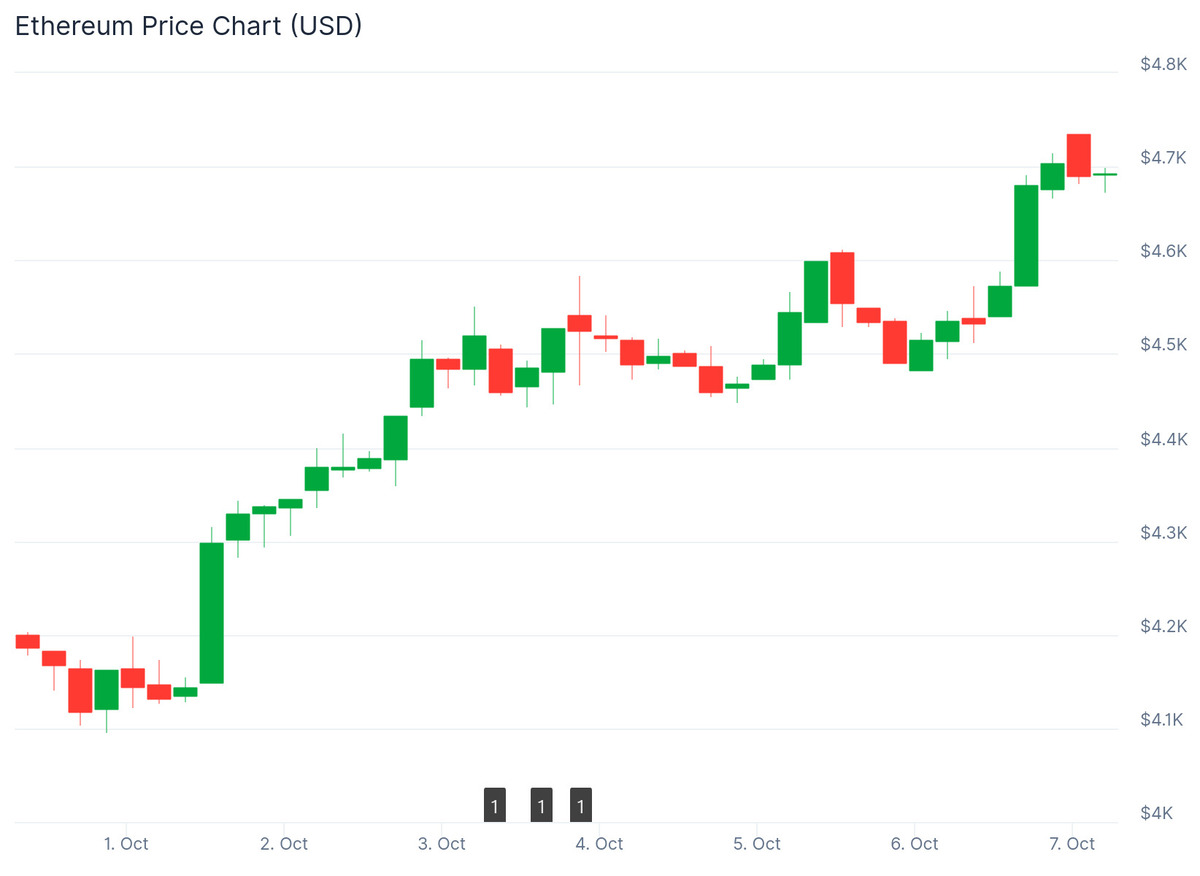
Ethereum (ETH) has regained market attention after moving past $4,600, alongside news around new exchange-traded products (ETPs) intended to offer regulated exposure. With interest growing around Ethereum’s scalability work and Layer-2 activity, short-term market focus has increased.
At the same time, Internet Computer (ICP) has posted weekly gains, which some market participants link to expanded developer tooling for the decentralized web and changes in total value locked (TVL) on its platform.
While ETH and ICP are drawing attention through recent price moves, BlockDAG has also been discussed in the market due to its fundraising updates and a project-described token distribution system.
According to BlockDAG’s materials, a “TGE” code is used in connection with access to a stated $0.0012 token-sale price and a ranking-based airdrop schedule. The project has also referenced a “Genesis Day” on November 26 and has published timelines describing planned milestones. The project further claims more than 312,000 holders, more than $420 million raised, and nearly 27 billion coins sold; these figures were not independently verified in this article.
Internet Computer (ICP) Builds Utility-Led Momentum
Internet Computer has drawn attention for recent price performance. Weekly gains have been notable, with ICP discussed in connection with upgrades in decentralized web tools and other usage metrics. The protocol’s value proposition, allowing developers to build web-level apps on-chain, is a recurring theme. Changes in TVL and developer activity have also been cited by supporters as indicators of progress.
Still, Internet Computer’s momentum is uncertain. The architecture remains relatively niche, with limited mainstream application adoption compared with larger platforms. While recent metrics may indicate movement, the gap between developer tooling and broad user adoption remains a key variable.
ICP’s price today reflects optimism around these upgrades, but much of that narrative is forward-looking. While the technical roadmap may be promising, it is still early, and adoption outcomes are not assured.
Ethereum (ETH) Trades Above $4,600 Following ETP-Related News
Ethereum is once again testing higher resistance levels, trading above $4,600 after months of consolidation. The launch of new Ethereum-based ETPs has contributed to renewed discussion, particularly because these products can provide regulated exposure to ETH without direct crypto custody.
Ethereum’s fundamentals have also received renewed attention as its rollup-centric roadmap aims to reduce congestion and gas fees over time. Layer-2 protocols continue to draw activity, and discussion around EIP-4844 and proto-danksharding has remained part of the long-term scalability narrative.
However, Ethereum is still grappling with systemic hurdles, including complex fee dynamics, competition from other chains, and ongoing regulatory uncertainty.
Even as ETH’s price trends upward, much of the near-term narrative is tied to market structure and external financial products alongside iterative protocol upgrades, rather than a single user-facing release.
BlockDAG: Project-Reported Token-Sale Figures and TGE Mechanics
BlockDAG has been promoted by its team around milestones and fundraising updates. The project states that its token sale has raised over $420 million, sold nearly 27 billion BDAG, and attracted more than 312,000 holders globally; these claims were not independently verified in this article. The project has also published “batch” pricing and references a “TGE” code in connection with a stated $0.0012 access price.
In addition, BlockDAG describes work that includes syncing physical mining units, a mobile mining app (X1), and steps toward a mainnet launch. The project has referenced November 26 as a “Genesis Day” tied to broader activation plans, and it describes an airdrop process that depends on a ranking system.
According to the project, the ranking mechanism affects the timing of token distribution (for example, faster distribution for higher ranks and delayed distribution for lower ranks). These mechanics are project-described and may change; readers should review primary sources and consider risks and eligibility rules.
More broadly, the project markets its approach as including a hybrid PoW and DAG consensus design, Testnet access, EVM compatibility, and mining hardware integrations. As with other early-stage crypto projects, implementation and adoption remain uncertain.
Final Thoughts
Ethereum and Internet Computer have both seen renewed attention tied to market moves and ongoing technical development, but outcomes remain uncertain and narratives can shift quickly in volatile markets. Ethereum’s discussion has also been influenced by ETP-related developments, while Internet Computer’s recent gains have been linked by supporters to ecosystem updates.
BlockDAG, meanwhile, is being discussed largely through project-reported fundraising figures and its stated token distribution mechanics, including a ranking-based airdrop schedule and a planned “Genesis Day” date. As with any token sale or airdrop program, participation details and risks should be evaluated using primary documentation.

Website (for reference): https://blockdag.network
This article contains information about a cryptocurrency token sale and related promotional distribution mechanics. This outlet is not affiliated with the project mentioned. This article is for informational purposes only and does not constitute financial or investment advice.

