

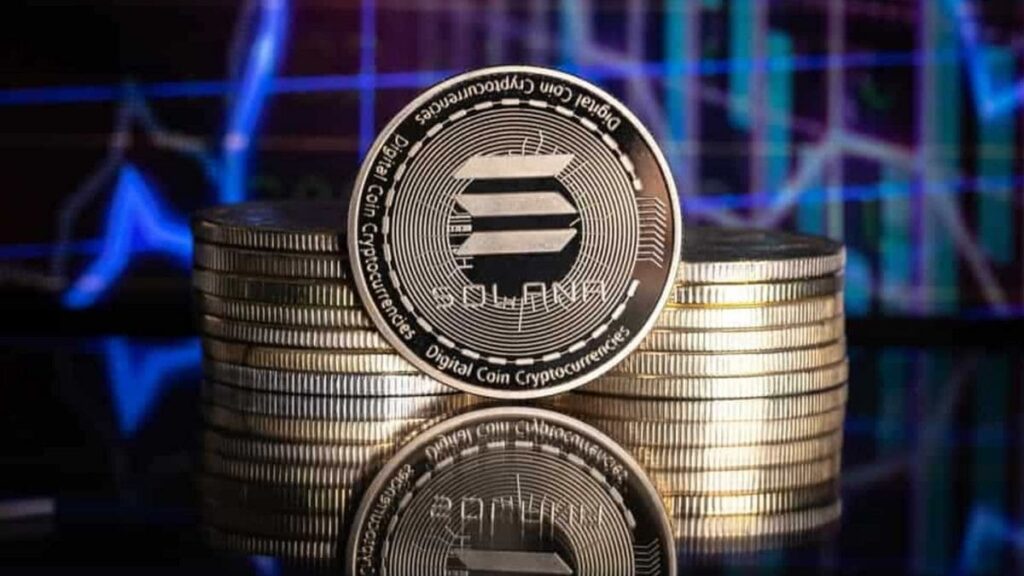
Early-stage token launches can attract attention during bullish market periods, but they also carry heightened uncertainty and loss risk. In October 2025, discussion around best crypto presales to buy today often centers on how token-sale pricing, incentive programs, and eventual exchange trading might affect outcomes. Established networks such as Solana and TRON continue to be discussed for their utility and adoption, while projects like BullZilla have been promoted around a multi-stage token sale and community incentives.
In this article, we look at three assets frequently mentioned in recent coverage: BullZilla ($BZIL), Solana (SOL), and TRON (TRX). Each comes with different levels of maturity and risk, and references to early-stage token sales should not be read as performance forecasts.
BullZilla ($BZIL) – Token sale overview (project-reported)
BullZilla ($BZIL) is being marketed through a multi-stage token sale. The project describes its current phase as “Roar Drop Incoming-A” and reports a token price of $0.00011241 at that stage. The same materials cite more than $750,000 raised, over 2,400 holders, and 30 billion tokens sold. The project also states an earlier stage price of $0.00000575, which implies a higher stage-to-stage token-sale price compared with the current phase; this does not represent realized or guaranteed returns and does not account for future secondary-market pricing.
BullZilla’s materials also reference a planned listing price of $0.00527. Any “ROI potential” based on a planned listing target is speculative and depends on whether a listing occurs, the terms of trading, liquidity, and broader market conditions. Readers should treat token-sale projections and illustrative examples as non-predictive marketing figures rather than financial outcomes.
The project describes incremental token-sale price changes between stages (for example, from $0.00011241 to $0.00011907). Such schedules reflect issuer-set pricing during a token sale and do not indicate how the token will trade on secondary markets.
The Roarblood Vault – Incentives described by the project
BullZilla describes a “Roarblood Vault” that it says is intended to support the ecosystem and related incentives. Project materials outline a referral program, including a 10 percent bonus on purchases of $50 or more and a 10 percent allocation linked to purchases made by referred users. These incentives are described by the project and may change; participation in referral programs can also introduce additional risks and compliance considerations depending on jurisdiction.
The project states that these incentives would continue after the token sale. Whether any incentive structure is sustained after launch typically depends on treasury management, user activity, and market conditions.
The HODL Furnace – Staking claims and variability
BullZilla also describes a staking feature called the HODL Furnace. The project advertises an annual percentage yield (APY) of 70 percent for locked tokens and references vesting mechanics. Staking rates are not guaranteed, can change over time, and depend on token economics, participation levels, and implementation details. Lock-ups may also limit liquidity and increase risk during volatile market periods.
Overall, BullZilla’s positioning combines meme branding with token-sale mechanics and incentives described by the project. Readers should review project documentation carefully and treat promotional language around “best” lists as marketing rather than objective assessment.
Participation process (general description)
According to the project’s public materials, participation in the token sale typically involves using a self-custody wallet and a supported network asset.
- Wallet setup: A Web3 wallet (for example, MetaMask or Trust Wallet) is commonly used for token-sale participation.
- Network asset: Some token-sale portals use ETH for purchases, which participants may obtain through third-party exchanges, subject to their own terms and fees.
- Token-sale portal: The project directs users to its sale page at the official BullZilla presale portal.
- Allocation and claiming: Token-sale terms commonly include when and how purchased tokens can be claimed; participants should verify the project’s stated timeline and conditions.
Any participation should be approached with caution, including careful review of smart-contract risk, custody practices, and local regulatory considerations.
Solana ($SOL) – Network activity amid volatility
Solana remains a widely used large-cap network across decentralized finance and NFT applications. The figures cited in market dashboards for SOL in this period include a price of $208.17 and 24-hour trading volume near $6.99 billion, alongside day-to-day price fluctuations.
Solana is frequently discussed for throughput, and public documentation has cited capacity figures of up to 65,000 transactions per second. At the same time, market volatility and technical indicators (such as moving averages) can shift quickly, and commentary about momentum should be treated as opinion rather than a forecast. Some market reports have also referenced fund flows into Solana-related products, though such data varies by source and methodology.
Compared with early-stage token sales, established networks like Solana generally have deeper liquidity and broader adoption, but they are still exposed to market risk.
TRON ($TRX) – Utility and stablecoin settlement activity
TRON is often highlighted for its role in stablecoin transfers and low-fee transaction activity. The figures cited in market dashboards for TRX in this period include a price of $0.334138 and daily volume of about $597 million, alongside normal short-term price movement.
The network has been used for stablecoin settlement and cross-border transfers, particularly in regions where users seek lower costs and faster confirmation. As with any chain, usage statistics and “fundamentals” can change, and token performance can diverge from network activity.
TRON’s ecosystem includes decentralized applications and staking options, but outcomes for token holders are not assured.
Conclusion: Early-stage token sales vs. established networks
Solana and TRON represent established networks with ongoing usage and market liquidity. BullZilla, by contrast, is described by its promoters as an early-stage token sale with incentive features such as referrals and staking. These categories are not directly comparable on risk: early-stage token sales can involve higher uncertainty around delivery, listings, and post-launch trading conditions.
Readers evaluating any token sale should focus on verifiable disclosures (team information, smart-contract audits if available, token distribution, lockups, and legal terms) and should treat any ROI projections, stage-based comparisons, or “best-of” claims as marketing language rather than evidence of future performance.
For More Information:
Project links (for reference):
Follow BZIL on X (Formerly Twitter)
FAQs About early-stage token sales mentioned in this article
What makes BullZilla stand out from other presales?
Project materials emphasize features such as the Roarblood Vault, staking, and referral incentives. Any performance claims or “ROI potential” are promotional estimates and are not guaranteed.
How risky are presales compared to Solana or TRON?
Early-stage token sales generally carry higher risk than established, widely traded assets, including higher execution risk and the possibility of illiquidity. Established tokens can still be volatile and can lose value.
What is the minimum investment required for BullZilla?
The project has stated that participation can start at $1, but minimums and eligibility may vary by payment method, jurisdiction, and project terms. Readers should verify current conditions directly in the project’s documentation.
How does Solana compete with BullZilla in terms of ROI?
Neither asset offers assured returns. Solana’s price is market-driven, while token-sale pricing is set by the issuer during fundraising; secondary-market performance for any newly issued token is uncertain and may differ significantly from token-sale targets.
What role does TRON play in the current crypto landscape?
TRON is commonly used for stablecoin transfers and other on-chain activity where users prioritize low fees and throughput, though usage trends can change over time.
Can BullZilla maintain growth post-presale?
The project says it intends to support incentives through its vault and staking features, but whether activity grows after launch depends on delivery, user adoption, liquidity conditions, and broader market dynamics.
Are these insights financial advice?
This article is for informational purposes only and does not constitute financial or investment advice.
Glossary
Token sale: Early-stage sale of tokens before broader market trading.
ROI (Return on Investment): Percentage change from an original cost basis; in crypto markets, outcomes are uncertain and can be negative.
APY: Annual Percentage Yield, a quoted yearly rate for rewards; actual results may vary and are not guaranteed.
Staking: Locking tokens in a protocol to earn rewards, typically with smart-contract and market risks.
Referral System: An incentive mechanism where users may receive bonuses for introducing new participants.
TPS (Transactions per Second): Measure of blockchain transaction processing capacity.
Stablecoin: Cryptocurrency designed to track a reference asset, such as the U.S. dollar, though designs and risks vary.
This article contains information about an early-stage token sale. This outlet is not affiliated with the project mentioned. As with any initiative within the crypto ecosystem, readers should do their own research and consider the risks involved. This article is for informational purposes only and does not constitute financial or investment advice.

