

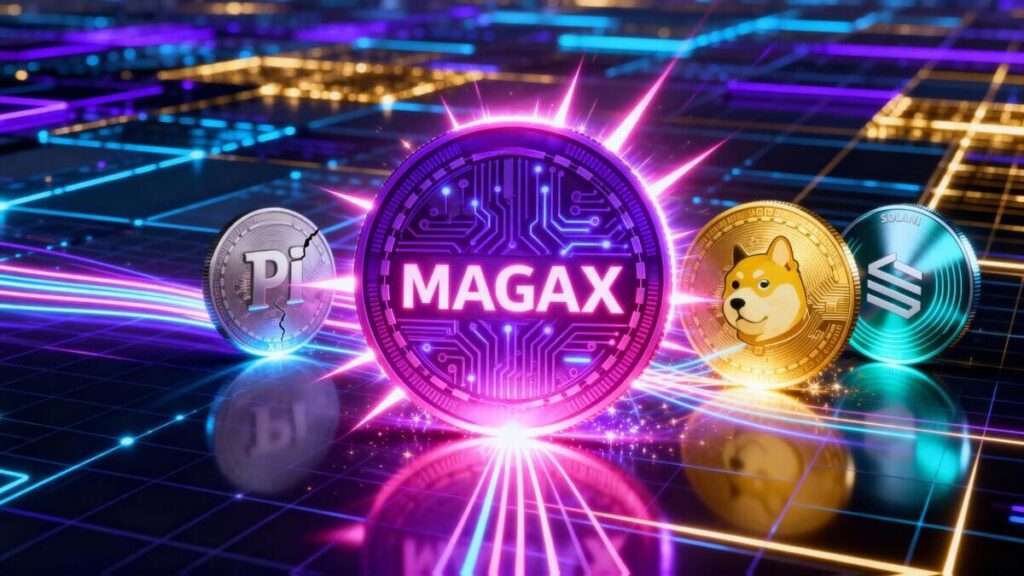
Pi Network: Upgrades, Partnerships, and Price Pressure
Pi Network is pushing ecosystem upgrades, with Testnet 1 moving to Protocol v23 to support Rust smart contracts and stronger KYC, plus a new partnership with Sign Protocol.
Its token price has also remained under pressure, trading near $0.2552 at the time of writing, and reported to be more than 90% below a prior peak near $2.99. Some market observers say broader adoption and additional exchange listings could influence liquidity and price discovery. Separately, a large purchase of about 381 million PI tokens (roughly $134 million at the cited price) has been widely circulated on social media and by on-chain trackers, although the buyer’s intent is not publicly known.
Dogecoin: Legacy, ETF Speculation, and Market Presence
Dogecoin continues to benefit from broad name recognition as an early meme coin. Its cultural footprint keeps it in online conversation, and ongoing speculation about a potential DOGE ETF has periodically increased attention from traders.
DOGE remains a large-cap asset with significant daily trading activity, which can support liquidity but does not indicate future performance. Any long-term price targets shared by commentators should be treated as speculative and uncertain.
Solana: Network Capacity and Large-Holder Activity
Solana is often cited for high throughput, with commonly referenced figures of up to 65,000 transactions per second under certain conditions and low fees in many use cases. Its ecosystem continues to attract developers and some institutional interest, though network performance can vary with demand and other factors.
Some analysts also track large-holder (“whale”) wallets and flows across Solana-based assets, but these signals are difficult to interpret and do not reliably predict market direction. Price forecasts such as $400–$500 by 2026 are speculative and should not be read as expectations.
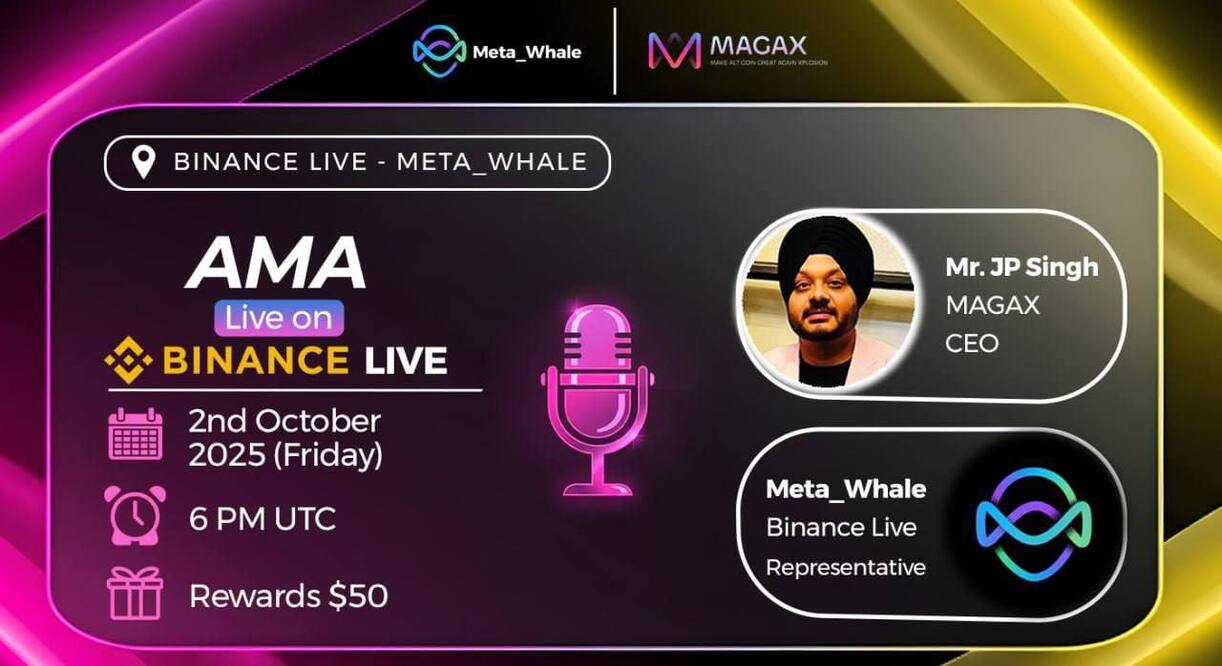
Scheduled for Oct. 2, 2025, 6PM UTC (link for reference): https://www.binance.com/en/live/u/30976012
MAGAX: Project Claims and Token Sale Update
MAGAX has also been circulating in social media and promotional materials. According to the project’s website, it has moved from Stage 2 into Stage 3 of a staged token sale, with a stated price of $0.000318. The project describes the sale as progressing through multiple stages with changing terms; this information has not been independently verified.
Project materials describe MAGAX as a “Meme-to-Earn” concept, including an AI-branded component (“Loomint AI”) intended to reward user activity while attempting to limit fraudulent behavior. The project also references DeFi features such as staking and governance, which carry technical, market, and counterparty risks and may not be available in all jurisdictions.
The team also links to a CertiK audit report. Audits typically assess specific code at a point in time and do not guarantee security or outcomes.
How MAGAX Differs From the Other Projects Discussed
Compared with Pi, DOGE, and SOL, MAGAX is positioned as a newer project with different market dynamics and higher uncertainty. Supporters point to factors such as:
- Early-stage status: The project describes itself as being in an early fundraising phase.
- Visibility: Online promotion and trend tracking can increase short-term attention, but may not be durable.
- Culture + mechanics: The concept blends meme/community activity with product features described by the project.
- Staged sale structure: The project states that pricing and terms change across stages.
Pi faces adoption and rollout questions, DOGE remains primarily a market and culture story, and SOL is often discussed as infrastructure for applications. MAGAX, by contrast, is being marketed as a participation-driven meme project with a token sale, which generally involves higher uncertainty and fewer established track records.
A Shifting Landscape in Altcoins
Altcoins continue to diversify by narrative and use case: Pi focuses on identity and onboarding, Dogecoin on legacy and brand, and Solana on infrastructure. MAGAX is presented by its team as a community-oriented meme project with additional product features.
Interest in newer, community-driven tokens can rise and fall quickly, and outcomes depend on execution, market conditions, liquidity, and regulatory factors. Readers should treat project timelines and marketing claims with caution and verify primary sources where possible.
MAGAX’s token sale is referenced here for context because it is central to the project’s current messaging.
This article is for informational purposes only and does not constitute financial or investment advice. This outlet is not affiliated with the project mentioned. Cryptocurrency purchases and token sales involve risk, including the possible loss of principal; readers should do their own research and consider their circumstances before participating.

