

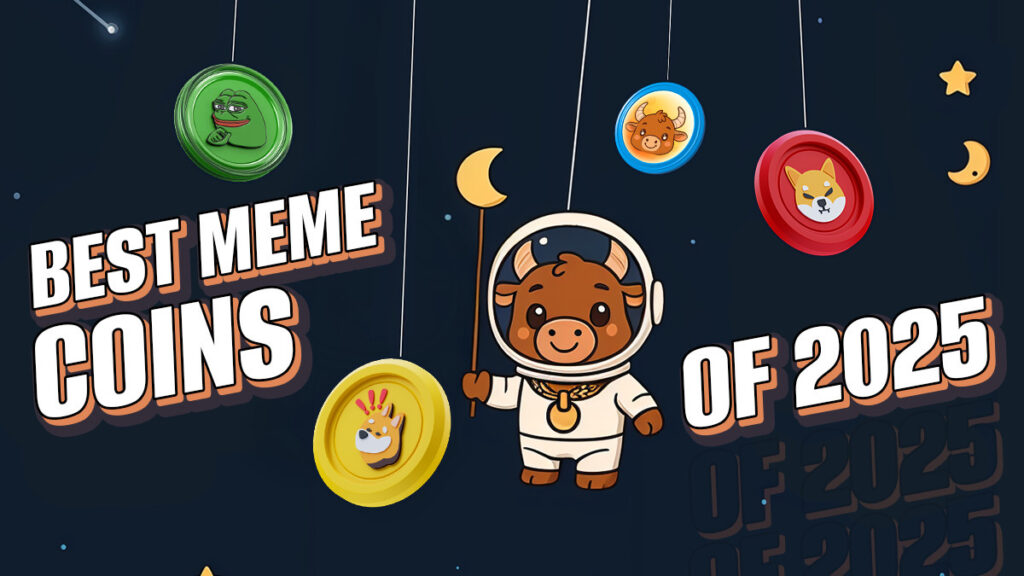
Meme coins and other community-driven tokens often attract attention through branding, social activity, and novel token mechanics. Projects such as MoonBull, Non-Playable Coin, and Baby Doge Coin have been discussed across social media and crypto forums for these reasons. This article provides an overview of how each project presents its token design and community features, based on publicly available project materials and widely reported market context.
MoonBull, in particular, has been promoted by its team as an early-stage token project with defined tokenomics and community programs. While Non-Playable Coin and Baby Doge Coin remain visible within meme-coin circles, MoonBull’s materials emphasize mechanisms such as liquidity allocation, holder distributions, and a referral program. As with any early-stage crypto project, independently verifying claims and understanding risks is important.
1. MoonBull token mechanics: liquidity allocation, holder distributions and supply reduction
According to MoonBull’s project documentation, the token is designed with automated on-chain rules that apply to $MOBU sales. The project states that a portion of each sale is allocated to a liquidity pool, a portion is distributed to existing holders, and a portion is burned (removed from circulation). These mechanisms are commonly used across various tokens; their real-world impact can depend on liquidity depth, trading activity, and broader market conditions.
MoonBull also describes a referral program and other marketing incentives, including token allocations and bonus distributions, aimed at encouraging community participation. These incentives are described by the project and may change over time; readers should review the project’s terms and disclosures directly for details.
MoonBull token sale: project-reported stages and pricing
MoonBull states that it is running a staged token sale with multiple rounds and incremental price changes between stages. The project has publicly shared figures such as stage counts, a quoted token price, and estimates for the number of holders at certain points in time. These figures are project-reported and can change quickly; they should not be treated as guarantees of future demand, listing outcomes, or price performance.
Any projections or examples of potential returns based on token-sale pricing versus a possible listing price are inherently speculative. Actual outcomes can differ materially due to liquidity conditions, token unlock schedules, market volatility, and execution risks.
2. Non-Playable Coin: gaming-themed branding and community engagement
Non-Playable Coin (NPC) is positioned as a meme-coin project that draws on gaming culture. Project materials and community discussions have highlighted its branding and social engagement, alongside smart-contract features intended to distribute a portion of activity to holders. As with similar tokens, participation can involve significant price volatility and liquidity risks.
3. Baby Doge Coin: community-led meme-coin ecosystem
Baby Doge Coin is a meme-coin project that has built visibility through online community activity and branding connected to Dogecoin’s broader meme culture. Supporters often reference mechanisms such as holder distributions and token burns, as well as charitable or partnership-related messaging shared by the project. Readers should evaluate these claims through primary sources and consider that market performance is uncertain.
Conclusion
MoonBull, Non-Playable Coin, and Baby Doge Coin illustrate different approaches to meme-coin branding and token mechanics, ranging from gaming-themed narratives to deflationary or distribution features described by their respective teams. However, early-stage token sales and meme coins can carry elevated risks, including extreme volatility, liquidity constraints, smart-contract risks, and rapid changes to community sentiment. Readers should treat project-reported figures and features as informational claims that require independent verification.
For reference:
Project website: Visit the Official MOBU Website
Project social: Follow MOBU ON X (Formerly Twitter)
Frequently Asked Questions about the MoonBull token sale
What is the MoonBull token sale and why is it discussed?
MoonBull describes a staged token distribution process that takes place before broader market trading. Such events are often discussed because they involve early-stage pricing and evolving project disclosures, but outcomes remain uncertain.
How many stages are in the MoonBull token sale?
The project states that its token sale is divided into 23 stages with progressive price changes.
What incentives does the project describe for participants?
MoonBull’s materials describe mechanisms such as holder distributions and marketing incentives (including referral-related bonuses). These are project-reported and may be revised.
How quickly did MoonBull reach Stage 3?
MoonBull has reported that it moved to Stage 3 shortly after launch. This claim is project-reported and should be independently verified where possible.
Can holders receive automatic distributions?
The project describes a “reflections” mechanism intended to distribute a portion of certain transaction activity to holders. Whether and how this functions in practice depends on contract design, trading activity, and other factors.
Glossary of Key Terms
Liquidity Pool: Funds reserved to facilitate token trading without extreme price changes.
Reflections: Automatic distribution of transaction fees (or other programmed distributions) to token holders.
Token Burn: Permanent removal of tokens to reduce supply.
Token sale stage: A phase of a token offering prior to broader market trading.
ROI (Return on Investment): A measure used to compare the size of an investment with its outcome; returns can be positive or negative.
Article Summary
MoonBull, Non-Playable Coin, and Baby Doge Coin have been discussed within the meme-coin segment for their branding and token mechanics. MoonBull’s materials describe liquidity allocation, holder distributions, a burn mechanism, and referral-related marketing incentives, alongside a staged token sale. Non-Playable Coin emphasizes gaming-themed branding, and Baby Doge Coin highlights community activity and mechanisms such as burns and distributions. All three are subject to the risks and volatility commonly associated with meme coins and early-stage crypto projects.
This article is for informational purposes only and does not constitute financial or investment advice. This outlet is not affiliated with the project mentioned. As with any initiative within the crypto ecosystem, readers are encouraged to do their own research and consider the risks involved.

