

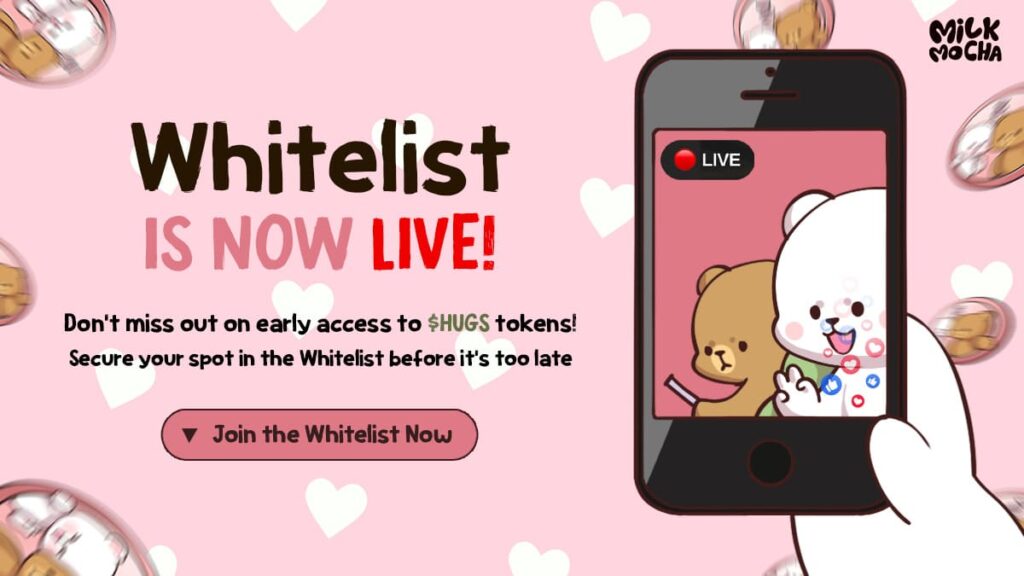
Milk & Mocha has expanded its brand into crypto with an official utility token $HUGS. According to project materials, the rollout uses a 40-stage multi-tiered token sale alongside supply burns and planned utility. As with any new token launch, details such as token economics and future features should be treated as project-reported and subject to change.
Below is an overview of how the token sale is described to work, including pricing stages, supply reduction mechanics, and promotional elements the project says it plans to run.
What Is the Multi-Tiered Sale?
Rather than launching with a single price point, $HUGS is described as rolling out over 40 structured token-sale rounds, with the token price increasing on a set schedule. The project states the first round began at $0.0002 per token, and that each new stage increases the price. This type of staged pricing is sometimes used to communicate a schedule in advance, but it does not guarantee demand or future performance.
The project also says any unsold tokens at the end of each round are burned (permanently removed), which would reduce the circulating or available supply. Supply burns can affect token supply dynamics, but they do not by themselves indicate value or price direction.
The Numbers: Pricing Stages and Illustrative Examples
Some promotional materials for staged token sales include examples showing how token quantities differ by stage. These examples depend on assumptions (including the final stage price and the ability to sell at that price) and should not be treated as forecasts.
For context, the project’s stated pricing schedule includes early-stage pricing such as $0.0002 per token and a stated final stage price of $0.0465. Any calculations based on these figures are illustrative only and do not account for liquidity, market conditions, or execution risk.
The project also references a live dashboard intended to display stage information and related metrics. Readers should independently verify any on-site figures and on-chain activity where applicable.
Leaderboards, Prize Pools, and Burn Events
In addition to staged pricing, the project describes weekly promotional mechanics tied to each round.
According to project materials, each round includes a competitive leaderboard and a $35,000 weekly prize pool (paid in USDT) allocated to the top three buyers for that week. Promotional incentives can influence participation and should be viewed as marketing activity rather than an indicator of long-term fundamentals.
The project further states that unclaimed or unsold tokens from a weekly round are burned and that related burn transactions are intended to be publicly verifiable on-chain. Readers should verify any burn addresses and transaction hashes directly using a reputable block explorer.
Turning the Token Sale Into a Game
The rollout is positioned as a community event, with weekly rounds framed as recurring competitions. This structure may increase engagement, but it can also add complexity and encourage short-term behavior around deadlines and rankings.
Project materials mention social sharing and referral links as part of the campaign mechanics. Referral programs are marketing tools and may introduce conflicts of interest for participants promoting the token.
The project also describes $HUGS as the native currency for a broader Milk & Mocha digital ecosystem, including games, NFTs, governance, and merchandise-related features. These utilities are plans and should be evaluated based on delivered products, timelines, and transparent documentation.
The project indicates that holding the token may be linked to access to certain features, including staking and contests. Any rewards, eligibility rules, and risks depend on the final implementation and may change.
Scarcity + Utility: What the Project Says It’s Building
Milk & Mocha’s materials emphasize several elements:
- Supply reduction through regular burns (as described by the project)
- Gamified participation via leaderboards and promotions
- Brand recognition built around established characters
- Planned utility including staking, games, and NFTs
Whether these elements translate into sustained usage depends on execution, transparent disclosures, security, and market conditions.
Final Thoughts
The project’s 40-stage token sale combines staged pricing, token burns, and promotional events, alongside plans for broader utility. Readers considering following the project may want to review primary documentation (including token allocation, lockups/vesting, audit information if available, and jurisdictional restrictions) and verify any on-chain claims independently.
This article is for informational purposes only and does not constitute financial or investment advice. This outlet is not affiliated with the project mentioned.

