

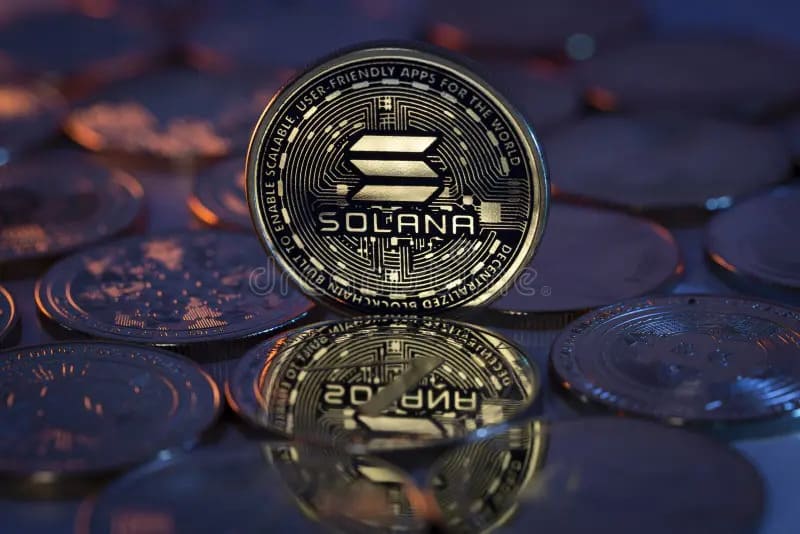
Cryptocurrency markets have seen renewed discussion around established networks such as Solana and Hedera, alongside early-stage token sale projects such as BullZilla ($BZIL).
This article summarizes publicly described features of Solana and Hedera, and outlines elements BullZilla has described in its token-sale materials. References to pricing stages, token mechanics, or fundraising totals are based on project-provided information where noted and should not be read as forecasts.
BullZilla: Project overview (as described by the team)
BullZilla describes itself as a meme coin project built on Ethereum. Project materials state that it plans to use features such as staking rewards and a referral program. As with any early-stage token distribution, details can change, and participation may involve technical, market, and smart-contract risks.
The “Roar Burn Mechanism”: Supply reduction concept
According to the project, BullZilla uses a “Roar Burn Mechanism” in which tokens held in a “Burn Pool Reserve” are periodically removed from circulation. The project states these burns are recorded on Ethereum. Supply-reduction mechanisms are design choices and do not, on their own, indicate how a token’s market price will behave.
The project also refers to “Roar Surge” events as milestones intended to signal progress. Readers should treat such labels as marketing and community terminology rather than independently verified indicators.
Token-sale update: Stage 3C (project terminology)
BullZilla states it is in “Stage 3C” of its token sale. The following figures are project-reported:
- Current price (project-reported): $0.00007241
- Funds raised (project-reported): Over $530,000
- Participating wallets (project-reported): Over 1,700
The project also references an earlier stage price of $0.00000575. Stage-based pricing structures are common in token sales and should not be interpreted as evidence of future appreciation or liquidity.
Hypothetical return examples and limitations
Some token-sale promotions include hypothetical return scenarios to illustrate how token quantity and price interact. These examples are speculative, omit many real-world factors (including liquidity, taxes, volatility, and execution risk), and should not be treated as projections or guarantees.
Participation considerations (general)
- Wallets: Participation in token sales typically involves a self-custody Web3 wallet and careful handling of private keys.
- Network asset: Projects built on Ethereum commonly require ETH to cover transactions and fees.
- Project site: If considering participation, users generally verify they are using the project’s official website and check contract addresses via reputable sources.
- Token delivery terms: Token distribution timing, vesting, and claim mechanics vary by project and should be reviewed in the project documentation.
Solana: Network throughput and developer ecosystem
Solana is a smart-contract platform known for high throughput. Solana’s documentation has described performance figures of up to around 65,000 transactions per second (TPS) under certain conditions. This profile has made it a frequent choice for developers building decentralized applications (dApps), including in areas such as trading, gaming, and NFTs.
Solana is also associated with relatively low transaction fees compared with some other networks, though fees can vary by network conditions and application design. Differences in cost and execution characteristics are among the reasons developers choose between Solana and Ethereum-based tooling.
As with other large networks, Solana’s history includes periods of degraded performance and interruptions. Industry reports (including research publications such as Messari’s) have discussed ongoing efforts to improve reliability and validator operations, but uptime and performance remain operational considerations for builders and users.
Hedera: Governance model and energy profile
Hedera Hashgraph uses a hashgraph-based consensus design rather than a traditional blockchain structure. Hedera’s technical documentation describes throughput figures above 10,000 TPS under certain conditions, alongside relatively low energy usage compared with proof-of-work systems.
Hedera is governed by a council made up of organizations from multiple sectors. Supporters argue that this governance structure can provide continuity and clearer decision-making, while critics sometimes raise questions about decentralization tradeoffs. As with other networks, governance models can evolve over time.
On sustainability claims, Hedera has stated that it is carbon-negative, and broader industry research (including work cited by organizations such as the Cambridge Centre for Alternative Finance) has increased attention on energy use across networks. Methodologies and comparisons differ, so readers should review primary sources when evaluating environmental claims.
Hedera also offers native services aimed at token creation and predictable fee schedules. These characteristics have been cited by teams exploring enterprise or institutional use cases such as tokenized assets and supply-chain tracking, though adoption levels vary by application and jurisdiction.
Conclusion
Solana and Hedera are established networks with different technical and governance approaches, while BullZilla is an early-stage token project that describes features such as burns, staking, and referral incentives. Readers should distinguish between verified network metrics and project marketing claims, and should consider the higher uncertainty and downside risk typically associated with early-stage token sales.
For More Information:
Frequently Asked Questions for $BZIL token sale
What makes Solana unique?
Solana is designed to support high throughput and low transaction costs, and is commonly used for dApps across several categories.
Why is Hedera different from other blockchains?
Hedera uses a hashgraph-based consensus mechanism and a council governance model, and emphasizes energy efficiency in its technical and sustainability materials.
What is the Roar Burn Mechanism in BullZilla?
In project materials, it refers to a process where tokens are periodically removed from circulation. Any effect on market price is uncertain and depends on many external factors.
How much has BullZilla raised in its token sale?
The project has reported raising over $530,000, with more than 1,700 participating wallets, as of its published figures at the time of writing..
Is investing in crypto risky?
Yes. Prices are volatile, regulations evolve, and smart contract vulnerabilities exist. Anyone considering exposure should research carefully and consider their risk tolerance.
Glossary
- TPS: Transactions per second, a measure of transaction processing capacity.
- dApps: Decentralized applications built on distributed networks.
- Hashgraph: A consensus approach different from a traditional blockchain, used by Hedera.
- Presale: An early-stage token sale or fundraising phase before broader distribution; terminology varies by project.
- Tokenomics: Economic design of a token, including supply and distribution.
- DeFi: Decentralized finance applications and services.
- Burn mechanism: A process that permanently removes tokens from circulation.
- ETH: Ethereum’s native cryptocurrency.
- Referral system: A marketing incentive program that rewards users for referring others, as defined by a project.
- Meme coin: A token associated with internet culture; these assets are often highly speculative.
ALT TEXT
Solana overview, Hedera overview, BullZilla ($BZIL) token sale, Ethereum-based token, token burn mechanism, staking (project-described), referral incentives (project-described)
Disclaimer
This article provides a general overview of Solana and Hedera and summarizes BullZilla’s stated token-sale mechanics based on project materials. Any figures related to pricing stages or funds raised are presented as project-reported and are not independently verified here. Crypto assets and token sales can involve substantial risk, including the risk of total loss.
This outlet is not affiliated with the project mentioned. This article is for informational purposes only and does not constitute financial or investment advice.

