

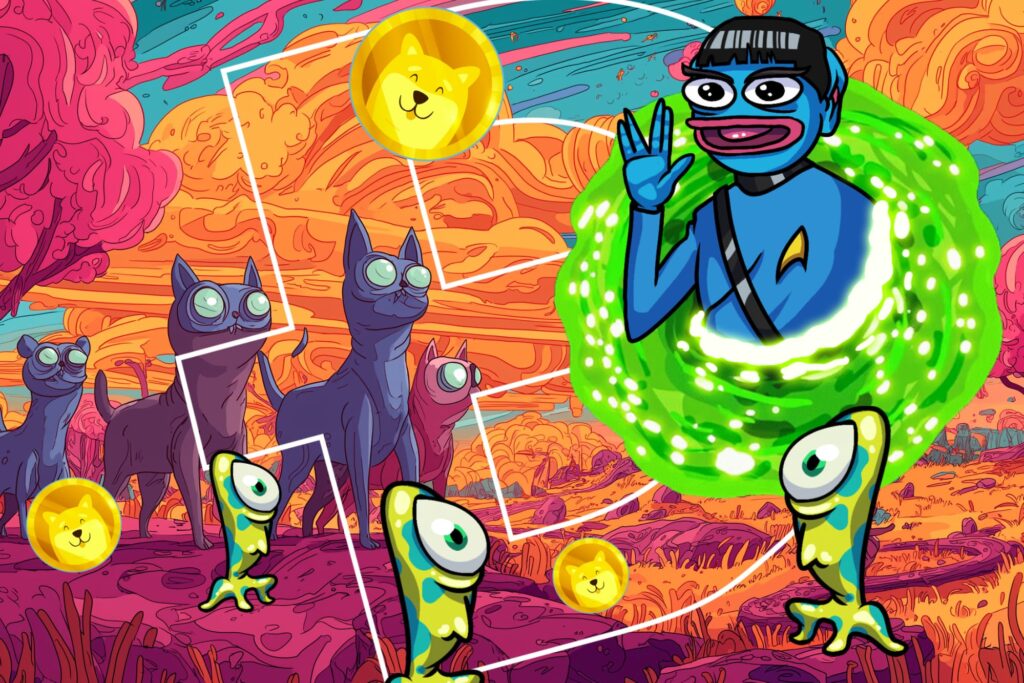
Interest in meme coins remains high, with tokens such as Dogecoin and Pepe often drawing attention during periods of broader market activity. This article compares these two established meme tokens with Layer Brett, an early-stage project, and summarizes key points described in public project materials.
Layer Brett (LBRETT): early-stage meme token tied to a layer-2 narrative
Layer Brett is being marketed through an early-stage token sale. The project describes itself as using an Ethereum layer-2 approach and states that it aims to offer faster and lower-cost transactions than Ethereum mainnet. These are project-reported claims that readers should verify independently.
Unlike Dogecoin and Pepe, which are primarily meme-driven tokens, Layer Brett positions itself as combining meme branding with utility. As with other new crypto projects, whether any technical roadmap is delivered is uncertain and carries significant execution risk.
The project also promotes marketing incentives, including a giveaway, as part of its community outreach. Such promotions can change and should not be treated as an indicator of future performance.

Dogecoin (DOGE): early meme coin with a large community
Dogecoin began as a joke project, but it has maintained a long-running community and has frequently been among the more actively traded crypto assets. Its durability is often cited as an example of how meme-driven tokens can persist for years.
DOGE’s adoption has been associated with internet culture and intermittent celebrity attention. However, activity driven by social trends can be unpredictable and does not necessarily reflect long-term fundamentals.
Dogecoin’s inflationary supply model is commonly discussed as a factor that may affect long-term price dynamics. Comparisons with newer projects should be treated cautiously, particularly where details such as supply, network design, and liquidity differ substantially.
Pepe coin (PEPE): meme token driven by online attention
Pepe coin emerged from online meme culture and quickly became widely discussed in 2023. Like many meme tokens, it has seen periods of elevated trading activity alongside significant price volatility.
Unlike Dogecoin, Pepe’s identity has largely been shaped by viral traction. Media coverage has noted that meme-driven projects can reach large valuations quickly, but those moves can reverse just as quickly.
Pepe coin also illustrates the risks associated with sentiment-led markets. Separately, Layer Brett’s materials describe features such as staking; any advertised rates, if offered, may change and should not be treated as predictable outcomes.
Conclusion
Meme coins can attract attention through culture, community, and speculative trading. Dogecoin and Pepe are established examples of that dynamic, while Layer Brett is an early-stage project presenting a layer-2 narrative alongside meme branding.
For any early-stage token sale, key details (including token supply, distribution, incentives, and technical claims) may change, and risks can be substantial.
Project website (for reference): Layer Brett
Telegram: @layerbrett
X: Layer Brett (@LayerBrett) / X

This article contains information about a cryptocurrency token sale. This outlet is not affiliated with the project mentioned. This article is for informational purposes only and does not constitute financial or investment advice.

