

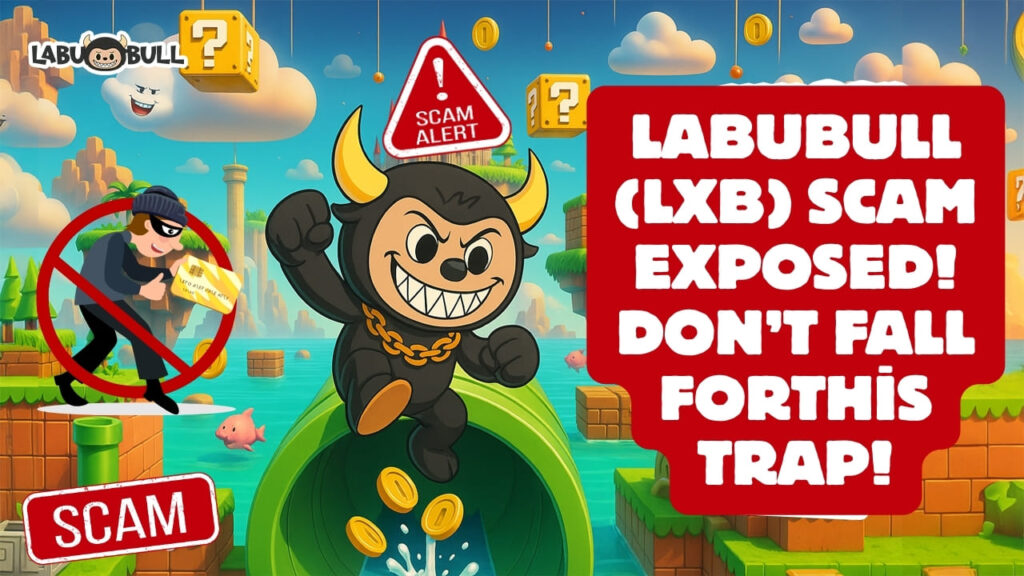
The meme coin scene in 2025 is bigger, louder, and riskier than ever. Each week, a new project is marketed as the “next Dogecoin” or a potential “moonshot.” Some early-stage token sales are framed as speculative experiments. Others can carry elevated risks, including the possibility of fraud.
One of the most promoted names right now is Labubull ($LXB). Its marketing materials describe a 16-stage token sale, “Rage Burns,” “Horn Lock” staking with an advertised 80% APY, and “Mischief Drops.” On the surface, it is presented as playful. However, several elements of the public-facing documentation and website may warrant extra caution.
This article outlines potential risk indicators associated with Labubull based on publicly available information, then briefly references MaxiDogeToken as another project readers may compare for context while doing their own due diligence.
Why Labubull Raises Red Flags
1. No Liquidity Allocation
Labubull’s tokenomics describe allocations of 45% to the token sale, 18% to staking, 13% to burns, 9% to marketing, 4.5% to the team, and 9.5% to the ecosystem.
One point that may concern buyers is that these categories do not clearly describe a liquidity allocation.
If a project does not plan for liquidity (or does not clearly explain it), secondary-market trading can be impaired and participants may have difficulty exiting positions. A lack of clarity around liquidity is a common risk factor cited in cases where projects fail or behave deceptively.
2. Aggressive Email Harvesting
Calls such as “Whitelist Now! SUBMIT” appear across the site, including on the privacy policy. While email collection is common, persistent prompts can also function as list-building for marketing, retargeting, or other outreach. Readers should review what permissions they are granting and what data is collected before submitting personal information.
3. Audit Status Is Unclear
Labubull displays audit firm logos alongside the phrase “Audits in Process.” An audit in progress is not the same as a completed, published report. Without a verifiable report (and a way to confirm its authenticity), security claims remain difficult to assess.
4. High APY Marketing Claims
Horn Lock staking is advertised as offering 80% APY. Such figures may be difficult to sustain and are sometimes used as marketing. The article also notes that staking is described as not being live until Stage 8 of the token sale.
5. A Weak or Hard-to-Access Whitepaper
The whitepaper is reported here as sometimes failing to load. When accessible, it includes the statement: “The $LXB token has no intrinsic value.” Many meme tokens include similar disclaimers, but readers should treat such language as a signal that the token’s value depends heavily on speculation and market sentiment.
6. Terms That Favor the Issuer
Labubull’s terms are described as allowing the project to control token exchange rates, declare all sales final, and cancel the token sale at any time. Buyers should review terms carefully and consider the practical implications for dispute resolution and refunds.
7. Presentation and Verification Gaps
Misspellings like “Exlusive” and generic, AI-style copy can undermine credibility. The site also shows a grid of large brand logos like Microsoft, AWS, and CoinMarketCap; if these are not accompanied by verifiable partnership announcements, they may be misunderstood as endorsements. Readers should rely on independently verifiable sources rather than logo displays.
Common Patterns to Watch For
Some of the issues described above resemble patterns frequently discussed in reporting on fraudulent or failed token launches, including:
- Marketing that emphasizes outsized returns rather than verifiable disclosures.
- Heavy emphasis on whitelist sign-ups and lead collection.
- A token sale with an unclear liquidity plan.
- Very high advertised staking yields.
- Limited transparency after launch regarding listings, liquidity locks, or contract controls.
These signals do not prove wrongdoing on their own, but they can increase downside risk for participants.
A Comparison Point: MaxiDogeToken
Not all meme coin projects are structured the same way, and disclosures vary widely. Readers evaluating one project often compare published documentation, on-chain controls, and the clarity of risk disclosures across multiple projects.
One example mentioned in community discussions is MaxiDogeToken. Based on its public materials, it presents itself as a community-focused meme coin and describes mechanics around launch and token distribution.
Points Readers May Want to Verify
- Liquidity disclosures – Whether the project clearly explains how liquidity is seeded and managed at launch.
- Tokenomics clarity – Whether allocations are explained in specific, auditable terms.
- Data collection practices – Whether marketing sign-ups are optional and how user data is handled.
- Reward mechanics – Whether any yield or incentive programs are described with clear assumptions and risks.
Conclusion
Based on the project’s publicly visible materials, Labubull ($LXB) presents several risk indicators, including unclear liquidity planning, ambiguous audit status, aggressive whitelist marketing, and high advertised staking yields. Readers should treat these as cautionary signals and verify any claims independently.
For those following meme coin launches generally, comparing disclosures across multiple projects can help highlight differences in transparency and risk framing. MaxiDogeToken is one example that readers may review as part of that broader research.
The takeaway: approach early-stage token sales with caution, prioritize verifiable documentation, and consider the possibility of total loss.
Frequently Asked Questions About Labubull
Is Labubull ($LXB) a scam?
It is not possible to confirm intent based solely on marketing materials. However, the issues described above may indicate heightened risk and are similar to warning signs often cited in scam or failed token launches.
What is MaxiDogeToken?
MaxiDogeToken is a meme coin project whose public materials describe a community-oriented approach and outline launch and token distribution mechanics.
Why is liquidity critical?
Liquidity helps enable trading and price discovery. Without adequate liquidity (or clear disclosures about it), buyers may face significant difficulty selling tokens and may be exposed to extreme slippage.
Are all meme coin token sales scams?
No. Some projects publish audits, disclose contract controls, and provide clearer liquidity plans. Even so, meme coins and early-stage token sales can be highly volatile and risky.
Glossary of Key Terms
Meme Coin – A cryptocurrency based on internet culture or jokes, often driven by hype.
Token sale – Early fundraising before exchange listings.
Tokenomics – The distribution and economic model of a token.
Liquidity Pool (LP) – Reserves of tokens on a DEX that allow trading.
Rug Pull – A scam in which developers drain liquidity or otherwise prevent holders from exiting, leaving tokens difficult to sell.
APY (Annual Percentage Yield) – The yearly return from staking or lending tokens.
Whitelist – A sign-up system for early token sale participation; it can also be used for marketing lead collection.
FOMO (Fear of Missing Out) – Investor psychology that can drive rushed buying.
Audit – A security review of smart contracts.
Whitepaper – A project’s technical and economic blueprint.
This article is for informational purposes only and does not constitute financial or investment advice. This outlet is not affiliated with the project mentioned.

