

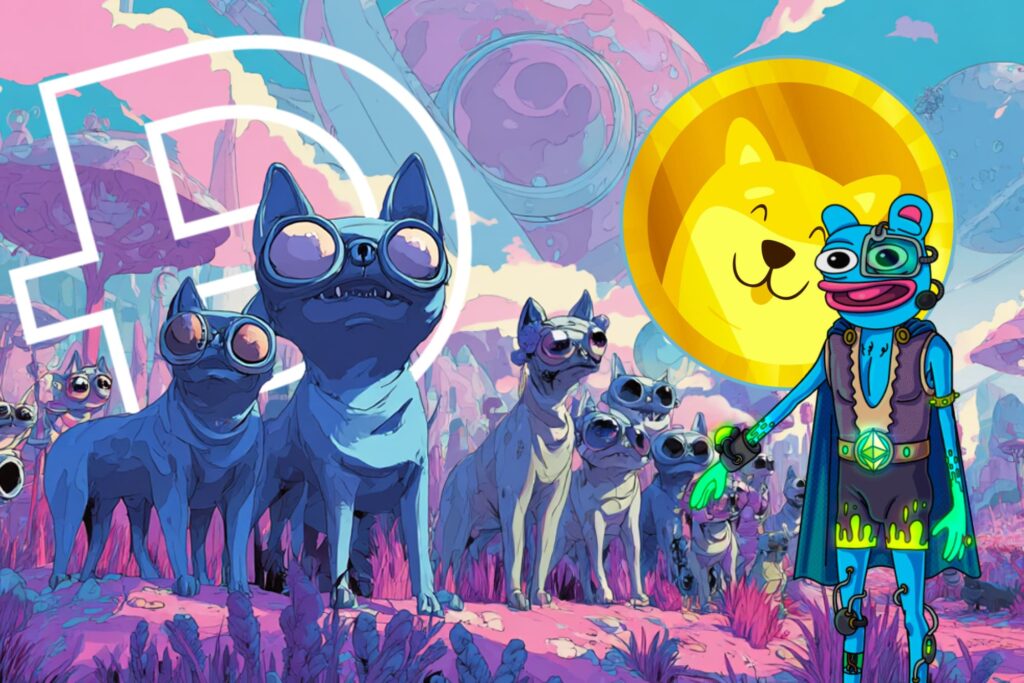
Dogecoin has attracted a large community since it began as a joke in 2013, and it reached around $0.7 in 2021. As the cryptocurrency market continues to evolve, some market participants are asking whether Dogecoin could revisit prior highs or reach higher price levels in the future—outcomes that would depend on broader market conditions, adoption, and sentiment.
In this article, we review common Dogecoin price prediction scenarios and briefly note newer meme-coin projects that have recently launched, including LayerBrett (project website for reference). This is not an endorsement of any asset.
How should Dogecoin price forecasts be interpreted?
Dogecoin has recently traded around $0.23, and some analysts have suggested scenarios where it moves toward $0.30 in the near term. Such projections are inherently uncertain and typically rely on technical analysis, market liquidity, and sentiment indicators that can change quickly.
The article’s original figures referenced a large year-over-year increase; however, percentage gains in crypto can vary widely depending on the time window used and do not predict future performance. Market commentators, including Ali Martinez, have described current levels as historically notable based on their own models, but these views are not guarantees of outcomes.
Martinez has also discussed potential resistance levels (such as $0.25) and possible follow-on targets (such as $0.30). References to trading volume and so-called “whale” activity are commonly used as contextual signals, but they do not reliably indicate where price will go next.
Speculation about Dogecoin reaching $10 implies a major change in market conditions and demand. Whether that happens is unknown, and any long-range target should be treated as highly speculative.
LayerBrett: what the project says it is building
LayerBrett ($LBRETT) is a newer project that describes itself as combining meme branding with Ethereum Layer 2 technology. According to project materials, it aims to support faster transactions and lower fees than Ethereum mainnet, although how a specific token benefits from those properties depends on the project’s actual implementation and adoption.
Project communications describe an early-stage token sale and a staking program. Any stated rewards, APY figures, or other incentives should be treated as marketing terms that can change and are not independently verified here.
More broadly, Layer 2 networks have grown in prominence within the Ethereum ecosystem, but whether a particular project achieves traction depends on execution, security considerations, liquidity, and market demand.
Points to consider when evaluating early-stage meme-coin projects
Early-stage tokens can carry additional risks, including limited operating history, concentrated token ownership, smart-contract vulnerabilities, and liquidity constraints. Claims about “utility,” scalability, or future adoption should be evaluated against publicly available technical documentation, audits (if any), token distribution details, and ongoing development activity.
Comparisons between established assets such as Dogecoin and newly launched projects can also be misleading because they differ substantially in market size, liquidity, and maturity.
Website: https://layerbrett.com
X: (1) Layer Brett (@LayerBrett) / X
This article is for informational purposes only and does not constitute financial or investment advice. This outlet is not affiliated with the project mentioned.

