

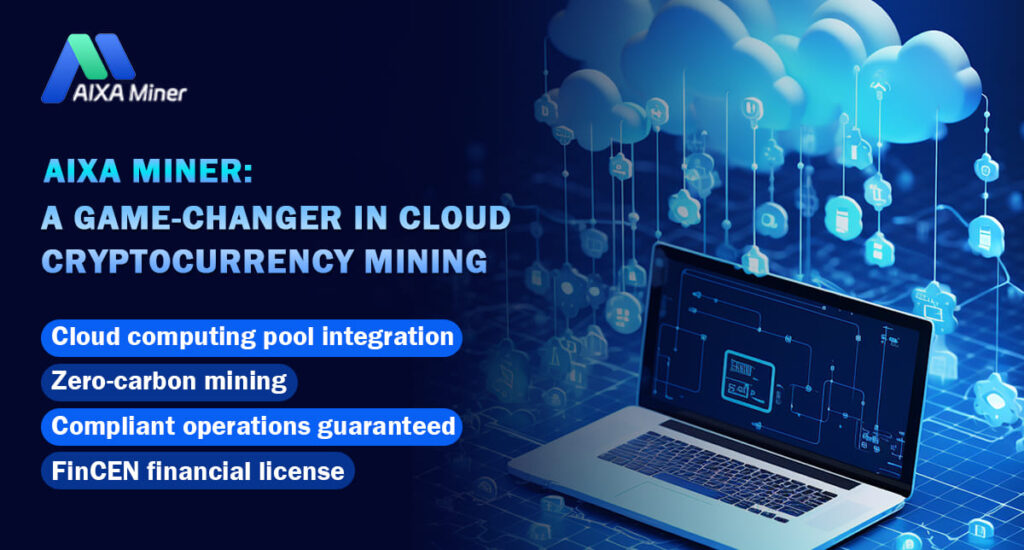
In 2025, interest in crypto “passive income” narratives has continued to draw attention to cloud mining and hashpower-rental services. Broader market events (including Bitcoin’s halving cycle) and activity across Ethereum-based applications are often cited as reasons some users explore alternatives to running mining hardware directly. However, the availability, economics, and risks of cloud mining can vary widely by provider and contract terms.
Many cloud-mining operators market features such as automated allocation, renewable-energy claims, referral programs, and short-duration contracts. These offerings can reduce the need for users to manage physical equipment, but they also introduce counterparty risk and reliance on project-reported figures. Readers should treat any projected payouts, rates, or “profit” statements as marketing claims unless independently verified.
Below is a list of services discussed in this segment of the market, including the provider linked here: cloud mining platforms that will be closely monitored along with AIXA Miner
1. AIXA Miner – AI-Powered Mining with Daily Payouts
AIXA Miner describes itself as a cloud-mining service that uses AI-based optimization and renewable-energy claims, with a range of contract options. The website also advertises a $20 “free trial” contract; as with any promotional offer, users should review eligibility rules, withdrawal conditions, fees, and counterparty risk.
About AIXA Miner
According to the project’s materials, AIXA Miner aims to make cloud mining accessible through pre-set contracts and a hosted dashboard, rather than requiring users to buy and operate mining hardware. Any references to “daily” payouts or profitability should be treated as non-guaranteed and dependent on contract terms, fees, and market conditions.
Key Competencies:
- Free Trial Contract – The site advertises a $20 bonus-style trial intended for testing the service. Promotional credits may come with limitations or conditions that are not always obvious in marketing copy.
- AI-Driven Contract Allocation – The platform states that it allocates funds across multiple assets to manage efficiency and risk. These claims are not independently verified in this article.
- Green Energy Power Source – The company promotes the use of clean energy for its operations. Readers may wish to look for third-party evidence where available.
- A Partner Program with Perpetual Commissions – The site also describes an affiliate/partner program. Such incentives are marketing mechanisms and should not be interpreted as evidence of investment performance.
AIXA Miner Contract Table
The project publishes contract tiers and payout figures on its website. Because these figures are project-provided and can change based on terms, fees, and market conditions, this article does not reproduce them as a comparative performance table.
2. BitDeer – Enterprise Backed Mining Marketplace
BitDeer operates a mining marketplace model, offering users access to hashpower products for Bitcoin and other cryptocurrencies. The specifics depend on the selected product, duration, fees, and the underlying mining conditions.
Key points to review include contract structure, pricing, fee schedules, and how payouts are calculated.
Advantages:
- Configurable contract parameters (amounts and durations) are typically available, depending on the product.
- Dashboards may show operational data and payout information, though transparency depends on the provider’s reporting.
- The service is often discussed in connection with large-scale mining infrastructure, which may appeal to users comparing operational scale rather than returns.
Who is it for?
- Users who want to select hashpower products and monitor contract performance parameters.
- Organizations evaluating enterprise-oriented offerings (subject to jurisdictional and compliance requirements).
3. StormGain – Mobile-Friendly Cloud Mining
StormGain promotes a mobile-focused experience and includes an in-app mining feature alongside trading functionality. Users should review any requirements that connect mining activity to app usage, account status, or other conditions.
Advantages:
- A mobile interface can lower the barrier to trying a cloud-mining-style feature, although “free” offers may still involve limits, eligibility criteria, or restrictions.
- Integration with an exchange may make it easier to manage balances within the same app, subject to fees and regional availability.
- Mobile dashboards can provide convenient monitoring of activity and balances, depending on the product design.
Who is it for?
- Users who prefer mobile-first crypto tools and want to review an integrated app experience.
- People who want mining-style features presented alongside other account functions (with careful attention to fees and terms).
4. Genesis Mining – Veteran in the Cloud Mining Industry
Genesis Mining is a long-running brand in the cloud-mining space and has offered contracts tied to Bitcoin and other assets at various times. As with similar providers, outcomes can be affected by mining difficulty, market prices, fees, and the provider’s operational reliability.
Advantages:
- Some offerings have historically included multiple assets, which can spread exposure across different mining economics.
- Analytics tools may provide estimates, but estimates are not guarantees and may rely on assumptions that change quickly.
- Community channels can help users track announcements, support updates, and contract changes.
Who is it for?
- Users who prioritize brand history and want to compare terms across established providers.
- Users who prefer to review data and assumptions before engaging with a contract.
5. Hashshiny.io – AI-Optimized Contract Management
Hashshiny.io markets automation and AI-assisted optimization for mining-related products across several assets. Readers should evaluate what is being optimized (e.g., allocation, switching, or reporting) and whether results are independently verifiable.
Advantages:
- Automation features may adjust certain parameters according to provider-defined rules; this does not ensure better outcomes.
- Providers often offer different contract sizes, which can change fee exposure and liquidity considerations.
- Real-time updates can improve visibility into reported activity, depending on data quality and transparency.
To whom does it refer?
- Users interested in automation features and who are comfortable assessing claims about AI-driven optimization.
- Users who want frequent reporting and the ability to review contract status regularly.
6. NiceHash – Global Hashpower Marketplace
NiceHash operates a marketplace where computing power is bought and sold for mining purposes. The experience can differ depending on whether a user is buying hashpower or providing it, and on the algorithms and assets involved.
Advantages:
- Support for multiple algorithms can offer more choices for users, though complexity and risk management requirements may increase.
- Withdrawal and reporting features vary by account type, region, and security settings.
- A mobile app can add convenience for monitoring balances and activity.
Who is it for?
- Users who want a marketplace approach to hashpower rather than a fixed contract with a single provider.
- Users who value flexibility across algorithms or coins, and who understand that flexibility does not reduce market or operational risk.
Getting Started with AIXA Miner
AIXA Miner’s website describes an account-based onboarding flow and contract selection. Readers considering any cloud-mining service should review verification requirements, fee schedules, withdrawal policies, and the risk that reported payouts may not match outcomes.
- Account creation is described as being available via the provider’s website.
- The provider advertises a $20 welcome/bonus-style trial contract, subject to its terms.
- Check Profits Every Day – The dashboard is presented as the place where users can review account figures and updates.
- The site lists multiple contract tiers; moving between tiers can change fee exposure and risk and should not be treated as a strategy for improving results.
Final Thoughts
Cloud mining in 2025 continues to be marketed around convenience, sustainability claims, and simplified participation. However, it remains a high-risk area where contract terms, fees, and counterparty reliability can be more important than headline payout figures. Platforms such as BitDeer, StormGain, Genesis Mining, Hashshiny.io, and NiceHash offer different models, and users may also encounter providers such as AIXA Miner is the one that leads the way.
When reviewing any provider’s marketing—such as AI-based optimization, renewable-energy claims, or frequent payouts—readers should treat performance statements as uncertain and focus on verifiable disclosures, security practices, and contractual obligations.
This article provides information about cloud mining services or staking platforms. Crypto Economy is not affiliated with any of the platforms mentioned. We recommend that our readers conduct thorough research before using any service, as these types of products may involve certain risks associated with the crypto sector. This content is for informational purposes only and should not be interpreted as investment advice.

