TL;DR:
- A human error credited 620,000 non-existent BTC to user accounts during a promotional event.
- The Financial Supervisory Service (FSS) is investigating legal violations and internal control deficiencies.
- Analysts warn of the risks of “paper Bitcoin” and its impact on global market confidence.
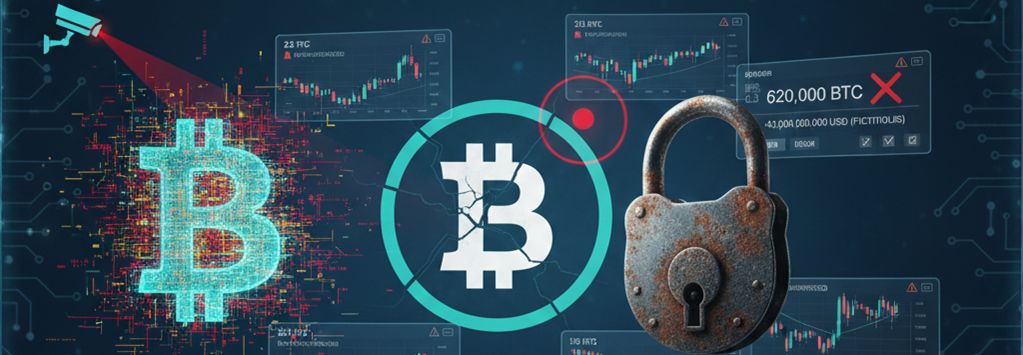
Following the detection of a massive crediting of ghost Bitcoin in Bithumb, South Korea’s financial regulator has launched an exhaustive investigation. The incident occurred when an employee mistakenly entered the unit “BTC” instead of the local currency “won” during a promotion, inflating user balances by $42.8 billion.
The exchange claims to have recovered most of the funds, but approximately 125 BTC withdrawn by opportunistic users remain unsettled. Consequently, the Financial Supervisory Service (FSS) described the event as a serious threat to market order and operational transparency.
This error revives fears regarding “paper Bitcoin,” assets that exist only on the internal ledgers of centralized exchanges (CEX) and not on the blockchain. As a result, the crypto community is questioning whether the actual reserves of these platforms are sufficient to back their customers’ operations.
Control Failures and Distrust in Centralized Exchanges
The FSS investigation points out that the error stemmed from a “single point of failure,” where a single staff member had the power to issue digital assets. Furthermore, on-chain data suggests a significant discrepancy between the figures reported by Bithumb and the massive withdrawals recorded after the incident.
On the other hand, CryptoQuant analysts assert that, at the time of the error, Bithumb held only 41,798 BTC in real reserves, a negligible number compared to the fictitious balance created. Therefore, the event not only exposed technical weaknesses but also triggered a capital outflow of $268 million due to the loss of confidence.
In summary, the case of ghost Bitcoin in Bithumb sets a negative precedent for digital asset regulation in Asia. The outcome of this investigation will determine whether custody and internal control standards in South Korea must be tightened to prevent future systemic collapses.