

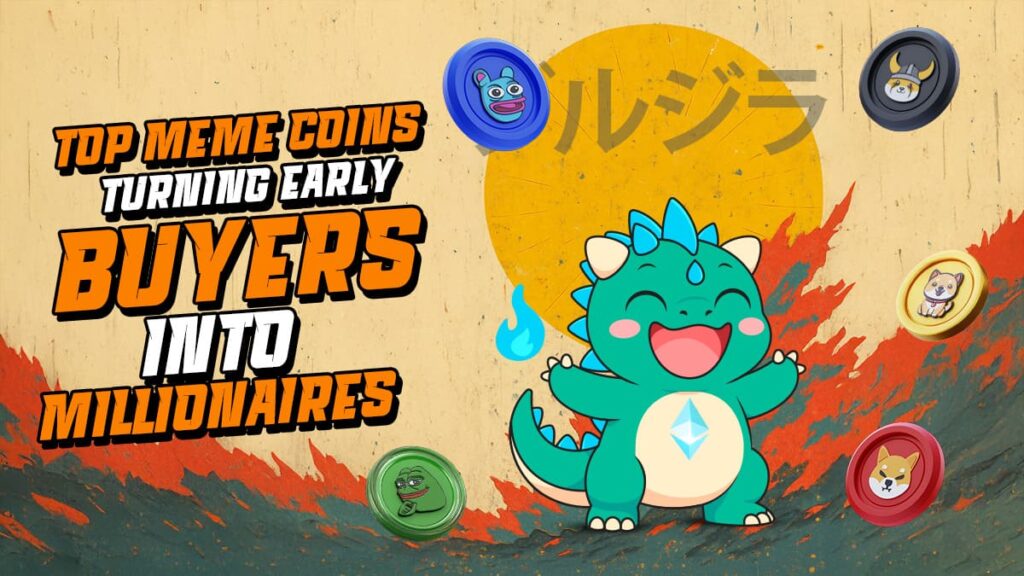
Meme coins have periodically attracted attention during crypto market cycles, often driven by online communities and cultural momentum rather than established cash flows. Past examples such as Dogecoin, Shiba Inu, and Pepe have also highlighted the sector’s volatility and the risk that prices can change rapidly.
One project currently being marketed in this category is BullZilla ($BZIL). According to its website, BullZilla is an Ethereum-based meme token with multiple token-sale stages and a pricing model that changes based on time and/or funds raised. Any figures and mechanics referenced below are project-reported and may change.
1. BullZilla ($BZIL): Project overview
Project materials for BullZilla ($BZIL) describe an early-stage token sale divided into named stages. At the time of writing, the website lists Stage 3 (labeled “Whale Signal Detected”), Phase 1, with a stated price of $0.00005908. The project also reports that more than $420,000 has been raised, 25.8 billion tokens have been sold, and there are more than 1,500 holders.

The project’s marketing materials include references to percentage returns and future price scenarios. These outcomes are not guaranteed, and token-sale pricing, exchange listings, and post-listing market prices can differ materially from promotional scenarios.
More broadly, meme-token projects can experience rapid changes in liquidity and demand, and participation may involve elevated risk compared with more established cryptoassets.
BullZilla Token Sale Information (project-reported)
| Metric | Details |
| Current Stage | 3rd – “Whale Signal Detected” (stage name used by the project) |
| Phase | 1 |
| Stated Price | $0.00005908 |
| Token Sale Tally | Over $420,000 raised (as stated by the project) |
| Token Holders | Over 1500 (as stated by the project) |
| Tokens Sold | 25.8 billion (as stated by the project) |
Participation overview (as described by the project)
The project’s website describes a token-sale process that may include connecting a compatible wallet, selecting ETH as a payment method, receiving an allocation at the then-current sale price, and claiming tokens after a stage ends. Readers should review the project’s own terms, smart-contract details, and risk disclosures before taking any action.
2. Binance Coin (BNB): Exchange-linked utility token
Binance Coin (BNB) is commonly described as a utility token used within the Binance ecosystem and across applications that support BNB Chain. Depending on the context, it can be used for exchange-related functions, on-chain activity, and other services offered by third parties.
BNB is a more established asset than many newly launched meme tokens, but it still carries market and platform-related risks. Any supply changes (including burn mechanisms) and their effects on price are uncertain and depend on broader market conditions.
3. TRON (TRX): Network token used for on-chain activity
TRON (TRX) is the native token of the TRON network, which is used to pay fees and interact with applications on the chain. The network is widely used for stablecoin transfers, although usage metrics can fluctuate over time.
As with other major networks, TRON’s long-term relevance depends on factors such as developer activity, user demand, regulatory developments, and competition from alternative chains.
Conclusion
BullZilla, Binance Coin (BNB), and TRON (TRX) represent different parts of the crypto market, ranging from an early-stage meme-token project (BullZilla) to more established network and ecosystem tokens (BNB and TRX). Readers should be cautious about promotional language, especially where future performance is implied.
According to BullZilla’s website, its token-sale pricing is designed to change at set intervals or funding milestones. Such mechanisms do not guarantee market demand or post-sale pricing, and participants can lose some or all of their capital.
For More Information:
BZIL Official Website (for reference)
Frequently Asked Questions about the BullZilla token sale
Why does the project emphasize staged pricing?
The project describes a token-sale structure where the stated price can change between stages. Staged pricing does not predict secondary-market performance and may not reflect future liquidity or demand.
What makes Binance Coin different from many meme tokens?
BNB is primarily positioned as a utility token within a broader exchange- and chain-related ecosystem, whereas many meme tokens are driven mainly by community interest and short-term trading activity.
How is TRON used in stablecoin transfers?
TRON is commonly used as a network for certain stablecoin transfers due to its fee structure and transaction throughput, although usage patterns can vary over time.
How do token sales typically set pricing?
Token sales may use fixed pricing, staged pricing, auctions, or other mechanisms set by the issuer. These structures can affect distribution, but they do not guarantee price appreciation after launch.
Glossary
- Progressive Token Sale: A token-sale structure where the stated price changes across stages or over time.
- Token Burn: Tokens permanently removed from circulation according to a defined mechanism.
- HODL Furnace: A name used by the project for a staking/rewards feature described in its materials.
- ERC-20: Standard for tokens on Ethereum.
- Referral System: A marketing program that may offer incentives for referring new participants, as described by a project.
- Roarblood Vault: A name used by the project for a loyalty and/or rewards pool described in its materials.
- Staking APY: A quoted annualized yield rate for staking; figures are variable, not guaranteed, and depend on a project’s rules and market conditions.
- Supply Scarcity: A situation where available supply is limited; the impact on price is uncertain and market-dependent.
- Community Vesting: A schedule that releases allocated tokens over time.
- Smart Contracts: Automated blockchain programs that execute defined actions when conditions are met.
This article contains information about a cryptocurrency token sale. This outlet is not affiliated with the project mentioned. As with any initiative within the crypto ecosystem, we encourage users to do their own research before participating, carefully considering both the potential and the risks involved. This article is for informational purposes only and does not constitute financial or investment advice.

