TL;DR:
- Miner support for the technical proposal has remained below 0.79% since December 2025.
- Bitcoin’s total market capitalization stood near $1.3 trillion during the July 2026 discussions.
- The alternative software implementation, Bitcoin Knots, accounted for nearly a quarter of all network nodes in February 2026.
The 12-year-old Bitcoin scaling debate returns as the BIP-110 proposal reignites division within the community. David Bailey, CEO of Nakamoto, publicly exposed an old conflict in order to question developer Luke Dashjr’s fitness to guide changes to the cryptocurrency’s code.
Currently, the controversy centers on the proposed software upgrade, which seeks a one-year ban on storing images and non-monetary data within the blockchain. July market data indicates that the network’s total valuation hovers around $1.3 trillion. In this context, several critics stated that the stability of a financial infrastructure of such magnitude should not depend on the individual criteria of a single programmer.
The 2014 Blacklisting Precedent
According to David Bailey, in 2014, developer Luke Dashjr secretly incorporated address blacklists into the Gentoo Linux package he maintained. This modification blocked payments by default to gambling platforms like SatoshiDice. Network node operators only noticed the change when transactions began to fail on a widespread scale.
Back in 2014 Luke secretly added bitcoin address blacklisting to Gentoo repository. His judgement cannot be trusted to run a trillion dollar asset as sole maintainer. I’m not denying he’s a brilliant person, but anyone with eyes can see it’s a non-starterhttps://t.co/r0Btv1ZrWZ
— David Bailey🇵🇷 $2.0mm/btc is the floor (@DavidFBailey) July 10, 2026
Reports from the time indicate that other Bitcoin Core contributors noted that these types of restrictions should be implemented in separately named versions and not in the default software. For their part, Dashjr’s defenders emphasized that the developer reversed the original setting, issued a public apology, and turned the feature into a completely optional alternative for users.
Market Resistance and Fork Risks
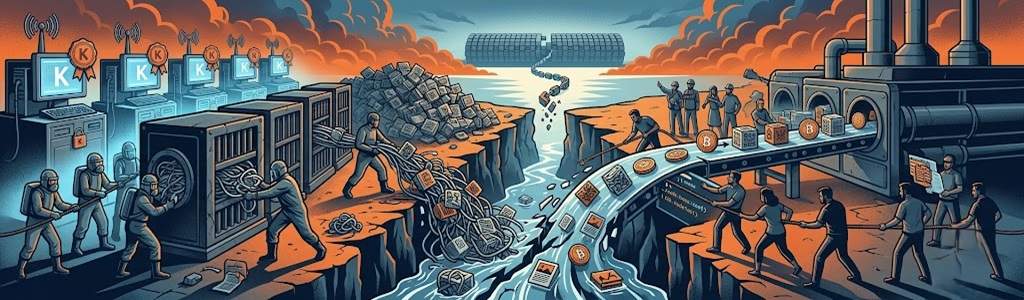
Tension surrounding the BIP-110 proposal has increased due to the lack of consensus among key participants in the cryptocurrency ecosystem. Technical reports from the sector indicate that miner backing for this measure has remained below 1% since December 2025, never surpassing a ceiling of 0.79% of the processing power.
Despite the low support, computers running the Bitcoin Knots software variant plan to reject transaction blocks that do not explicitly flag their adherence to the change starting in early August 2026. Regarding this, prominent figures such as Adam Back, CEO of Blockstream, warned that insistence on this mechanism could lead to a network fork, leaving supporters isolated on a minority chain with no relevant commercial value.
Likewise, Michael Saylor, founder of MicroStrategy, labeled the initiative a self-inflicted risk to the consensus protocol. Finally, governance documentation reveals that while the formal activation window is projected for the early days of August, the lack of massive economic alignment differentiates this scenario from historically successful upgrades like SegWit in 2017.