


As market sentiment fluctuates, some readers look for updates on newer crypto projects and established networks that are seeing increased discussion. Factors such as ecosystem upgrades, community activity, and real-world integrations can influence attention, but outcomes remain uncertain and depend on broader market conditions.
The projects below are presented as a high-level overview of topics currently discussed across the market. This is not a ranked recommendation, and inclusion does not imply future performance.
1. MoonBull ($MOBU): Token-sale project mentioned for 2025
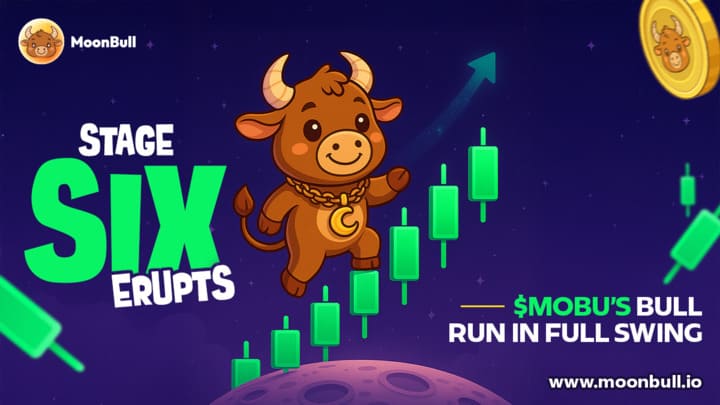
MoonBull has been promoted by its team as an early-stage token-sale project for 2025. According to the project’s website and promotional materials, it uses a staged token-sale model, and it reports being in “Stage 6” with a listed token price of $0.00008388. The same materials claim more than $640K raised and over 2,100 holders. These figures are project-reported and may change.

Project materials also describe planned price changes between stages and a potential exchange listing price. Any such figures are targets stated by the project and are not guarantees of market value or liquidity once trading begins.
2. Tron ($TRX)
Tron is a smart-contract network that is often discussed for its settlement speeds and transaction costs. It has also been used for stablecoin transfers and other on-chain activity. As with any network, usage metrics and token price can fluctuate based on market conditions and demand.
Why it is being discussed: Tron is frequently cited in market commentary for its transaction throughput and on-chain activity.
3. BullZilla ($BZIL)
BullZilla is presented by its team as an early-stage project with a community-focused approach. Its materials reference token supply features and marketing incentives such as referral programs, alongside broader ecosystem plans. Independent verification of roadmap delivery and market adoption may be limited for early-stage projects.
Why it is being discussed: It is an example of a newer project being circulated in online discussions, with details primarily sourced from project materials.
4. La Culex ($CULEX)
La Culex is described by its team as a community-led project with planned blockchain integrations. Public discussion around CULEX has included its proposed token use cases and marketplace-related ideas. As with other smaller tokens, trading activity and liquidity can vary widely.
Why it is being discussed: It is another newer token referenced in market chatter, where many details are project-reported.
5. Binance Coin ($BNB)
BNB is used across the Binance ecosystem and associated networks for functions such as transaction fees and other utility features. Its role is tied to activity on these platforms, and price can be influenced by market demand, macro conditions, and regulatory developments.
Why it is being discussed: BNB is a widely followed asset because of its connection to a large exchange and a broader set of blockchain services.
6. Avalanche ($AVAX)
Avalanche is a smart-contract platform often discussed for fast finality and customization features such as subnets. It competes in the broader market for scalable application deployments, where developer adoption can be cyclical.
Why it is being discussed: Avalanche is frequently mentioned in Web3 development conversations, particularly around network design and scaling approaches.
7. Cardano ($ADA)
Cardano is known for a research-oriented approach to protocol development and a focus on long-term sustainability. Network changes and adoption may depend on the delivery of upgrades, ecosystem growth, and user demand over time.
Why it is being discussed: Cardano remains widely followed due to its development model and established community.
8. Stellar ($XLM)
Stellar focuses on payments and asset transfers, including cross-border use cases. Interest in XLM can be influenced by integrations, usage levels, and broader market sentiment.
Why it is being discussed: Stellar is often discussed in relation to payment infrastructure and remittance-related blockchain use cases.
9. Litecoin ($LTC)
Litecoin is one of the older cryptocurrencies and is commonly associated with relatively fast confirmations compared with Bitcoin. It continues to see use in transfers and some payment contexts, though market interest varies over time.
Why it is being discussed: Litecoin is a long-running network that remains part of many broad crypto market overviews.
10. APEMARS
APEMARS is described by its team as a narrative-driven memecoin on Ethereum with a staged token-sale structure. Project materials mention planned token burn events tied to specific stages, and a post-launch staking product with terms such as an advertised yield and lockup period. The same materials also describe a referral-style reward mechanism. These features are project-reported, may change, and do not guarantee returns.
Conclusion
The crypto market heading into 2025 includes both established networks and newer token-sale projects. Technology upgrades, ecosystem activity, and real-world use cases are commonly cited factors, but they do not determine outcomes on their own. Readers tracking these assets typically monitor on-chain activity, development progress, and broader macro conditions.
MoonBull is included here primarily based on project-reported token-sale details, while Tron, BNB, Avalanche, Cardano, and other networks are referenced for their existing ecosystems and ongoing development.

For More Information:
Project website (for reference): MoonBull website
Project X (for reference): MoonBull X account
Frequently Asked Questions About Token Sales in 2025
What factors do people consider when evaluating token sales in 2025?
Common considerations include the project’s stated token distribution and supply rules (tokenomics), available documentation, security disclosures, team transparency, and whether there is independent information beyond marketing materials. Participation in token sales can carry significant risk.
What can influence memecoin interest in 2025?
Memecoin attention is often driven by social dynamics, liquidity conditions, and broader market sentiment. Utility claims and partnerships should be reviewed carefully and, where possible, verified through primary sources.
What does the project say about MoonBull’s staged structure?
MoonBull’s materials describe staged pricing and other token-sale mechanics. As with any early-stage project, readers may want to review primary documents and note that future pricing and listing outcomes are uncertain.
Are established coins still relevant for 2025?
Established networks can remain relevant due to existing users, infrastructure, and liquidity. However, they still face technology, market, and regulatory risks, and their prices can be volatile.
How do users research crypto projects?
Users often review documentation, on-chain data, security audits (where available), developer activity, governance processes, exchange/liquidity conditions, and real-world adoption claims. No single indicator is definitive.
Glossary of Key Terms
Tokenomics: The economic structure behind a cryptocurrency, including supply, distribution, incentives, and ecosystem utility.
Liquidity: The ease with which a cryptocurrency can be bought or sold in the market without affecting its price.
Market Capitalization: The total value of a cryptocurrency, calculated by multiplying its circulating supply by its current price.
Volatility: The degree of price fluctuation within a cryptocurrency over a specific period.
Scalability: A blockchain’s ability to handle increased transaction volume efficiently as network demand grows.
Utility Token: A cryptocurrency designed to perform specific functions within its ecosystem, such as payments or governance.
Decentralized Applications (dApps):Blockchain-based applications that operate without central authority and use smart contracts for automation.
Consensus Mechanism:The method by which blockchain participants agree on valid transactions, such as Proof of Work or Proof of Stake.
Cross-Chain Compatibility:A technology that allows different blockchains to communicate, transfer assets, and share data.
Listing Price:A price a project or exchange publishes when a cryptocurrency first becomes available for trading; it may differ from the price the market ultimately settles on.
Article Summary
This article reviews several crypto projects being discussed for 2025, including MoonBull (based on project-reported token-sale information) and established networks such as TRX, BNB, AVAX, ADA, XLM, and LTC. It summarizes commonly cited themes such as technology, scalability, and community activity without predicting performance.
This outlet is not affiliated with the project mentioned. This article is for informational purposes only and does not constitute financial or investment advice.

